








Introduction:Should you choose hot or iced water for your pour over coffee? Many coffee enthusiasts often feel puzzled when making this choice. This article presents a comparative test, analyzing in depth the differences between hot pour over and iced pour over in key parameters such as brew ratio, water temperature, and grind size, and revealing how these affect extraction yield, flavor complexity, and taste performance. Mastering these details not only enhances brewing skills but also helps you more precisely identify your preferred coffee flavors.
In the coffee enthusiast community, the debate over whether to opt for hot or iced pour over coffee never ends. Many are undecided about which method better showcases the unique flavors of coffee. Professional advice usually suggests that if you wish to experience a richer array of coffee flavors, hot pour over is often the more ideal choice. To visually demonstrate the difference between the two, we conducted a controlled experiment—keeping the type of coffee beans and brewing technique consistent, while only adjusting the brew ratio and grind size—to clearly illustrate how hot and iced pour over differ in extraction efficiency, flavor expression, and mouthfeel.

When asked how to choose between iced pour over and hot pour over, we typically recommend: “If you’re aiming for a fuller coffee flavor experience, it’s best to enjoy pour over coffee as a hot beverage.” Though we’ve explained many times why hot pour over brings out more complex flavors, many still find it not intuitive enough. Therefore, this time we specifically use a side-by-side comparison to help everyone understand more clearly: why hot pour over better highlights the distinctive traits of coffee flavor. It’s worth mentioning that this also explains why some coffee shops charge higher prices for iced pour over service compared to hot pour over.
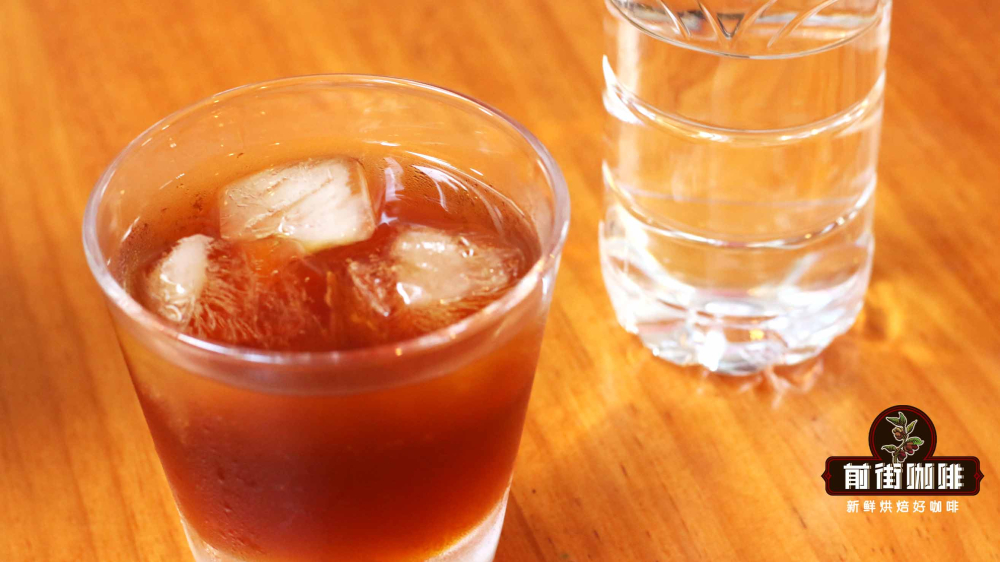
Looking at the actual parameters, the main differences between hot pour over and iced pour over lie in the settings for water volume and grind size. In this experiment, the parameters for hot pour over were: 15 grams of coffee grounds, using an Ek43 grinder set to grind size 10, water temperature controlled at 92°C, brew ratio set at 1:15 (i.e., 15 grams of coffee with 225 ml of hot water), with an overall brewing time of about 2 minutes. In contrast, the parameters for iced pour over were adjusted as follows: 15 grams of coffee grounds, Ek43 grinder set to grind size 9.5, water temperature also at 92°C, but the brew ratio changed to 1:10 (i.e., 15 grams of coffee with 150 ml of hot water), and a coffee-to-ice ratio of 1:6 was used (i.e., 15 grams of coffee with about 90 grams of ice, which do not fully melt), also with a brewing time of about 2 minutes.
Observing these parameters, it’s not hard to see that the main differences lie in the amount of water used and the coarseness of the coffee grind. Iced pour over requires rapid cooling via ice cubes, hence the total water volume is lower. To balance the impact of ice melt on concentration, we reduced the total water volume to increase the concentration of the coffee liquid, avoiding a final product that is weak and tasteless—essentially “coffee-flavored water.” However, with reduced water volume, maintaining the original grind size would make it difficult to fully extract the flavor compounds from the coffee, so we adjusted the grind to a finer setting to enhance extraction efficiency. From this, it can be seen that the key factor causing the difference in flavor mainly stems from the different water volume settings.
Since pour over coffee doesn’t have the pressure assistance that espresso machines provide, when the total water volume is insufficient, relying solely on the dripping process makes it very difficult to fully extract the flavor substances from the coffee. To illustrate this point more clearly, we designed another comparative experiment: brewing a pot of coffee using both 1:15 and 1:10 brew ratios, keeping the brewing parameters the same as previously described, with the only difference being that the 1:10 brew did not include ice cubes but was diluted with hot water, ensuring the final temperature and concentration of the two pots were closer, thus more accurately demonstrating the differences in extraction effects caused by varying water volumes.
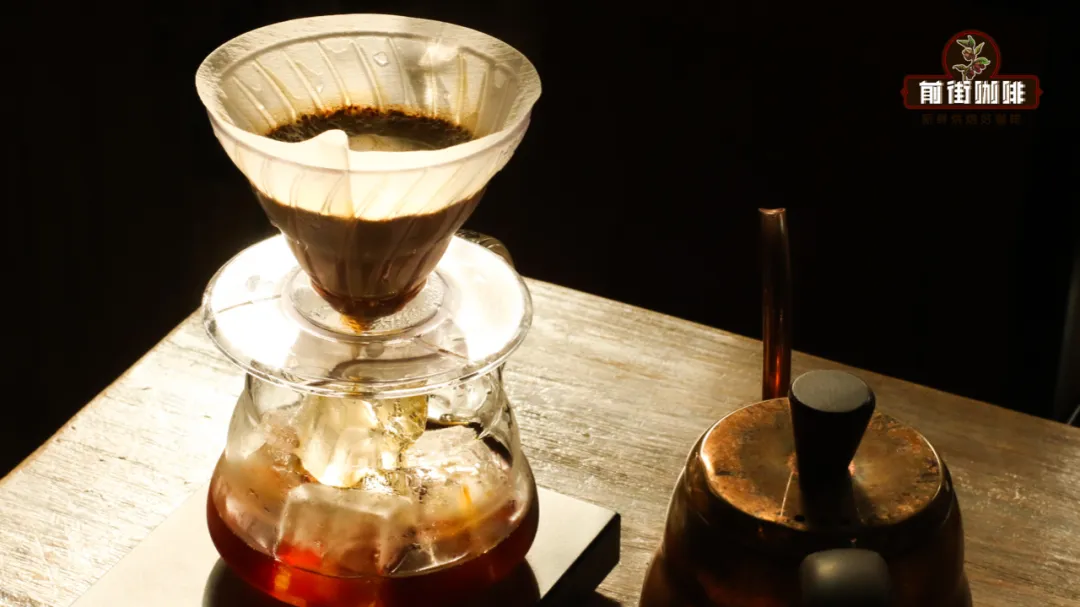
For this experiment, we selected a representative single-origin coffee bean from Yirgacheffe, known for its distinct jasmine floral aroma, accompanied by fresh notes of lemon, honey, and green tea—perfectly suited for coffee lovers who enjoy fruity and floral profiles and prefer less bitterness. Additionally, medium to light roasted beans, with their rich floral and fruity aromas, pair exceptionally well with iced pour over—not only delivering bright, sweet-and-sour flavors but sometimes even presenting a juice-like refreshing texture.
After completing the brewing, we separately measured the weight of the brewed coffee in each pot. The results showed that the coffee brewed at a 1:15 brew ratio weighed 195 ml, while the 1:10 brew ratio sample weighed 120 ml. We then took samples for extraction yield testing and additionally added 70 ml of 65°C hot water to dilute the 1:10 brew ratio sample to bring its concentration closer to that of the 1:15 sample, finally inviting café customers to participate in a blind tasting test.
The actual test data showed that the 1:15 brew ratio coffee achieved an extraction yield of 20.6%, with rich flavor layers, balanced sweetness and acidity, and main flavor notes including citrus, strawberry, cream, and berries, followed by a honey-like aftertaste upon swallowing; in contrast, the 1:10 brew ratio coffee had an extraction yield of 18.1%, with relatively simpler flavor layers, more pronounced sweetness and acidity, almost no bitterness perceived, and a lack of aftertaste upon swallowing. Nevertheless, this cup of coffee still falls within the “tasty” range. The blind tasting results showed that most customers ultimately chose the 1:15 brew ratio sample, believing it had a fuller flavor and better overall performance.
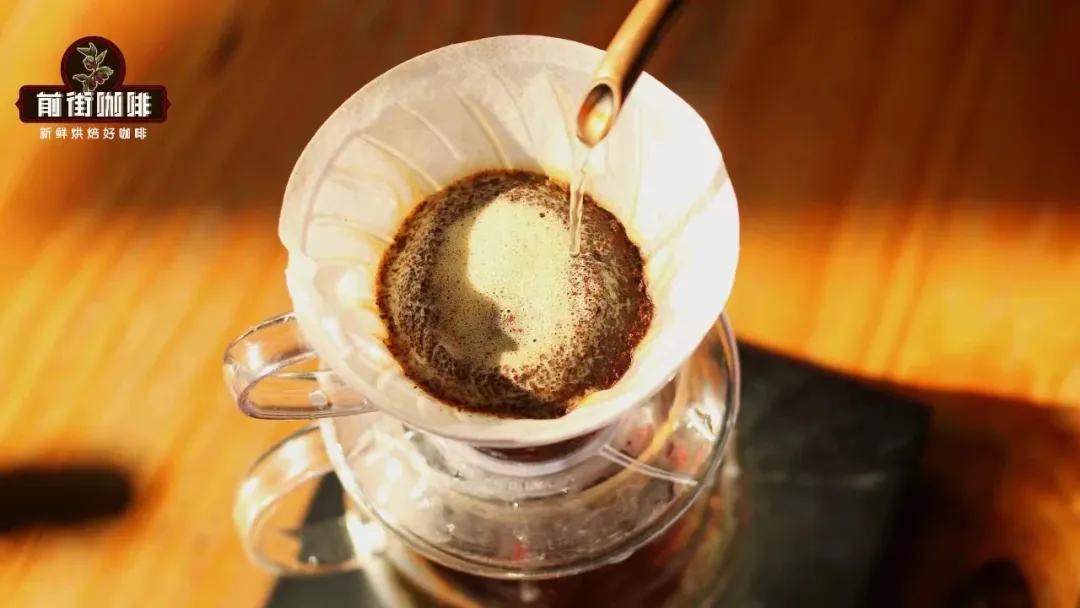
Some may ask, since insufficient water leads to incomplete extraction of flavor compounds, could we compensate by further fine-tuning the grind size or increasing the water temperature? Theoretically, this approach is indeed feasible. But in practice, we also need to consider other factors, such as the issue of fine particles. A finer grind increases the contact surface area between coffee grounds and water, but it also produces more fine particles, which dissolve quickly and can release excessive bitterness and impurities, negatively affecting the overall flavor. We once tried grinding to size 7 on the Ek43, keeping all other parameters the same and using a 1:10 ratio for brewing. Although the extraction yield entered the Golden Cup range (around 20%), the actual taste revealed noticeable bitterness and off-flavors, resulting in a poorer flavor performance. Therefore, most coffee shops only make slight adjustments to hot pour over when making iced pour over, to maintain flavor stability, rather than risking extreme extraction methods.
Additionally, some shops increase the amount of coffee grounds to raise the total volume of extracted water. While this method can effectively improve extraction completeness, it also raises costs and leads to higher retail prices, and thus is not a mainstream approach. Based on the above analysis, we can clearly understand why hot pour over better showcases the full spectrum of coffee flavors—because sufficient water volume helps fully extract the various flavor compounds in coffee, making every sip rich in layers and surprises.
The above content is compiled by CoffeeHunters, a coffee news website.


