







Introduction:Indonesian Mandheling is renowned for its bold, rich flavor, low acidity, and distinctive herbal and woody notes, making it a favorite among coffee enthusiasts. Behind this unique flavor profile lies Sumatra’s special humid climate and the local “wet-hulling” processing method. This article delves into the wet-hulling process, from climate conditions and semi-washed steps to the origin of “fox tail” beans, and explores how the humid environment, through mold and Maillard reactions, shapes Mandheling’s signature earthy aroma and regional character.
When it comes to Indonesian coffee, most coffee lovers immediately think of Mandheling. This coffee from Sumatra, with its intense body, low acidity, and prominent herbal and woody aromas, holds a respected place in the global specialty coffee market. Especially in the offerings of well-known cafes, Mandheling is often the darkest roasted bean, showcasing a stable roast aroma, a full body, and a subtle sweetness in the aftertaste. But it’s the unique “earthy” quality that truly sets it apart from other dark roasts.
So why is it that, even among similarly medium to dark roasts, only Mandheling can exhibit such a distinct aromatic profile? The answer lies not only in Sumatra’s high-altitude growing regions but also in its unique “wet-hulling (Giling Basah)” processing technique. This traditional method is a key reason why Indonesian coffee can be stably produced in a humid and variable climate.
Although Sumatra has high-altitude areas suitable for growing Arabica, such as Aceh and North Sumatra, the overall climate is highly challenging. With humidity levels reaching 70% to 90% year-round, unpredictable weather that alternates between sunshine and heavy rain, and annual rainfall exceeding 2000 mm, such a moist environment is extremely unfavorable for traditional sun-drying or washed processing methods—especially during the drying stage of parchment coffee, where moisture that cannot dissipate in time easily leads to mold.
To overcome this challenge, Indonesian coffee farmers gradually developed “wet-hulling,” a semi-washed processing method adapted to high-humidity climates. This approach allows the outer parchment layer to be removed before the beans are fully dry, enabling the inner green beans to dry quickly. This effectively reduces the risk of fermentation and mold, while also shortening the overall processing cycle, getting the coffee to market faster.
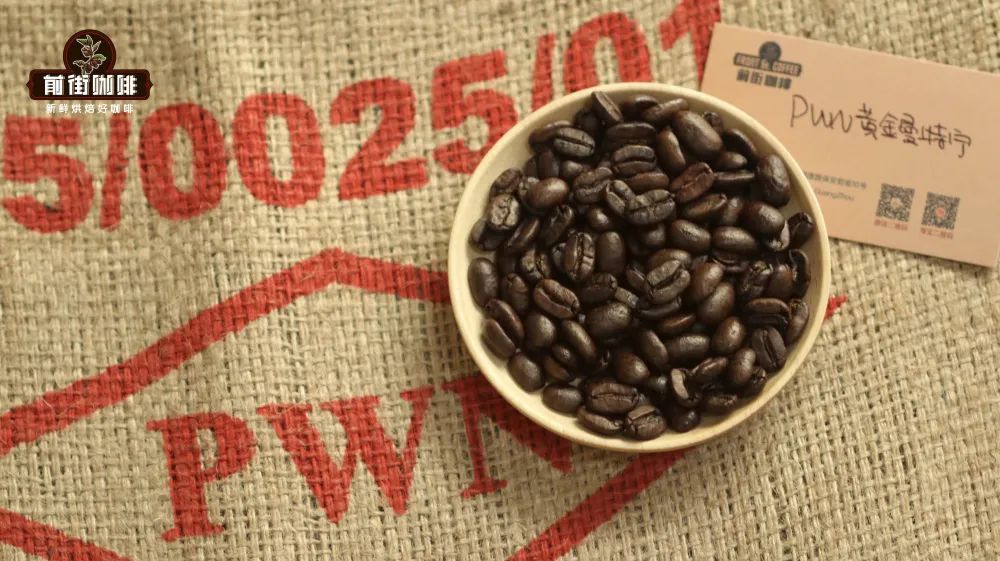
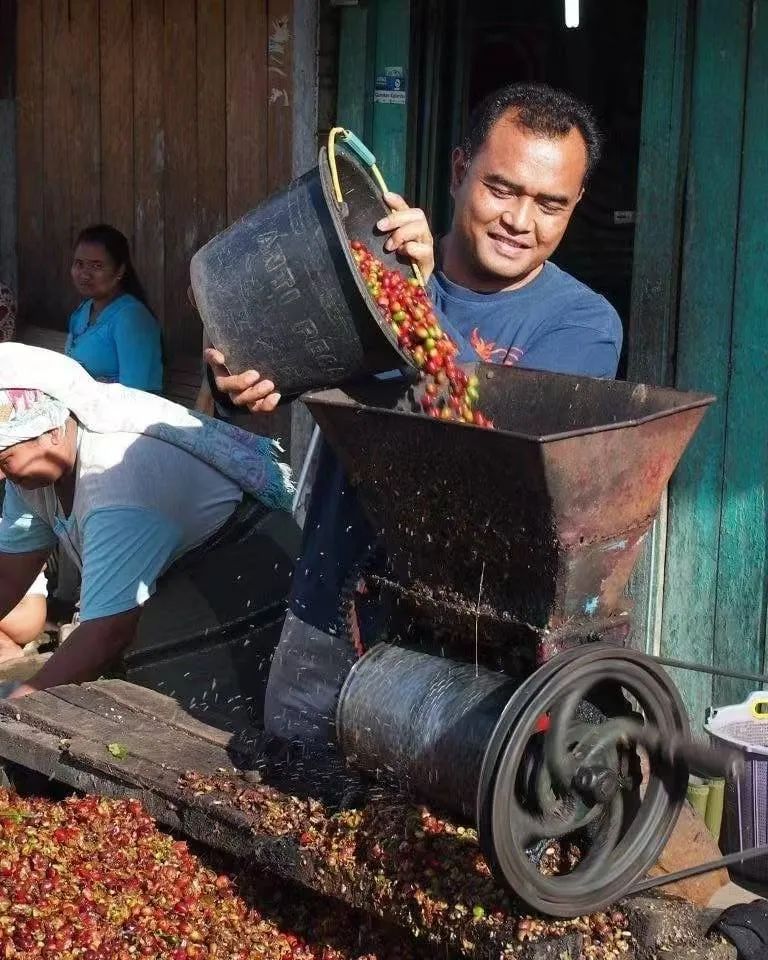
The wet-hulling process begins with removing the outer skin of harvested coffee cherries using machinery. The mucilage-covered parchment beans are then placed in water tanks, where floaters are skimmed off, and the sound beans that sink are subjected to brief fermentation, usually lasting just a few hours. After fermentation, any remaining fruit mucilage on the parchment must be thoroughly washed. The parchment beans are then placed outdoors for initial drying. However, unlike Brazil’s dry and stable climate, the parchment beans here can only be sun-dried for one or two days at most; otherwise, they are highly prone to mold due to the high heat and humidity.
Generally, when the moisture content of the parchment beans drops to between 30% and 50%, they are sent to the processing mill for the next step. At this point, the beans are still semi-hard and soft. If the hulling is not done promptly, over-fermentation may lead to off-flavors. It’s worth noting that because the beans aren’t fully dry, the hulling process is relatively difficult and requires more powerful professional hulling machines with greater friction to remove the parchment. During this process, white or greenish viscous liquid often oozes out, and the beans themselves, due to prolonged soaking and a moist environment, gradually become soft, whitish, or even swollen, turning gray-green and prone to forming small indentations similar to deer hooves under mechanical pressure—this is the origin of the commonly seen “fox tail” beans in Sumatran coffee.
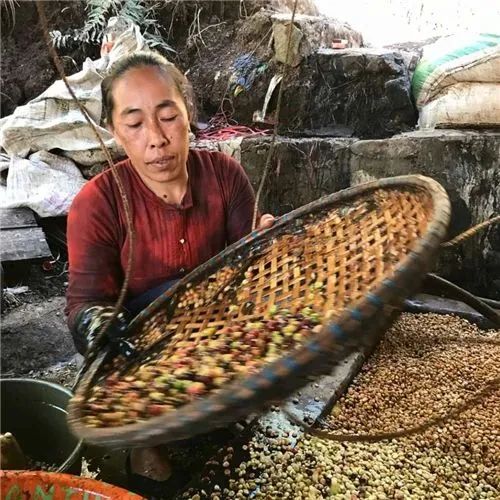
In the wet-hulling method, the green beans are hulled and have their silver skin removed before they are fully dry, leaving only the inner bean exposed directly to sunlight and air for subsequent drying. While this greatly improves drying efficiency, it also makes the beans more susceptible to external influences, including microbial growth and physical damage. For this reason, high-quality Mandheling usually requires multiple rounds of manual sorting to remove defective beans.
Additionally, since the protective layers are removed earlier, the overall processing time is significantly shortened, reducing labor costs and allowing the green beans to move more quickly into storage and export stages. However, this highly efficient processing method also comes with a higher defect rate—especially during transportation and storage, where improper control of temperature and humidity can easily affect the final flavor profile.
Interestingly, this seemingly imperfect processing environment unexpectedly contributes to Mandheling’s unique flavor characteristics. Research suggests that the complex aromas often found in Sumatran coffee—such as woody, earthy, spicy, and grass jelly-like notes—likely stem from the natural action of mold in the humid environment. Later, during the drying process of the coffee beans, these compounds interact with Maillard reactions and caramelization, ultimately forming a rich and layered “earthy” aroma, also known as the “regional flavor.”
In summary, the reason Mandheling can exhibit its distinctive personality—low acidity, high body, and pronounced herbal and woody tones—lies in Sumatra’s humid, rainy climate conditions and the wet-hulling processing method developed by local farmers to adapt to the environment. Although this method increases the risk of defects, it also endows Mandheling with an irreplaceable regional character, making it the most representative symbol of Indonesian flavor in the hearts of coffee lovers worldwide.
The above content is compiled by CoffeeHunters, a coffee news website.


