








Introduction:Want to roast coffee beans at home but not sure where to start? This article provides a detailed introduction to three common home roasting methods—rotary drum, frying pan, and electric oven—covering everything from heat control, bean color changes, and first and second crack sounds to the pros and cons and practical techniques of each tool. Whether you're a beginner or looking to enhance flavor, you'll find useful entry-level methods here.
In recent years, more and more coffee enthusiasts have moved beyond just brewing and have started to challenge themselves with the roasting process. Handling green beans from scratch not only allows for a deeper understanding of coffee characteristics but also lets you adjust the roast level to suit your personal taste. However, when faced with a handful of green beans, many people don’t know where to begin. This article will start with the basics, guide you through the key elements of home roasting, and take an in-depth look at how to operate and what to watch out for with three common roasting tools.
First, let’s take a look at the flavor differences brought by various roast levels. In the early stages of home roasting, it is recommended to use low to medium heat and keep the beans constantly moving, observing their color changes. If you notice that some beans change color too quickly, it may be due to excessive heat or insufficient stirring, and adjustments should be made promptly. Conversely, if the beans remain unchanged for a long time, it indicates that the heat is too weak, and you can moderately increase the intensity of the heat source. When the beans uniformly transition in color and begin to produce first and second crack sounds, you’ve entered the critical stage of determining roast level.
First CrackUsually occurs as the beans turn from yellow to brown, with sounds that are brief and not very pronounced, lasting only a few seconds. AndSecond Crackoccurs as the beans further darken to brown, producing dense and loud sounds that can last two to three minutes. Many coffee lovers choose to stop roasting just as the second crack begins, after hearing about ten cracks. At this point, the roast level often falls between medium and dark, with a dry bean surface and the beginning of oil sheen, offering a rich layering of flavors. If you continue roasting until the second crack ends, the beans will further carbonize. Although some prefer this intense, smoky flavor, it is generally not recommended for most home roasters to attempt.

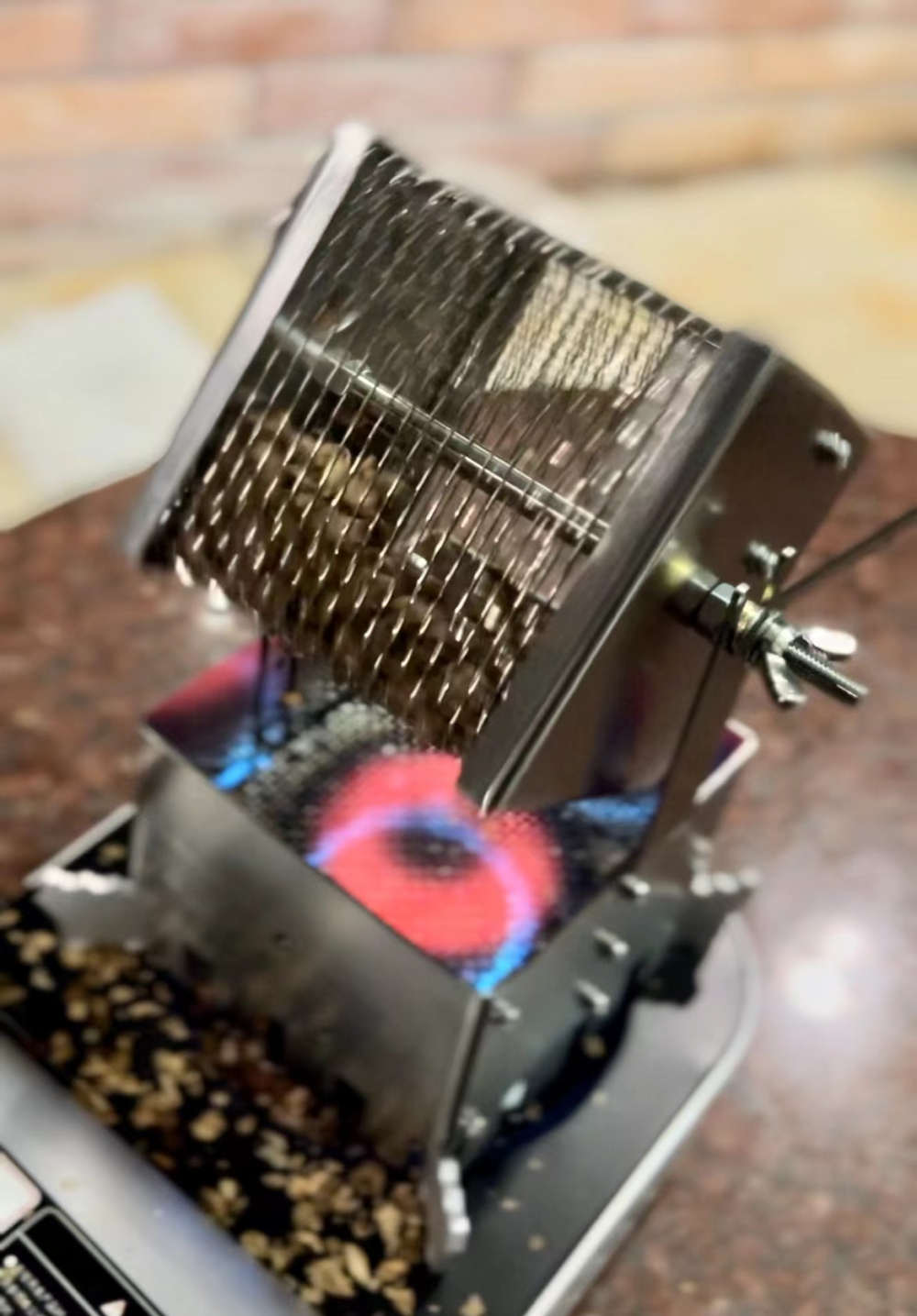
Next, we’ll explore several common home roasting tools and how to use them. The first and foremost is therotary drum, which operates on a principle similar to commercial roasting machines, allowing the beans to be evenly heated as they rotate. When using it, make sure to adjust the heat before placing the drum inside, and maintain a rotation speed of about 60 to 65 revolutions per minute. Although rotary drum roasting takes longer—usually more than double the time of professional machines—it allows you to clearly observe the beans as they change from green to yellow, then cinnamon, and finally to chocolate brown, while also experiencing the transition of aromas from corn sweetness, caramel, to nuttiness. It’s an excellent way for beginners to understand the changes during roasting.
If you’re looking for something simple and straightforward,frying pan roastingis also a viable option. Although this traditional method doesn’t allow for precise temperature control like professional equipment, it excels in its intuitive operation and is suitable for experiencing the full process of beans turning from green to brown. Before use, make sure to thoroughly clean the frying pan to remove any residual grease. It’s recommended to boil it in water and then dry it, repeating the process one to two times. When roasting, maintain a stable and moderate heat, and keep the amount of beans between 100 to 200 grams—too much can lead to uneven heating. While this method may not achieve commercial-grade consistency, it’s great for beginners to build an intuition for heat and bean changes.
Finally, many people consider using anelectric ovenfor roasting, but this method has clear limitations. Since ovens cannot continuously stir the beans during roasting, it can easily lead to localized overheating or burning. If you choose to use an oven, it’s recommended to roast small batches at a time and spread the beans out on a baking tray to avoid stacking. You’ll need to take the beans out multiple times to stir them, ensuring even heating. However, due to the lack of continuous stirring and precise temperature control, electric ovens are generally not recommended as a primary roasting tool, though they can still serve as a trial option with some reference value.

No matter which method you choose, the key to home coffee bean roasting lies in observation, listening, and adjustment. From the color and aroma changes of the beans to the sounds of first and second crack, all are indicators of roasting progress. Through continuous practice, you’ll gradually master your own roasting rhythm, roast beans that suit your personal taste, and enjoy the complete coffee experience from green bean to cup.
The above content is compiled by CoffeeHunters, a coffee news website.


