








Introduction:Geisha coffee, originating from wild Ethiopian varieties, rose to fame in Panama and has now become one of the top-tier cultivars in the specialty coffee world. This article takes you through the historical roots of Geisha, delves into the grading system and plot differences at the Geisha Village Estate, and focuses on comparing the regional characteristics and flavor profiles of the two top-tier Geishas: Gold Label and Red Label. We also demonstrate the pour over brewing steps for Red Label Geisha, providing practical extraction parameters such as filter type, water temperature, and grind size to help you master the brewing techniques for high-quality Geisha.
The name Geisha is almost synonymous with “ultimate flavor” in the specialty coffee industry. However, many people don’t know that this variety, which has captivated coffee enthusiasts worldwide, originally came from the wild coffee forests of southern Ethiopia. Today, we not only discuss how Geisha made its way from the Kafa forest to Panama but also take an in-depth look at its rebirth story at its place of origin — the Geisha Village Estate — and how the estate, through a rigorous grading system, has created the two highly acclaimed top-tier Geishas: Gold Label and Red Label.
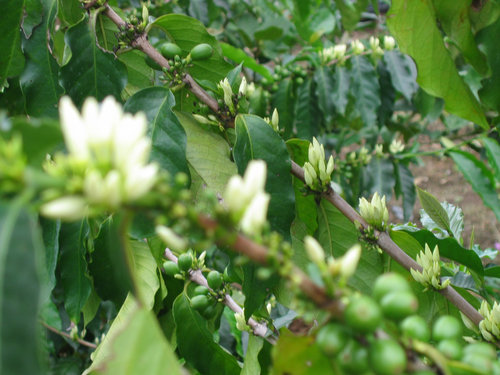
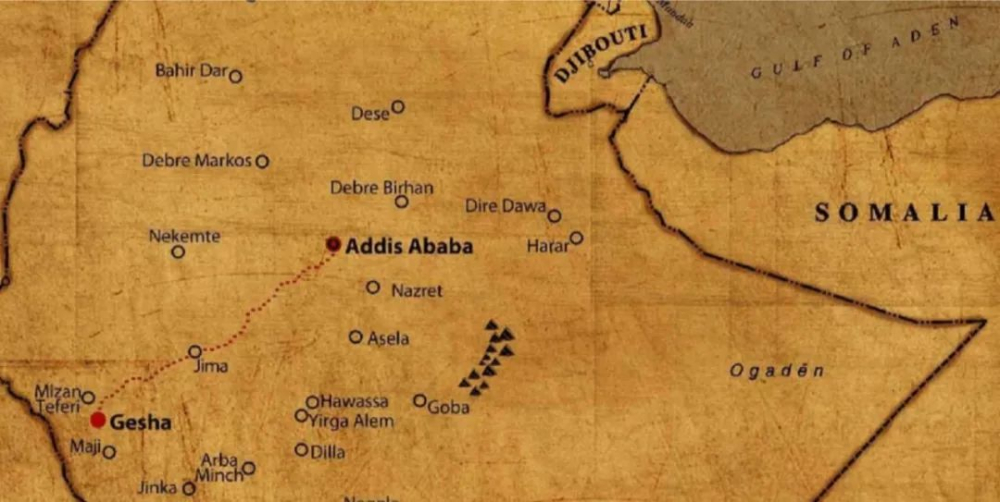
Going back to the 1930s, post-war Africa was overshadowed by colonialism. At that time, in search of commercial coffee varieties suitable for large-scale cultivation, British agricultural institutions sent officers deep into the Kafa forest in southwestern Ethiopia to look for wild coffee trees. During an exploration, the wild forests in the Gesha region stood out for their exceptional flavor. British officers sent these precious coffee seeds to trial fields in Kenya and Tanzania for cultivation. Interestingly, the original name of this forested area was "Gesha," but due to a clerical spelling error, it became "Geisha," and this "incorrect" name has been used ever since.
Historical records indicate that these seeds were collected in three separate batches, in 1931 and 1936, and were subsequently sent to locations such as Kitale in Kenya and Lyamungu in Tanzania for cultivation and selection. Among them, the Lyamungu research station developed superior selections numbered VC496 to VC500. These varieties eventually made their way to Central America, including the T2722 variety, which later shined brightly in Panama. It wasn’t until the 1960s that these Geisha seedlings from Ethiopia were introduced to Panama by CATIE, and decades later, their astonishing potential was discovered by the Peterson family.
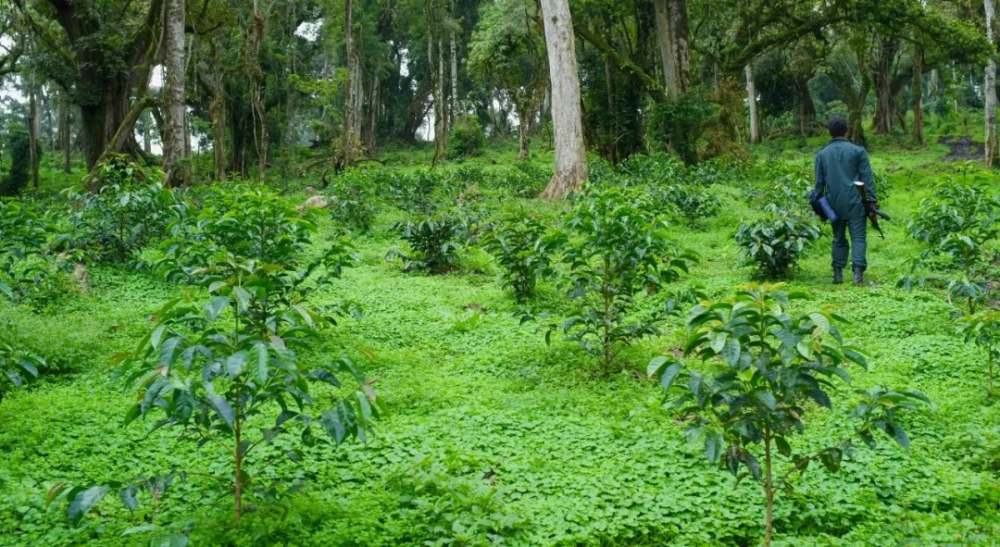
Fast forward to 2007, documentary filmmakers Adam Overton and his wife Rachel Samuel, while shooting a coffee documentary for the Ethiopian government, visited the Gori Gesha forest, the native home of Geisha, for the first time. They were deeply captivated by the unique aroma and flavors of the local coffees, which led to the idea of establishing their own Geisha estate. In 2011, the couple arrived in the Bench Maji region of southwestern Ethiopia, near the border with South Sudan, and founded the now world-renowned Geisha Village Coffee Estate.
The Geisha Village Estate is located in a forested area with elevations generally exceeding 1900 meters. Even the lowest-altitude plots within the estate have the high elevation necessary to nurture specialty coffee. The large diurnal temperature variation at high altitudes allows coffee cherries to ripen slowly, accumulating richer flavor compounds. Adam, along with Willem Boot, a former BOP judge, ventured into the primeval forest to discover native Geisha tree varieties and brought these precious seeds back to the estate, gradually building a planting base spanning over 500 hectares.
Unlike the smallholder farming model common in Ethiopia, the Geisha Village Estate is one of the few large-scale farms with its own washed processing facility and laboratory. To precisely understand the flavor characteristics of each batch of coffee, the estate conducts detailed zoning and numbering of different plots, taking into account factors such as soil, altitude, and shade percentage for flavor traceability. This scientific management approach is also a key foundation for the estate’s ability to consistently produce high-quality Geisha.
The Geisha variety grown at the Geisha Village Estate, while related to Panama’s dominant Geisha (T2722), is not exactly the same. Currently, the estate mainly cultivates three varieties: Gori Gesha, Geisha 1931, and IIIubabor Forest. Among them, Geisha 1931 shares a similar flavor profile with Panamanian Geisha, while IIIubabor Forest is a variety specifically cultivated for disease resistance. To ensure consumers can clearly identify coffee grades and origins, the Geisha Village Estate has established a strict grading system, categorizing its products into multiple tiers including auction, gold label, red label, green label, and CHAKA.
The auction lots are the estate’s flagship products, available only to invited buyers through auctions. The Gold Label Geisha (known in English as Rarities, meaning rare treasures) is the highest non-auction grade offered to the market, accounting for about 10% of total production. Each batch of Gold Label is labeled with specific plot information. For example, the Gold Label Geisha from the Oma plot in Bench Maji, sold under this brand, is processed using the natural (sun-dried) method, with an altitude ranging between 1900 and 2040 meters. The variety is Geisha 1931, and its flavor profile often includes layers of citrus, berries, cream, caramel, and melon, with particularly prominent honey-like sweetness.
Compared to Gold Label, the Red Label Geisha (Growers Reserve), while not an auction product, also boasts extremely high quality, accounting for about 15% of annual production. Red Label must meet the SCA cupping score standard of 88 or above and retains complete information on origin and processing. The Red Label Geisha used by the brand comes from the Shewa-Jibabu plot, is of the Gori Gesha variety, and grows at altitudes between 1973 and 2069 meters. It is processed using the natural method, and its flavor profile is dominated by lemon, plum, citrus, tropical fruits, and floral tea notes, with bright acidity and clear layers, showcasing the vibrant characteristics typical of high-altitude African coffee.

If you’d like to try brewing Red Label Geisha from the Geisha Village Estate at home, here are our recommended pour over parameters for your reference and adjustment: Use a V60 filter, control the water temperature at 91–92°C, use a coffee dose of 15 grams, aim for a brew ratio of 1:15, and grind to a size similar to fine sugar (approximately 80% passing through a #20 sieve). Use the three-pour method: the first pour adds 30 grams of water for a 30-second bloom, using a small stream and circling from the center outward to ensure even saturation of the coffee bed; the second pour increases the water flow, adding 120 grams of water, reaching approximately 150 grams by around 55 seconds, with a vertical and even water stream; the third pour uses a small stream to add 90 grams of water, bringing the total water volume to 240 grams, with a total brew time of about 2 minutes and 10 seconds. After brewing, gently swirl the server to enjoy this vibrant Geisha Village Red Label coffee from the highlands of Ethiopia.
The above content is compiled by CoffeeHunters, a coffee news website.


