








Introduction:Want to understand how a perfect Espresso is born? From its definition and the science behind the crema layer, to extraction ratios and time control, this article dives deep into the core elements of an espresso. It not only explains why this shot is a daily essential for baristas but also details the key parameters affecting flavor, how to showcase unique taste profiles through blends, and even how it extends into variations like Americano and Latte.
In coffee shops, it’s common to see baristas take a quick sip of a rich Espresso before diving into their busy workday. This high-pressure extracted coffee from Italy is known for releasing intense flavors in a short time, with its surface covered by a captivating golden foam. What does this foam signify? And how can one achieve a precisely extracted, highly concentrated shot? Let’s explore the world of Espresso together.
Espresso is defined as a concentrated coffee liquid extracted quickly under high temperature and high pressure (typically around 9 atmospheres). In this process, the soluble substances and gases within the coffee grounds are rapidly released, creating a thick and intensely flavored liquid. The extraction time usually lasts only 20 to 35 seconds, with an extraction ratio commonly around 1:2 — that is, about 40 grams of coffee liquid is extracted from 20 grams of coffee grounds. This kind of concentrate is more than just a dark black coffee; it serves as the foundation for many coffee beverages.

One of the most distinctive features of Espresso is the cream — the golden layer of foam that floats on the surface. This foam forms due to the carbon dioxide gas accumulated during the roasting process. Under high-pressure extraction, the gas is released along with the water flow, and when the pressure returns to normal, these gases gather as tiny bubbles on the surface, forming a stable foam layer. Cream is not only an indicator of the Espresso’s freshness, but its thickness and color also reveal the roast level of the beans: darker colors typically indicate a darker roast and a richer, bolder flavor. On the other hand, if the coffee has been left too long or not consumed immediately after extraction, the foam can easily dissipate, diminishing the overall experience.
In addition to the crema, high concentration is another key characteristic of Espresso. Due to the short extraction time and high pressure, Espresso can release a large amount of flavor compounds in an extremely short period, resulting in a much higher concentration than typical drip coffee. This intense concentration delivers a strong sensory impact while leaving a long-lasting aftertaste. That’s why many professional shops serve a glass of water alongside the Espresso, to cleanse the palate and better appreciate its layers of flavor.
So, how can you make an ideal Espresso at home or in your shop? First, you’ll need an espresso machine capable of delivering a stable pressure of at least 9 bars — commercial models like the Lelit Bianca can even reach 11 bars, offering more flexibility in adjusting extraction pressure. Pairing this with a precise grinder is equally essential to ensure uniform coffee ground fineness. Typically, a double shot basket is recommended to be filled with 18 to 20 grams of coffee grounds, and the extraction ratio is best set between 1:1.5 and 1:2.5. The most common and balanced choice is 1:2, meaning 20 grams of grounds yield about 40 grams of coffee liquid.
Extraction time is equally critical, generally controlled between 20 to 35 seconds. If the time is too short, under-extraction may occur, leading to weak flavors; if it exceeds 35 seconds, over-extraction is likely, resulting in burnt or bitter notes. In practice, industry experience shows that an extraction time of 28 to 30 seconds often achieves the best balance. For the steps: first ensure the portafilter basket is dry, distribute the ground coffee evenly, then tamp it down firmly — this helps maintain stable water flow during extraction. Next, run a little water through the group head to rinse away any leftover coffee residue, then lock the portafilter in place and begin extraction. When the scale shows the target weight (e.g., 40 grams) and the time falls within the ideal range, you can stop the extraction process.
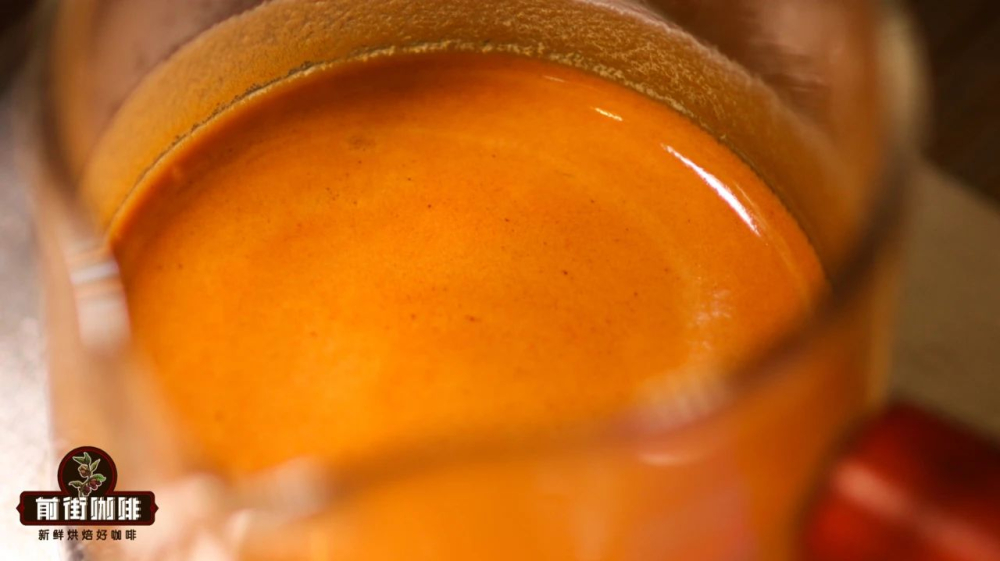
The flavor profile of Espresso is closely tied to the coffee beans used. For example, a common blend using Honduran Sherry and Ethiopian Natural Red Cherry in a ratio of about 7:3 can produce a shot rich in crema, with prominent whisky-like aromas, as well as hints of vanilla biscuit and berry acidity. Such a blend offers not only layered flavors but also a solid mouthfeel and a long-lasting aromatic finish.
Espresso is extremely versatile — not only is it the ultimate expression of single-origin coffee, but it’s also the base for many classic coffee drinks. Diluted with hot water, it becomes a refreshing Americano; mixed with steamed milk, it transforms into a smooth and sweet Latte. No matter the variation, Espresso remains the soul that ties all coffee flavors together.
The above content is compiled by CoffeeHunters, a coffee news website.


