








Introduction:At the 2017 Taste of Harvest (TOH) competition in East Africa’s Kenya division, Fram Farm from the Kiambu region won first place with an impressive score of 85.3. Its AA auction lot was purchased by Qingdao Fisher Coffee. This article delves into the origin background, variety characteristics, Kenya coffee grading system, and K72 washed processing method of this champion bean, while also providing expert pour-over brewing recommendations and a detailed flavor profile — taking you on a comprehensive journey from origin to cup to fully understand this exceptional Kenyan specialty coffee.
The results of the 2017 East Africa Taste of Harvest (TOH) competition, Kenya division, have been officially announced. Fram Farm, located in the Kiambu region, claimed victory with its AA auction lot,scoring 85.3 points,and earning the championship title. This coffee, composed of the SL28 and SL34 varieties, was ultimately acquired by Fisher Coffee from Qingdao, China, in the auction — making it the third African coffee to win at TOH, following Ethiopia’s “Huika” and Uganda.
Fram Farm is a family-run private estate managed by James Kariruki, with a history that spans several generations. After his father passed away, James inherited three hectares of land, which he gradually expanded to the current nine hectares. As early as the 1980s, the farm grew only the SL28 variety. It wasn’t until 1993, when a proprietary wet mill was established, that the farm not only processed its own harvested coffee cherries but also helped process coffee for surrounding relatives and friends, gradually building a reputation for high-quality coffee production. The winning AA-grade coffee comes from this family-owned farm equipped with a well-developed processing facility, ensuring stricter quality control and resulting in its outstanding flavor performance.
In addition to being an excellent representation of Kenya’s local coffee, this award-winning auction lot further highlights the potential of the Kiambu region within the specialty coffee map. Fram Farm produces three grades: AA, AB, and PB (peaberry), and the high-scoring AA-grade coffee demonstrates the bright acidity and complex layers typical of Kenyan coffee.
To understand the uniqueness of this champion bean, we must look back at the development history of Kenyan coffee. Coffee was introduced to Kenya around the end of the 19th century, but it was the SL28 and SL34 varieties — developed by the Scott Laboratories (abbreviated as SL) in the 1930s — that truly elevated Kenya to the ranks of global specialty coffee nations. These two varieties are hybrids of Bourbon and native Ethiopian strains. Though they did not increase yield as expected, they unexpectedly produced coffee with remarkably outstanding flavors, characterized by bright citrus notes and rich complexity.
Several key factors have contributed to the rapid development of Kenya’s coffee industry:First is the establishment of a breeding mechanism.The Scott Laboratories, founded in 1922, screened the SL28 and SL34 varieties from 42 candidates within just over a decade — identifying ones well-suited to Kenya’s high-altitude environment and laying a solid foundation for subsequent specialty coffee production.
Second is government support and institutional development.Starting in 1931, Kenya successively established grower cooperatives and the National Coffee Board, and launched the Nairobi Coffee Exchange in 1937, creating a transparent auction system that ensures premium coffee receives fair compensation. In recent years, the Kenyan Ministry of Agriculture has also introduced a 1.5 billion Kenyan Shilling revitalization plan for the coffee industry, continuously enhancing overall industry competitiveness.
Kenya’s grading system is also a cornerstone of its specialty coffee development.Grading is mainly based on bean size, shape, and hardness, ranked from highest to lowest as: AA (or AA+), AB, PB (peaberry), C, E, TT, and T. Among these, AA and AB grades are the main exports, and some exporters further subdivide them into unofficial but widely used quality levels such as TOP, PLUS (+), and FAQ based on cupping performance. A well-known shop previously introduced a Kenyan bean, such as the Asaliya flavor grade, which reached the TOP level. However, it’s worth noting that these additional grades are not mandatory national standards, so consumers shouldn’t be overly fixated on them — as long as the beans are AA or AB grade, they generally already possess a certain flavor standard.
Finally, one cannot overlook Kenya’s uniqueK72 washed processing method,which is also a key factor behind its bright acidity and juicy mouthfeel. While most washed processing methods involve fermentation times of 36 hours or less, Kenya employs a 72-hour fermentation process, followed by drying to a moisture content of 12%. This extended processing allows more time for mucilage breakdown, enabling the coffee beans to fully express a clear acidity and rich layered complexity. If you want to experience the charm of Kenyan processing, try the “Little Tomato” coffee beans offered by a well-known shop — they also use the SL28 and SL34 varieties and are processed with the K72 method, delivering highly representative flavor performance.
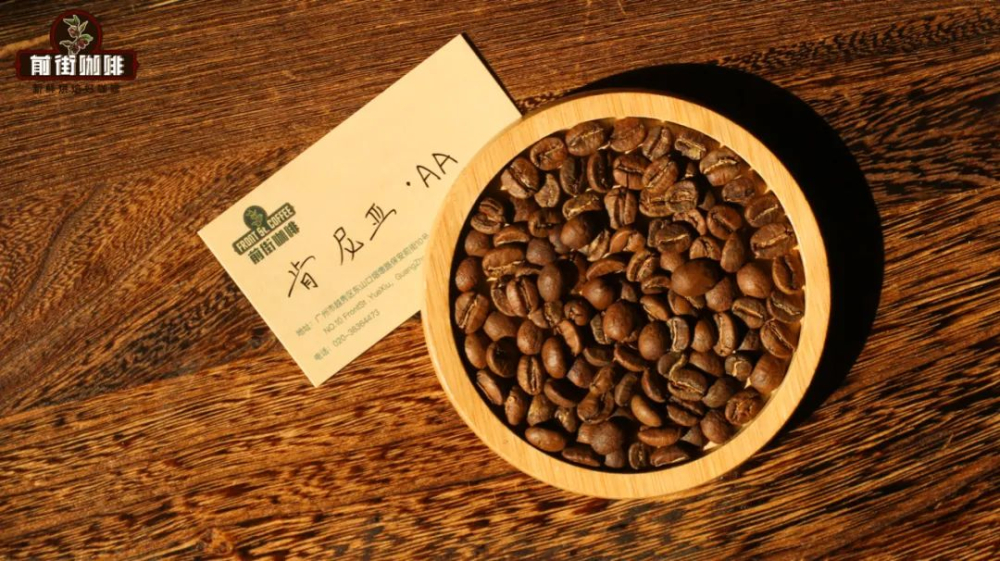
A well-known shop offers the following professional pour-over brewing recommendations for high-quality Kenyan beans, such as this Fram AA and the Little Tomato beans:
- Equipment:Hario V60 dripper
- Water temperature:90°C
- Coffee dose:15 grams
- Coffee-to-water ratio:1:15
- Grind size:EK43s setting 10 (approximately equivalent to 80% passing through a Chinese No. 20 sieve, similar to a medium-fine grind)
Pour-over steps:
- Start with a 30-gram bloom for about 30 seconds
- Then pour water in small circular motions up to 125 grams for the first pour
- When the water level drops and is about to expose the coffee bed, continue pouring up to 225 grams, then stop
- Once the water level drops again and is about to expose the coffee bed, remove the dripper to finish extraction
- Total brew time is recommended to be around 2 minutes
[Little Tomato Flavor Description]: The dry aroma carries notes of ripe tomato and fresh floral scents. Upon tasting, you’ll perceive bright sourness and sweetness with distinct flavors of cherry tomato and black plum. The acidity is vibrant yet gentle, and the mouthfeel is clean with well-defined layers. The mid-palate sees a gradual increase in sweetness, with a rich juiciness, while the aftertaste lingers with berry aromas, accompanied by brown sugar sweetness and a hint of green tea — presenting an overall very balanced and memorable cup.
The above content is compiled by CoffeeHunters, a coffee news website.


