








Introduction:To consistently brew well-balanced espresso at home, you can't rely on a single rigid formula. Variables such as your espresso machine’s condition, environmental climate, or even the beans' daily performance can all lead to vastly different extraction results. This article breaks down the six key factors — dose, brew ratio, time, flow rate, water temperature, and pressure — in detail. It teaches you how to adjust parameters according to the characteristics of your blend, offers troubleshooting tips for abnormal flow rates, and shows you how to use extraction yield and concentration to determine whether you're within the Golden Cup range. With illustrative aids for better understanding, it helps you level up quickly.
It’s possible to brew delicious espresso at home, but only if you know how to adjust your extraction parameters based on real-world conditions. Different machines, daily climate variations, and even the freshness of your coffee beans can influence the final flavor. Mastering the six essential elements — dose, brew ratio, extraction time, flow rate, water temperature, and pressure — is key to tailoring the best extraction method for your specific blend.
The choice of dose depends first and foremost on the capacity of your portafilter basket. Too much or too little will affect the final extraction outcome.An insufficient dose leads to a loose puck, resulting in overly fast water flow and under-extraction. Conversely, an excessive dose makes the puck too dense, slowing the flow and possibly causing uneven extraction.. Under normal circumstances, a single shot of espresso is recommended to use 7 to 9 grams of coffee, while a double shot calls for 18 to 20 grams — slight adjustments can be made based on bean conditions.

Brew ratio is one of the core factors that influence espresso flavor. It refers to the ratio between the weight of coffee grounds used and the weight of the final brewed espresso liquid. Common ranges are from 1:1.5 to 1:2.5, with 1:2 being the most typical — for example, 17 grams of coffee yielding 34 grams of espresso. If the ratio is too low, the espresso often becomes overly intense, easily bringing out over-extracted bitterness. If the ratio is too high, the flavor may turn thin, possibly with prominent acidity, indicating under-extraction.
Extraction time refers to the total duration from when the extraction begins until it ends, typically ranging between 25 to 30 seconds. However, this is actually influenced by grind size and brew ratio. **The finer the grind, the denser the puck, and the harder it is for water to pass through, naturally requiring more time — though this also increases the risk of over-extraction. On the other hand, an overly coarse grind leads to fast flow, which may result in incomplete extraction.** In addition, the freshness of the coffee beans also affects extraction time — beans that are too fresh, due to high levels of carbon dioxide, may prolong the extraction time, while stale beans may accelerate the water flow, shortening extraction.
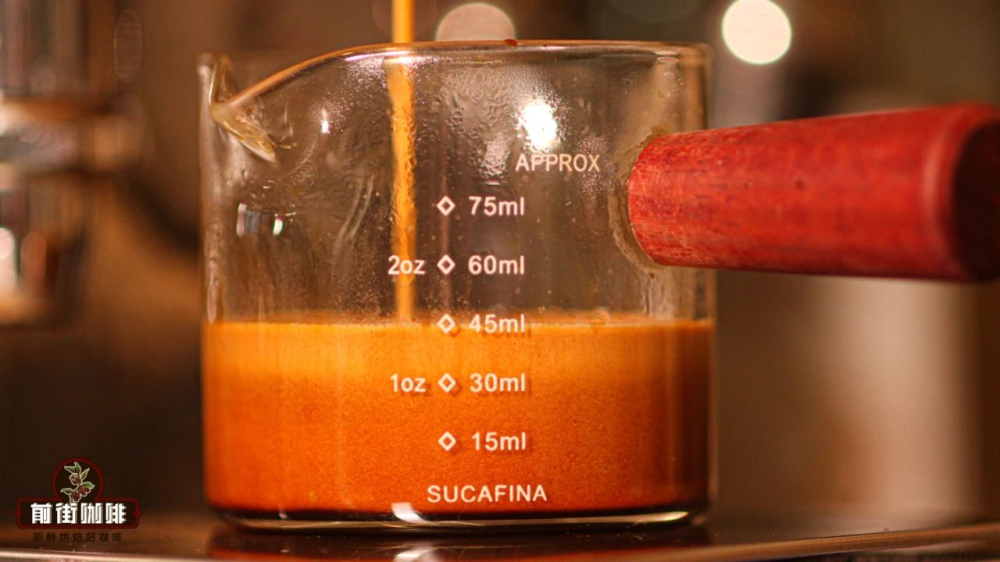
Flow rate is a crucial indicator of whether the overall extraction is balanced. Ideally, once you start the extraction, you should begin to see coffee dripping out around the 5-second mark, continuing steadily thereafter. Taking the example of extracting 35–40 milliliters of espresso with 18–20 grams of coffee, keeping the time between 27–30 seconds usually achieves better balance. If the extraction time is too short (e.g., less than 20 seconds), it indicates a fast flow rate, likely leading to a sour taste and under-extraction. In this case, consider slightly increasing the dose by 0.5–1 gram or grinding finer. If the time is too long (e.g., over 35 seconds) and the flavor is bitter, it could mean over-extraction — it’s advisable to reduce the dose or coarsen the grind.
In terms of pressure, most home and commercial espresso machines operate at around 9 bar during extraction — this is a proven ideal value for stable flavor extraction. **Pressure that’s too low may cause under-extraction, while pressure that’s too high can release undesirable compounds, making the coffee over-extracted and harsh in texture.** Therefore, when choosing an espresso machine, it's advisable to confirm its ability to deliver stable pressure output, rather than focusing solely on price.
Water temperature is another variable that can’t be overlooked. The ideal range is 90 to 94 degrees Celsius. Water that’s too hot tends to extract too many bitter substances from the coffee, resulting in overly sharp flavors. Water that’s too cold may lead to under-extraction, with a sour and thin-tasting profile lacking complexity. It’s recommended to use a home espresso machine with temperature control functionality or equipment with a heating block that stabilizes water temperature, ensuring consistency in each extraction.
If you find that the flow rate during extraction is either too fast or too slow, try checking the following items in order: First, inspect the condition of the coffee beans themselves, including roast level and freshness, as these are usually the most direct factors affecting flow rate. Next, confirm whether your dose, brew ratio, and tamp pressure are correct. It’s suggested to start by adjusting the brew ratio — tweaking the dose to change the flow rate is often a faster and more effective method. If the issue persists after these adjustments, then consider altering the grind size further.
How do you know if your espresso falls within the ideal Golden Cup extraction range? We can evaluate this using two metrics: concentration and extraction yield. Espresso concentration generally refers to the proportion of dissolved coffee solids in the total liquid, with an ideal range of 8% to 12%. Extraction yield is the percentage of soluble substances extracted from the coffee beans relative to the weight of the coffee used, ideally between 18% and 22%.
To measure concentration, you can use a professional concentration meter. First, calibrate the device with pure water, then stir the finished espresso, use a pipette to take a sample of the middle-stage espresso, and place it in the instrument for measurement. Take multiple readings until the values stabilize. The formula for calculating extraction yield is: Extraction Yield = (Concentration × Coffee Liquid Weight) ÷ Coffee Bean Weight. For example, using 19 grams of coffee to produce 40 milliliters of espresso, with a measured concentration of 8.97%, the calculated extraction yield is approximately 18.44%, which falls within the Golden Cup range — indicating relatively ideal extraction conditions for that session.
However, it’s important to note that coffee falling within the Golden Cup range doesn’t necessarily mean it’s the flavor profile you prefer. The Golden Cup standard is simply a scientific reference to help us systematically adjust extraction parameters. Coffee is inherently a highly subjective beverage. Through continuous experimentation and adjustment, finding the combination that best suits your personal taste is where the joy of espresso lies.
The above content is compiled by CoffeeHunters, a coffee news website.


