







Introduction:When many coffee enthusiasts hear the word "Geisha," their first thought is often Panama’s Hacienda Esmeralda. However, the Geisha variety actually originated in the village of Gesha in Ethiopia. This article provides an in-depth comparison between the Green Label Geisha from Gesha Village and that from Hacienda Esmeralda, analyzing everything from origin background, grading systems, processing methods to pour over and cupping performance. We break down the differences in aroma profiles, acidity and sweetness balance, and aftertaste characteristics, while also offering practical brewing parameters and flavor identification tips to help you choose the Geisha coffee that best suits your taste.
When talking about Geisha, many coffee lovers immediately think of the classic flavor profile of Panama’s Hacienda Esmeralda—delicate floral notes paired with a tea-like mouthfeel. However, the origin of the Geisha variety can actually be traced back to Gesha Village in Ethiopia. To better understand the differences between the two, we cupped both the Natural Green Label from Hacienda Esmeralda and the Green Label Geisha from Gesha Village, and through cupping and pour over sessions, analyzed their varietal heritage, grading, processing methods, and final flavor expressions from multiple dimensions.
Gesha Village is located in the Bench Maji region of Ethiopia. It was co-founded by Adam Overton and Rachel Samuel, who, with the assistance of coffee expert Willem Boot, discovered wild Geisha plants in the Gori Gesha forest. They carefully selected these precious seeds and transplanted them to Gesha Village for cultivation, thus opening a new chapter in the modern history of Ethiopian Geisha.
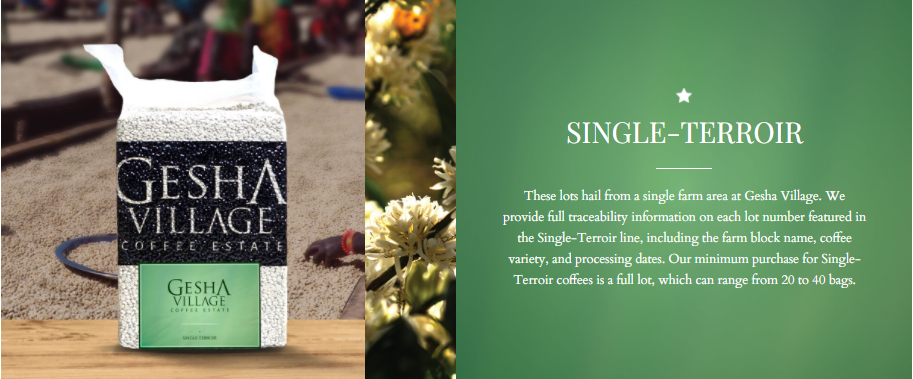
Similar to other renowned producing regions, both Gesha and Esmeralda’s Geisha coffees have rigorous grading systems to ensure quality and consistency. Panama’s Hacienda Esmeralda classifies its Geisha into Red Label, Green Label, and Blue Label, with the Green Label being a more affordable and accessible grade. In contrast, Gesha Village employs a more detailed and strict grading system, typically divided into Auction Lots, Gold Label RARITIES, Red Label GROWERS RESERVE, Green Label SINGLE-TERROIR, and Chaka lots. Each tier represents distinct terroir characteristics and varying degrees of processing refinement.
In this tasting, we evaluated the Green Label SINGLE-TERROIR from Gesha Village and the Natural Green Label from Hacienda Esmeralda. Many consumers often wonder, “Which one tastes better?” To answer this, we conducted detailed flavor comparisons of the two Green Label coffees using both cupping and pour over methods, evaluating their unique profiles across dry fragrance, wet aroma, acidity, sweetness, body, and aftertaste.

We began our cupping session with the Green Label Geisha from Gesha Village’s Banko Gotiti plot, made from the Gori Gesha variety and processed using the natural method.For cupping, it is recommended to use approximately 11.3 grams of coffee grounds, with water temperature controlled around 94°C.Even after grinding, you can already detect pronounced berry-like dry fragrance. Once hot water is poured, the wet aroma reveals sweet, ripe fruit notes. During cupping, we followed the standard procedure: after pouring water, timing started for four minutes; at the crack, we stirred the crust three times in one direction with a cupping spoon, gently breaking it and pushing aside floating grounds, which helped concentrate and layer the aromas. Finally, the grounds were skimmed off to proceed with the slurp evaluation.
Although Gesha Village’s Green Label does not have as strict a cupping score threshold as the Red or Gold Labels, this single-plot, single-variety Green Label still offers complete traceability information—including farm name, plot, variety, and processing date—ensuring high quality consistency. Its flavor performance will be directly compared later with that of Hacienda Esmeralda’s Green Label.
Next, we cupped the Natural Green Label from Hacienda Esmeralda. This coffee also displayed intense floral characteristics at both the dry and wet aroma stages, with the wet stage particularly showcasing bold floral notes. We also noted that the roasting and brewing strategies for the two Green Labels differed.
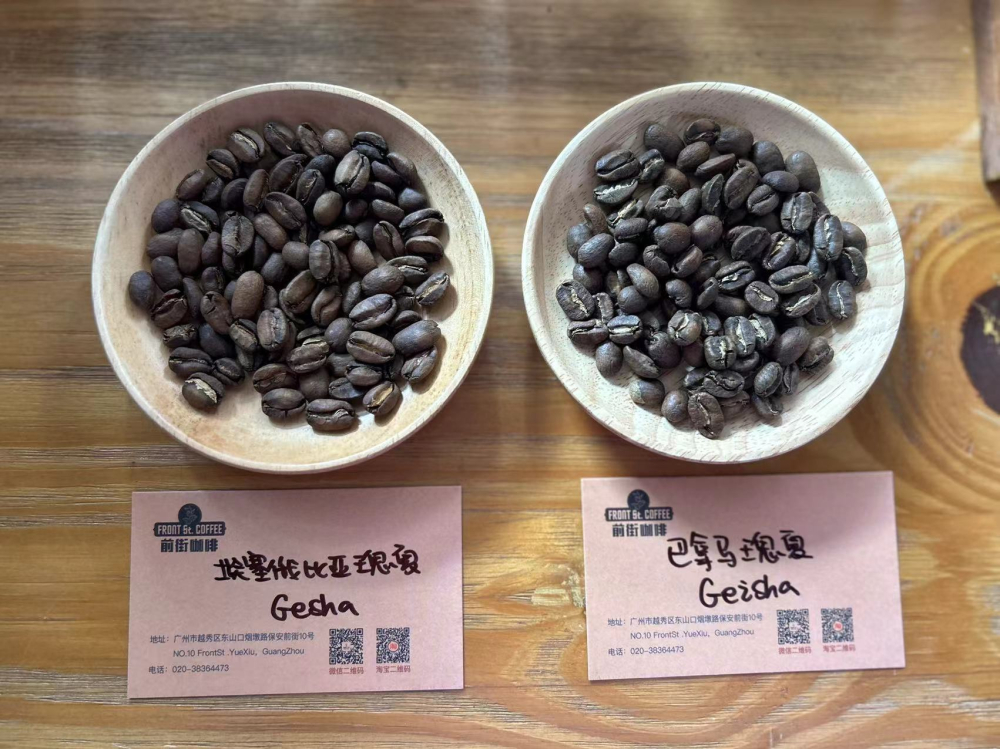
The Natural Green Label from Gesha Village uses African raised beds for thin-layer sun drying. The process involves covering the beans with plastic sheeting and regularly turning and sorting them to remove insect-damaged or underripe beans, with an overall drying period of about 18 to 30 days. This method imparts rich sweetness and soft acidity, along with complex fruity aromas. Therefore, we roasted it to a medium-light level to fully highlight the floral and fruity sweetness brought by the sun drying.
As for the Natural Green Label from Hacienda Esmeralda, we opted for a light roast to emphasize its refined floral and tea-like characteristics. For brewing parameters, it is recommended to use a water temperature of 90°C, about 15 grams of coffee, and a 1:15 coffee-to-water ratio. In practice, a three-stage or multi-pour method is advised: start with a 30-gram bloom, then pour in small circles up to 125 grams for the first pour; once the water level drops, continue pouring up to 225 grams, then stop and remove the filter for extraction.
In terms of taste, Hacienda Esmeralda’s Green Label exhibits exceptional clarity and smooth mouthfeel, with a well-balanced aftertaste. Its natural processing gives off intense jasmine florals, and as it cools, it even takes on a honey-like creamy texture. In contrast, Gesha Village’s Green Label carries a slightly more pronounced acidity, reminiscent of the berry-like tang commonly found in Kenyan beans, resulting in a fuller and richer body. Its aftertaste not only includes honey sweetness but also hints of subtle fermented wine-like notes, creating a more layered flavor profile.
Overall, the Green Label from Panama’s Hacienda Esmeralda aligns more closely with the classic impression many have of Geisha—centered around floral, tea-like, and delicate tonalities. Meanwhile, the Green Label from Gesha Village showcases a bolder stone fruit character and higher sweetness. Coupled with Ethiopia’s high-altitude growing environment, which aids in the accumulation and transformation of coffee flavor compounds, its flavor presentation is wilder and more multidimensional.
Whether you prefer refined, delicate floral notes or bold, rich fruitiness and sweetness, the Green Label Geishas from both Gesha Village and Hacienda Esmeralda offer distinctly different taste experiences. Understanding their origin backgrounds, processing methods, and roasting strategies will help you make more personalized choices when selecting and brewing Geisha coffee.
The above content is compiled by CoffeeHunters, a coffee news website.


