







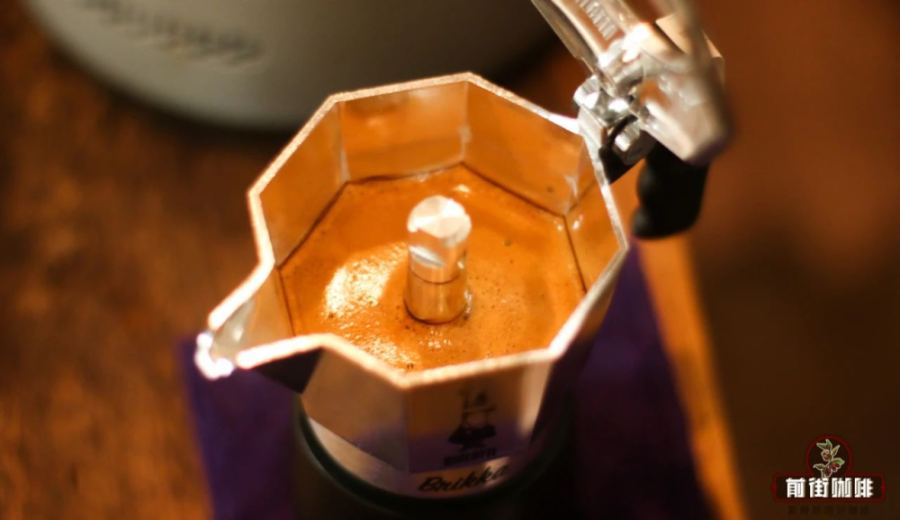
Introduction:Want to brew balanced, smooth coffee with a moka pot, but often end up with overly bitter, strong, or thin-tasting results? This article breaks down the key details affecting moka pot coffee extraction—from bean selection and grinding to filling, heating, and flavor adjustment—step by step. It provides practical operation tips, directions for tuning, and recommends suitable medium-to-dark roast beans to help you systematically improve your moka pot brewing quality.
Although the moka pot isn’t hard to use, many people often encounter issues such as overly bitter or strong coffee, or even a lack of flavor complexity in practice. In fact, mastering just a few key steps can significantly improve extraction performance. Below, we explain in detail the considerations and adjustment techniques for each stage—from bean selection, handling the coffee chamber, grind setting, filter application, heat control, to final concentration adjustment—to help you brew satisfying coffee with your moka pot.
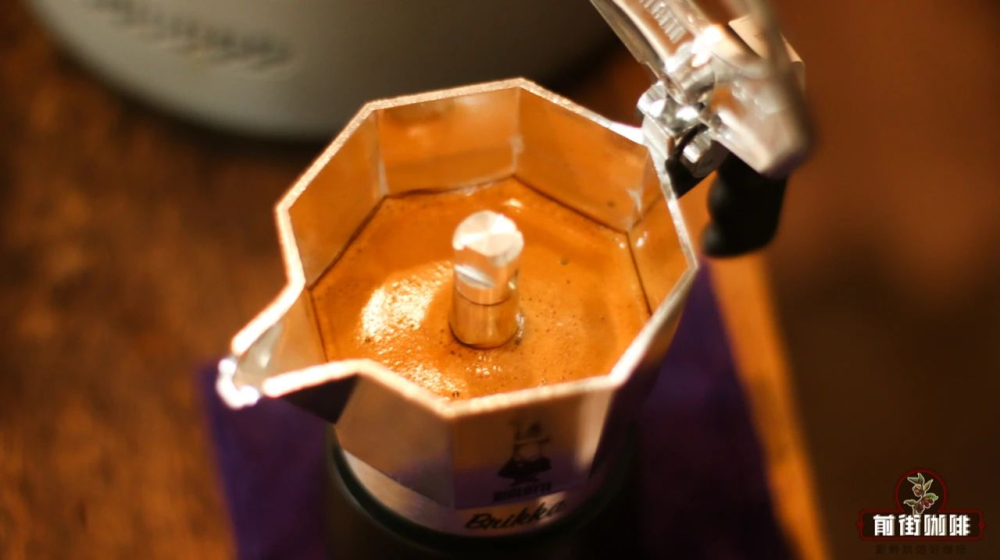
Many assume that using a moka pot is simple, but brewing a great cup still involves quite a few nuances. Next, we’ll take you through the full process from bean selection to drinking, and fully analyze how to enhance the overall performance of moka pot coffee.
1. Choose a medium-to-dark roast—bringing out rich and full-bodied flavors
Because the moka pot extracts coffee at relatively high temperatures and with some pressure, using light roast beans not only results in weaker aroma, less body, but also easily leads to sharp acidity and astringency in the brewed coffee, making the overall flavor feel thin. Therefore, it’s recommended to prioritize medium-to-dark roast beans, such as those with herbal and spicy notes, options with roasted nut and creamy chocolate profiles, or beans with dark chocolate and cocoa flavors. These types of beans can showcase rich caramel aromas and noticeable body under the moka pot’s high temperature and pressure, making them suitable for drinking straight, diluted with water, or with milk.

2. Fill the coffee chamber completely—reducing the risk of off-flavors and uneven extraction
Many people scoop coffee powder into the chamber with a spoon, which often leaves quite a few gaps. The recommended method is to first fill the empty coffee chamber with whole beans, then grind them, and afterward fill the chamber as fully as possible with the ground coffee. You can place a clean cloth on a table, gently tap the moka pot base vertically a few times to let the upper layer of coffee powder naturally settle, freeing up more space to add the remaining coffee. The fuller the chamber, the more consistent the internal density, which helps avoid over-extraction in some areas and under-extraction in others, reducing flavor imbalance and bitterness, resulting in more stable overall extraction.
3. Adjust grind size—using the bitterness threshold as a benchmark
A common question about grind size is how fine is appropriate? Since each grinder's design and settings vary—even models of the same type may produce different grind sizes—it’s difficult to give a one-size-fits-all standard number. It’s suggested to try multiple grind levels first, find the threshold where bitterness begins to appear, then gradually adjust to a suitable range. Generally speaking, if the result is too strong or bitter, slightly coarsen the grind; if it’s too sour or weak, make it finer. It’s important to note that the moka pot’s structure tends to produce richer flavors, which might feel strong to those used to pour over strength—but it’s advised to first adjust by adding water or milk, rather than hastily making the grind coarser, which could sacrifice flavor complexity.
4. Use filter paper—for a cleaner and crisper taste
Coffee brewed with a moka pot often contains some fine coffee particles, and you might notice a slight graininess at the bottom of the cup. If you don’t like this texture, consider using filter paper. Commercially available round or cone-shaped filter papers, or even hand-cut pour over filter papers, can be used. Place the filter paper on top of the coffee grounds or adhere it to the bottom of the upper chamber, which effectively filters out fine particles, making the coffee smoother. Additionally, if you want to further adjust the fruit acidity, using two layers of filter paper can slightly reduce acidity and create a thicker mouthfeel, and the process is quite simple.
5. Control the heat—avoiding over-extraction and bitterness
Once the coffee is filled and the upper chamber is securely locked, you can start heating. Whether using hot or cold water, the moka pot brews quite quickly, so it’s advised to stay nearby and control the flame throughout. When the moka pot starts making a distinct hissing sound, it means the temperature is nearing the ideal extraction point—this is when you should switch to low heat to avoid rapid temperature rise, which can lead to insufficient contact time between water and coffee grounds, affecting the completeness of flavor extraction. Also, when about half of the coffee has flowed out of the upper chamber, you can prepare to turn off the heat and let residual heat complete the rest of the extraction, avoiding over-extraction and bitterness due to excessive pressure.

6. Add water as needed—to adjust to your preferred strength
Lastly, it’s worth noting that coffee brewed with a moka pot is usually quite concentrated, and drinking it straight may be too intense for some. Taking a common coffee-to-water ratio as an example: with about 20 grams of coffee in the chamber and around 200 milliliters of water in the lower chamber, the actual yield is approximately 160 milliliters of coffee, translating to a ratio of about 1:8, which falls within the high concentration range. Most drinkers are accustomed to a ratio between 1:12 and 1:15, so it’s recommended to add water according to personal taste preference to adjust the concentration to a more comfortable level. Adding water won’t ruin the coffee’s flavor—in fact, it can make subtle aromas and layers more pronounced, allowing you to enjoy more of the fine details in your coffee.
The above content is compiled by CoffeeHunters, a coffee news website.


