







Introduction:Sidamo is a renowned specialty coffee region in Ethiopia, blessed with unique geographical conditions and diverse microclimates that produce beans with a wide range of flavors. This article delves into Sidamo’s regional environment, the impact of natural and washed processing methods on flavor, and uses two popular light-roast natural beans—Alsie and Huakui 5.0—as examples to analyze pour over parameters and flavor profiles, offering practical extraction settings and tasting suggestions.
When Ethiopian coffee is mentioned, many people immediately think of Yirgacheffe, but in fact, Sidamo is also an important representative of the country’s specialty coffee. Not only does Sidamo boast exceptional geographical and diverse microclimatic conditions, its coffee is also known for its intense fruity aromas and bright acidity, making it a must-try for pour over enthusiasts.
Sidamo and Yirgacheffe are geographically close but belong to different administrative regions. Sidamo is a provincial-level unit, while Yirgacheffe is a famous coffee town under its jurisdiction. Compared to Yirgacheffe, where altitudes often exceed 2600 meters, most of Sidamo sits at around 2100 meters. Though slightly lower, it still falls within the high-altitude growing range, fully capable of producing high-quality coffee.
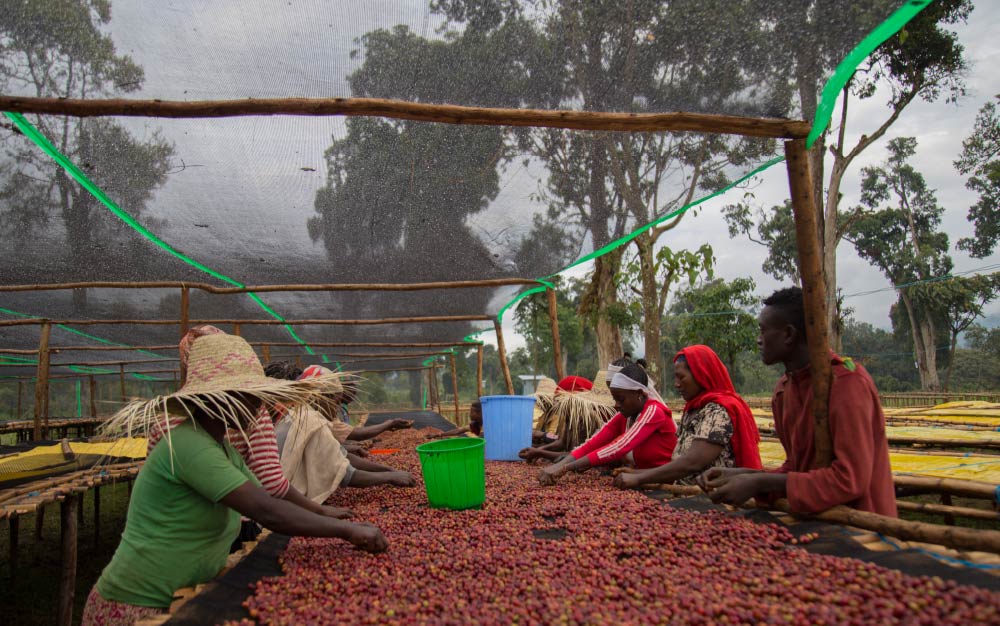
The region is located on the southern plateau of Ethiopia, bordering Kenya and situated directly south of the capital. The overall altitude ranges approximately between 1400 and 2000 meters. The soil is primarily nutrient-rich volcanic earth with excellent drainage, deep layers, and natural conditions highly conducive to coffee growth. Additionally, local farmers mostly adopt organic management practices, using fallen leaves and natural litter as natural fertilizers, allowing each village and each bean variety to potentially exhibit distinct personality traits.
Sidamo’s coffee flavors are diverse, often characterized by clear fruit acidity, soft body, and delicate floral and fruity notes. Naturally processed Sidamo often carries soft floral aromas and slight earthy undertones, while washed processing showcases layers of nuts, citrus, and mild cocoa, with bright acidity and a smooth, viscous mouthfeel—suitable for single-origin enjoyment, as well as for blending or as espresso bases.
Within Sidamo, there are also several sub-regions. For example, West Arsi, adjacent to Yirgacheffe, is not only home to the Oromo people, who are said to be among the earliest ethnic groups to consume coffee, but also has over 88% of its residents belonging to the Oromo ethnic group. Furthermore, the Guji region was once part of Sidamo but was independently designated after 2010 and is now also renowned for producing high-quality natural beans.
When brewing Sidamo using a pour over method, it is recommended to use a medium-fine grind, similar to about 78% extraction through a Chinese standard No. 20 sieve, paired with a conical filter like the V60, which can fully highlight its layers and aromas. Below are tested and effective parameter settings: use 15 grams of coffee grounds with a 1:15 coffee-to-water ratio, and control the water temperature at around 91°C. This combination balances acidity and sweetness, suitable for multiple Sidamo bean varieties.
The specific pour over steps are as follows: begin with a 30-second bloom using 30 grams of water to help the coffee grounds degas and initiate extraction; then pour approximately 95 grams of water, bringing the total to 125 grams. Once the water level drops to half the bed, pour the final ~100 grams, totaling 225 grams. Allow the filter to drain completely, with the entire process taking about 2 minutes to 2 minutes and 3 seconds. This technique helps stabilize extraction and avoid over-extraction or excessive acidity.

Taking two popular light-roast natural beans as examples—Sidamo Alsie and Huakui 5.0—both showcase the typical fruity profiles of Sidamo coffee, though their flavor directions differ slightly. Alsie comes from the Alsie area of Sidamo, with altitudes ranging between 1900 and 2200 meters, using heirloom varieties and natural processing. Its flavor profile is dominated by berries, honey, cranberry jam, nectarine, and mango, featuring intense fruitiness and noticeable sweetness.
Huakui 5.0 hails from the Guji region of Sidamo, at even higher altitudes between 2250 and 2350 meters, also using heirloom varieties and natural processing. Its flavor starts with citrus, strawberry, and passionfruit, with the mid-palate revealing fermenty notes of jackfruit and mango. It has a pronounced sweetness and a lingering aftertaste reminiscent of oolong tea, with rich layers, bright and lively acidity.
In actual pour over brewing, Alsie exhibits intense fruit jam and honey aromas when hot, with a strong juice-like mouthfeel and distinct nectarine and berry notes. When cooled, it resembles a blend of plum and nectarine juice, with sweetness and fruitiness running consistently throughout. Huakui 5.0 opens with bright citrus and berry acidity, followed by rich tropical fruit and fermenty notes in the mid-to-late stages, with layered sweetness and a subtle tea-like finish, offering a dynamic and enjoyable flavor transition.
Overall, if you prefer intense fruit sweetness and juice-like mouthfeel, Alsie is an excellent choice; if you enjoy a balance of sweet and sour with complex fermenty layers, Huakui 5.0 stands out more. Both beans are suitable for the aforementioned pour over parameters, and you can also fine-tune water temperature or grind size according to personal taste to explore your optimal extraction flavor.
The above content is compiled by CoffeeHunters, a coffee news website.


