







Introduction:The Konga Cooperative in Yirgacheffe is renowned for its high-altitude red soil and meticulous natural processing methods, yielding top-tier coffee beans rich in citrus and jasmine flavors. This article delves into its geographical advantages, native varietal characteristics, and provides practical pour-over parameters and resting recommendations to help you fully experience the layered charm of this African specialty bean.
Among Ethiopia’s many coffee-growing regions, Yirgacheffe has always been a golden landmark for specialty coffee enthusiasts. However, many remain unfamiliar with local cooperative names such as Konga and Gedeb. This article focuses on the Konga Cooperative, located south of Yirgacheffe town, offering a comprehensive understanding of this distinctive coffee bean—from its unique geography and native varietals to the key techniques of its natural processing method—along with expert pour-over recommendations.
Yirgacheffe’s coffee culture originates from the region’s unique highland terrain. Early residents chose to settle above swampy areas, hence the term “Yirgacheffe” itself means “settling on high ground.” This area is located in the southern Gedeo Zone, with an average altitude between 1,700 and 2,100 meters, making it one of the highest coffee-growing belts in the world. Though once part of the Sidamo region, its highly distinctive flavor profile eventually led to its recognition as a standalone, renowned producing area. Surrounding small regions like Wenago, Kochere, and Gelena Abaya, which share similar flavor profiles, have also been classified under Yirgacheffe. The region comprises 28 small-scale cooperatives, mostly practicing backyard farming or intercropping with other crops, exemplifying typical smallholder operations.
The Konga Cooperative (Konga Cooperative) is part of the Yirgacheffe Coffee Farmers Cooperative Union (YCFCU), one of its 26 members, located just 5 kilometers from Yirgacheffe town. Established in 1994, it officially joined the union in 2002. Its name derives from the nearby Konga River basin and Konga village. The cooperative consists of over 1,500 smallholder farming families, with an average cultivation area of less than 1.25 hectares. The beans are grown at altitudes of approximately 1,800 to 2,250 meters, with the main variety being local native heirloom types. The region’s unique red soil, which reaches a depth of 1.5 meters and is rich in iron, promotes chlorophyll synthesis, enhances photosynthetic efficiency in the plants, and thereby improves fruit quality—this is the hidden foundation behind the exceptional flavor of Konga coffee.
When it comes to Ethiopian coffee varieties, many consumers often see the label “native variety” without understanding its meaning. In fact, as the birthplace of coffee, Ethiopia boasts the world’s richest coffee gene pool, with a diverse array of varieties that have yet to be fully identified and classified. Due to conservation considerations, the local government does not publicly release all information, and these varieties, having long adapted to the local environment, develop unique flavor profiles, hence they are collectively referred to as native varieties. The beans used by the Konga Cooperative belong precisely to these regionally distinctive native varieties.
Additionally, the export grading of Ethiopian coffee beans is not based on bean size but rather on the ratio of defective beans and cupping flavor. If there are fewer than 3 defective beans per 300 grams of green beans, it qualifies for the highest G1 grade—this explains why Ethiopian beans often vary noticeably in size.
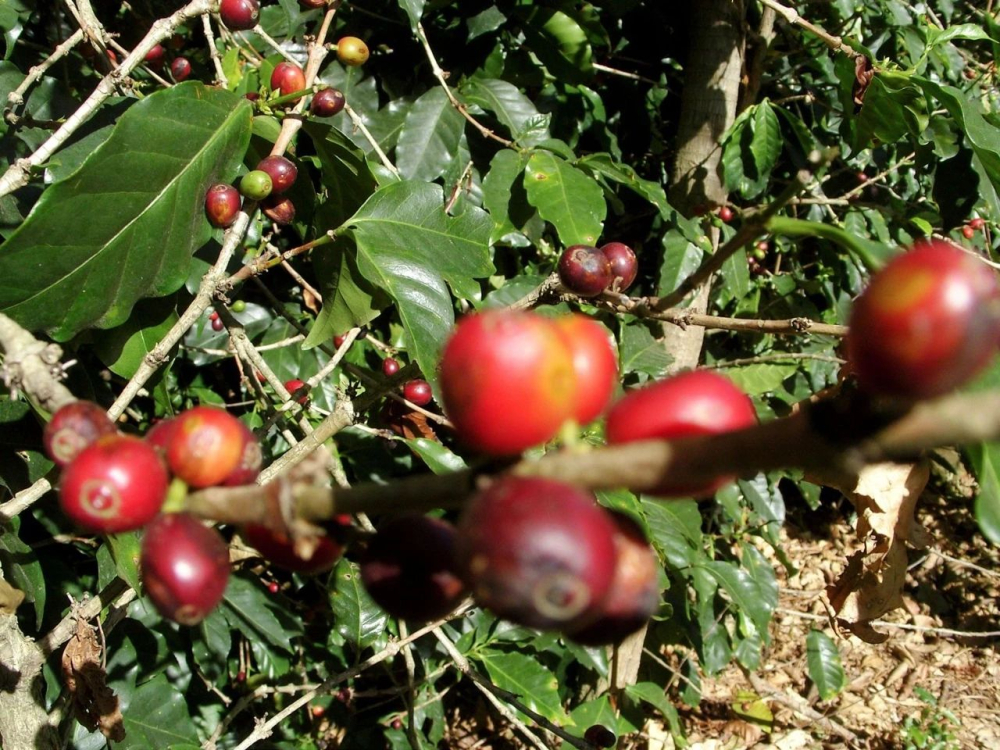
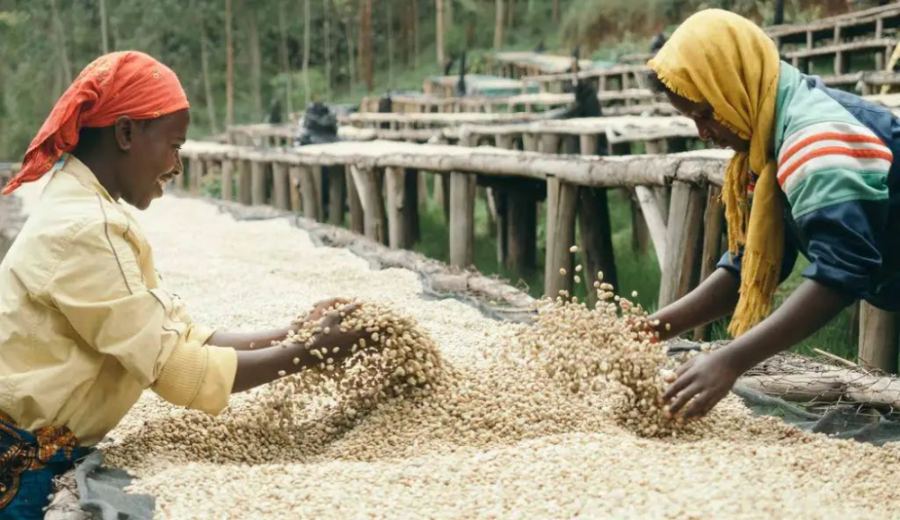
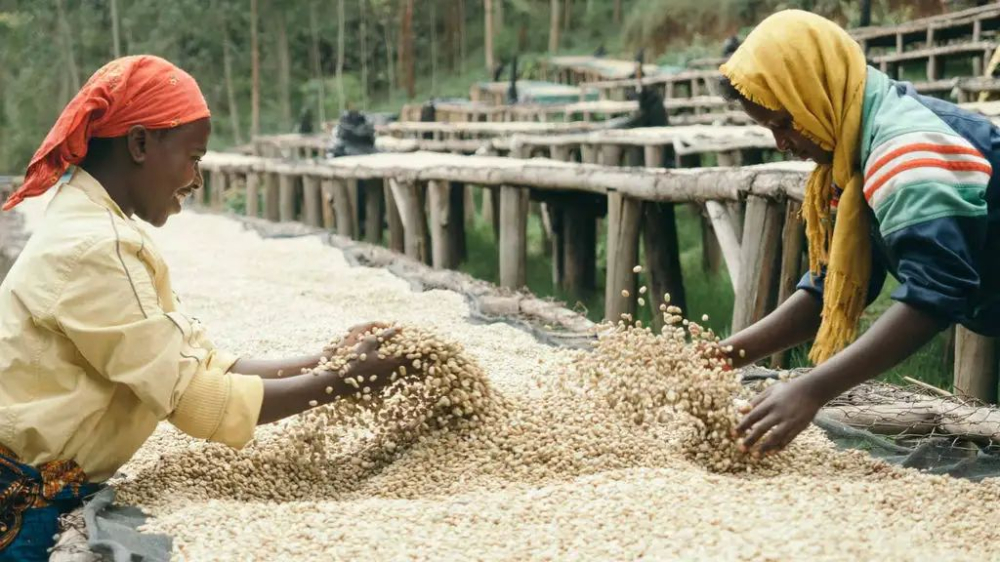
When Yirgacheffe is mentioned, many people first think of the washed processing method. However, the Konga Cooperative insists on using traditional natural processing. In the early 1970s, Ethiopia introduced washed processing techniques from Central and South America, significantly enhancing the clarity and aroma of the coffee, making the jasmine and citrus notes more refined and earning the region a reputation for washed beans. But Konga chooses to uphold the ancient natural tradition: carefully selecting only ripe red cherries, discarding unripe, damaged, or overripe fruits, and keeping only the highest-quality coffee cherries. The parchment-covered beans are then placed on shaded raised beds and dried in the sun for two weeks until the moisture content stabilizes at 12%, after which they are graded and packaged. This process gives Konga coffee a richer fermented fruity aroma compared to washed coffee, with a juicier mouthfeel and slightly softer brightness, showcasing a distinctly different flavor profile.
For coffee enthusiasts, the freshness of the beans is a key factor influencing flavor expression. It is recommended to choose coffee beans roasted within 5 days prior to shipment, as their flavors are at their most vibrant at this stage. Generally, coffee beans require a resting period of 4 to 7 days to allow internal gases to gradually dissipate and achieve flavor balance. If purchasing coffee powder, resting is unnecessary, as the carbon dioxide within the packaging during transport helps maintain flavor roundness. However, note that coffee powder oxidizes faster upon exposure to air, so it is advisable to use it promptly to fully appreciate its complete flavor spectrum.
For brewing Konga natural coffee, it is recommended to use a medium-light roast to highlight its citrus notes and jasmine floral aromas. A V60 dripper is recommended, as its stable flow rate can clearly showcase the acidity and sweetness layers. Specific parameters are as follows: set the water temperature to 90°C to fully extract aromatic compounds; the water-to-coffee ratio is suggested at 1:15, with 15 grams of coffee and a grind size passing 80% through a Chinese No. 20 standard sieve (equivalent to medium-fine grind).
The recommended brewing steps are as follows: first, perform a 30-second bloom with twice the amount of water (about 30 grams) to help the coffee grounds release carbon dioxide and ensure stable extraction thereafter; then pour water in small circular motions until reaching 125 grams for the first pour, followed by continuing to pour until the total water volume reaches 225 grams before stopping. Once dripping from the dripper is complete, remove the dripper, with the total extraction time controlled to around 2 minutes. Finally, gently swirl the coffee liquid before pouring it into the cup to better evenly experience its flavor layers.
The flavor profile of Konga coffee is distinct: when grinding the beans, a subtle jasmine floral aroma can be detected, and after brewing, it reveals lively berry and citrus acidity, with a creamy and honeyed sweetness in the aftertaste. The overall mouthfeel is like sipping a rich mixed fruit juice, leaving a memorable impression. This natural specialty coffee from Ethiopia’s highlands is undoubtedly an excellent starting point for exploring the charm of African coffee.
The above content is compiled by CoffeeHunters, a coffee news website.


