







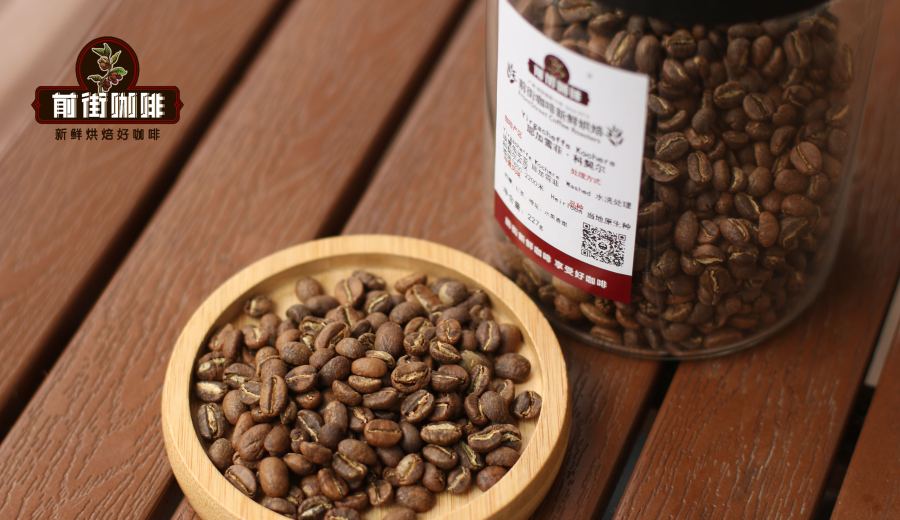
Introduction:Delve into the geographical advantages, native variety characteristics, and washed processing methods of Ethiopia's Yirgacheffe Kochere micro-region, analyzing its unique flavor profile of citrus, floral notes, and honey-like aftertaste, while providing expert pour over recommendations to help you precisely master the brewing essentials of this specialty coffee.
Yirgacheffe, as Ethiopia’s most representative specialty coffee region, is globally acclaimed for its bright citrus and delicate floral notes. Located southeast of this region, Kochere stands out with its consistently high-quality washed processing and clear fruity-floral profile, making it an unmissable choice for coffee enthusiasts seeking vibrant flavors and refined layers. This article begins with the background of the Kochere region, detailing its geography, coffee varieties, washed processing techniques, and sharing professional brewing parameters and flavor characteristics of washed Kochere beans, taking you from origin to cup for a comprehensive understanding of this remarkable green coffee.
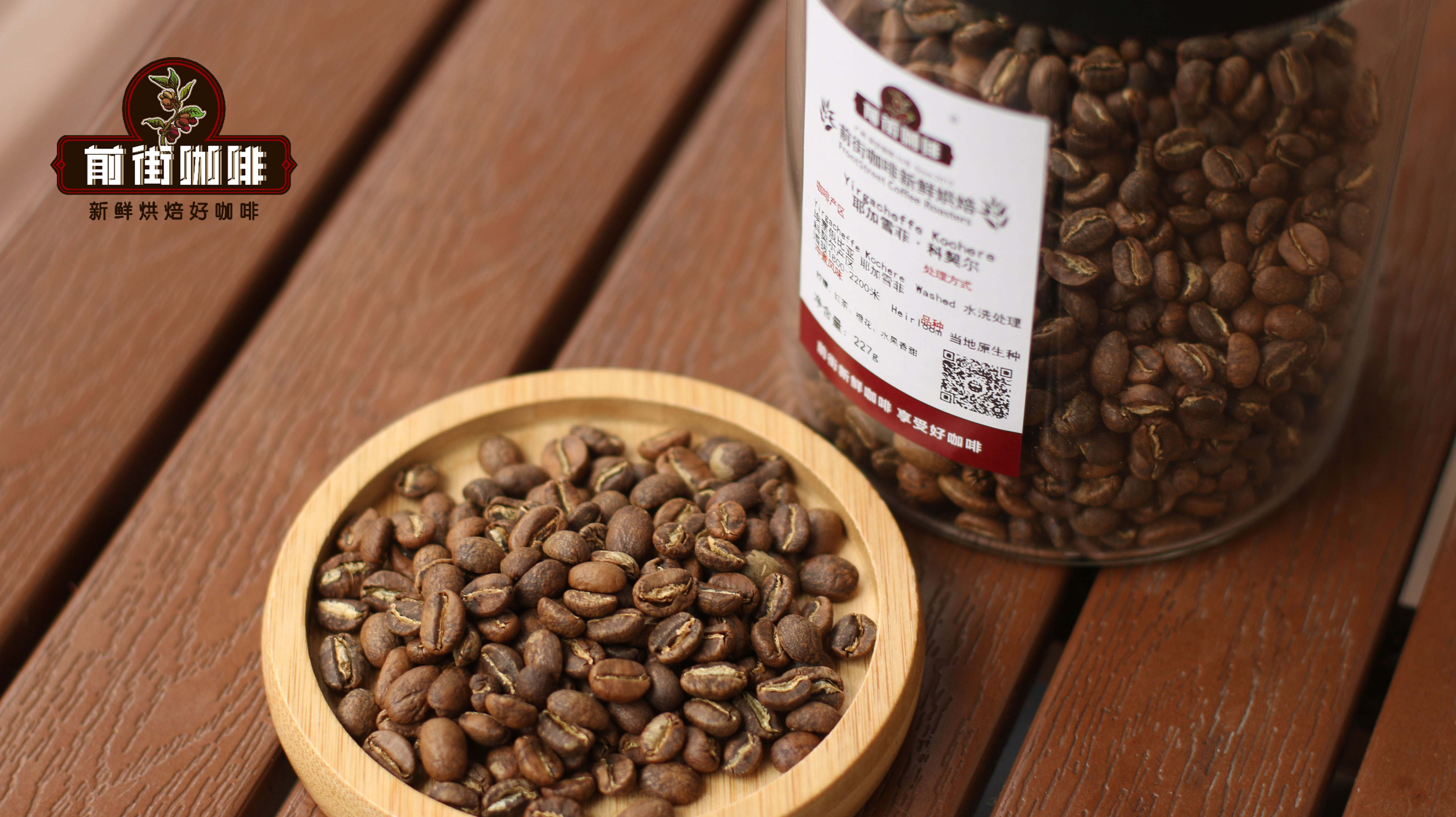
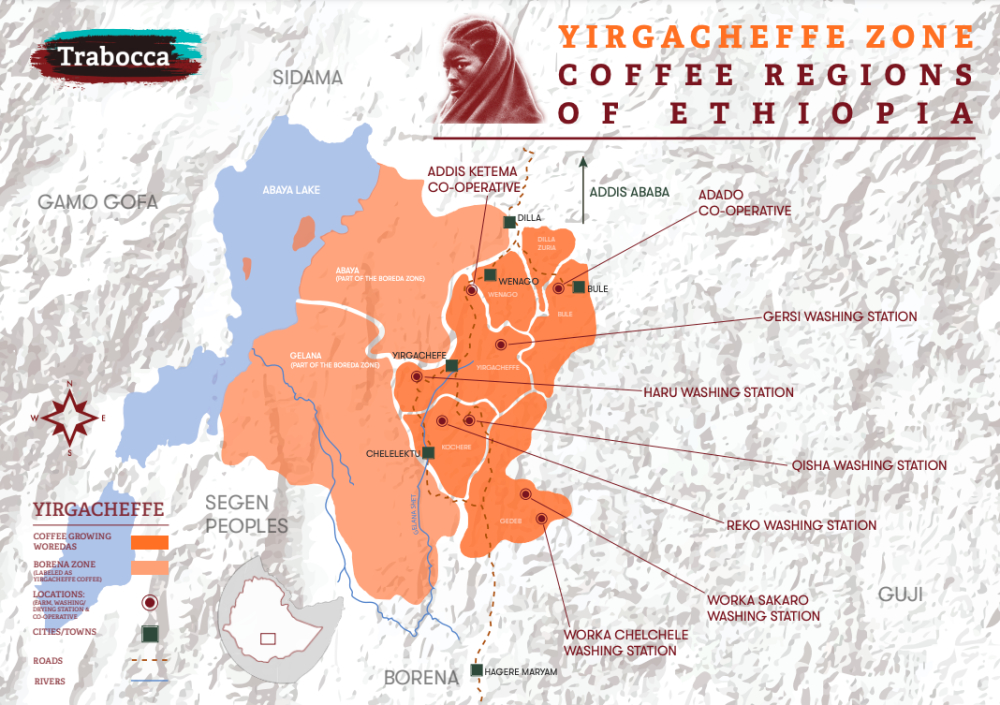
Kochere belongs to the Gedeo Zone in southern Ethiopia and is one of the important micro-regions under the larger Yirgacheffe area, located approximately 25 kilometers from the town of Yirgacheffe. The region not only boasts ideal coffee-growing altitudes, typically ranging between 1800 and 2100 meters, but also benefits from well-established processing facilities and rigorous quality control processes, resulting in highly consistent and outstanding flavor profiles. Most of the coffee here is cultivated by smallholder farmers using traditional methods without chemical inputs, and can be considered naturally organic. Paired with advanced washed processing equipment, Kochere’s washed beans have repeatedly received international acclaim, such as a high score of 94 from Coffee Review.
When it comes to the flavors of Yirgacheffe, the most memorable are its refreshing qualities interwoven with citrus, lemon, and jasmine. These flavor traits gradually became established in the 1970s, following the establishment of the first washed processing station in Yirgacheffe town and the introduction of South American washed processing techniques. This innovation resulted in brighter fruit acidity and cleaner cup profiles, distinguishing Yirgacheffe coffees from the traditionally heavy and syrupy profiles of sun-dried processing, and cementing Yirgacheffe’s unique position in the global specialty market. Later, in 2004, the Ethiopian government registered several regions including Yirgacheffe as trademarks, and in 2008 established the ECX (Ethiopia Commodity Exchange) to ensure export quality and flavor grading, further solidifying its international reputation.
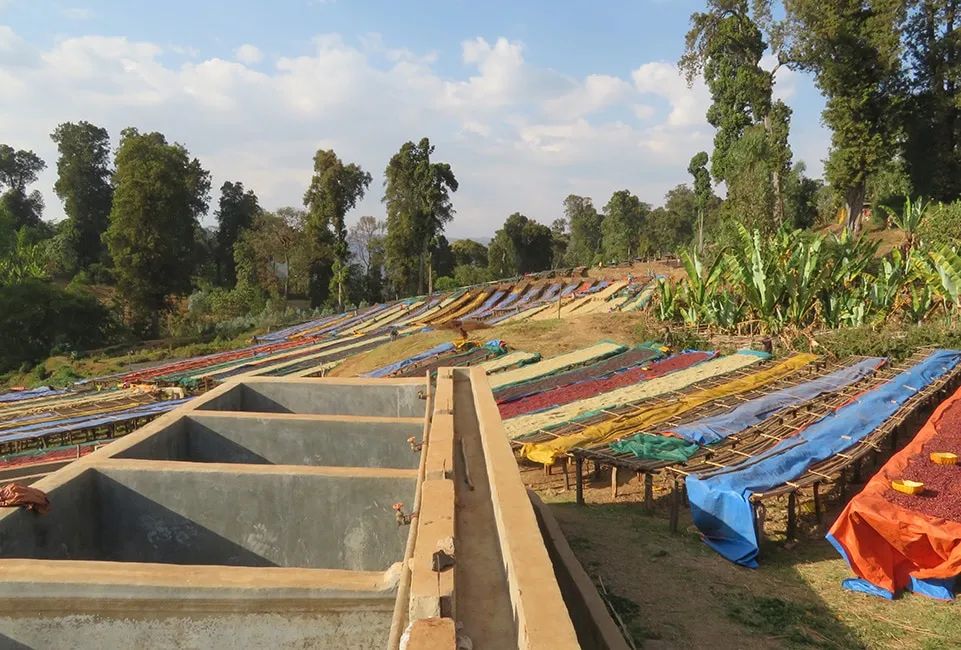
According to ECX classifications, in addition to Yirgacheffe town itself, surrounding areas such as Wenago, Gelena Abaya, and Kochere can also be categorized under the Yirgacheffe flavor profile if they exhibit similar flavor characteristics. Among them, Kochere stands out as a top performer within this classification, thanks to its consistently floral-fruity output and refined processing standards. In fact, Kochere not only has an overall regional name, but can also be further subdivided by village, processing facility, or micro-terrain — for example, Chelelektu, Teklu Dembel, or Banko Gutiti. This detailed traceability approach helps improve annual flavor consistency and market value.
In terms of varieties, Ethiopia, as the birthplace of coffee, possesses an extraordinarily rich genetic pool. Since local coffee trees are often intercropped with other crops and farmers typically do not specifically distinguish between varieties, the majority of exported green beans are sold under the Heirloom (native variety) designation. Heirloom is not a single variety but rather a collective term encompassing hundreds of locally distinct, uncategorized cultivars. These varieties are mixed during harvest and processing by smallholders, leading to potential variations in bean size, shape, and even flavor nuances between batches. However, this also gives rise to an irreplaceable sense of uniqueness.
The washed processing procedure in Kochere is quite meticulous, with harvesting generally taking place from November to December. Local farmers handpick ripe red cherries and deliver them to nearby cooperative washing stations for unified processing. The standard washed steps include: first removing the skin and some pulp, then soaking the mucilage-covered beans to ferment, with fermentation times ranging from approximately 18 to 36 hours depending on climatic conditions. After fermentation, the beans are thoroughly rinsed with clean water to remove residual mucilage, then spread out evenly with their parchment layer intact for either sun drying or mechanical drying until the moisture content drops to around 12%. Finally, the parchment is removed, completing the washed process. This technique effectively highlights the coffee’s citrus, floral, and sweet characteristics, resulting in the clean and layered profile of Kochere washed beans.
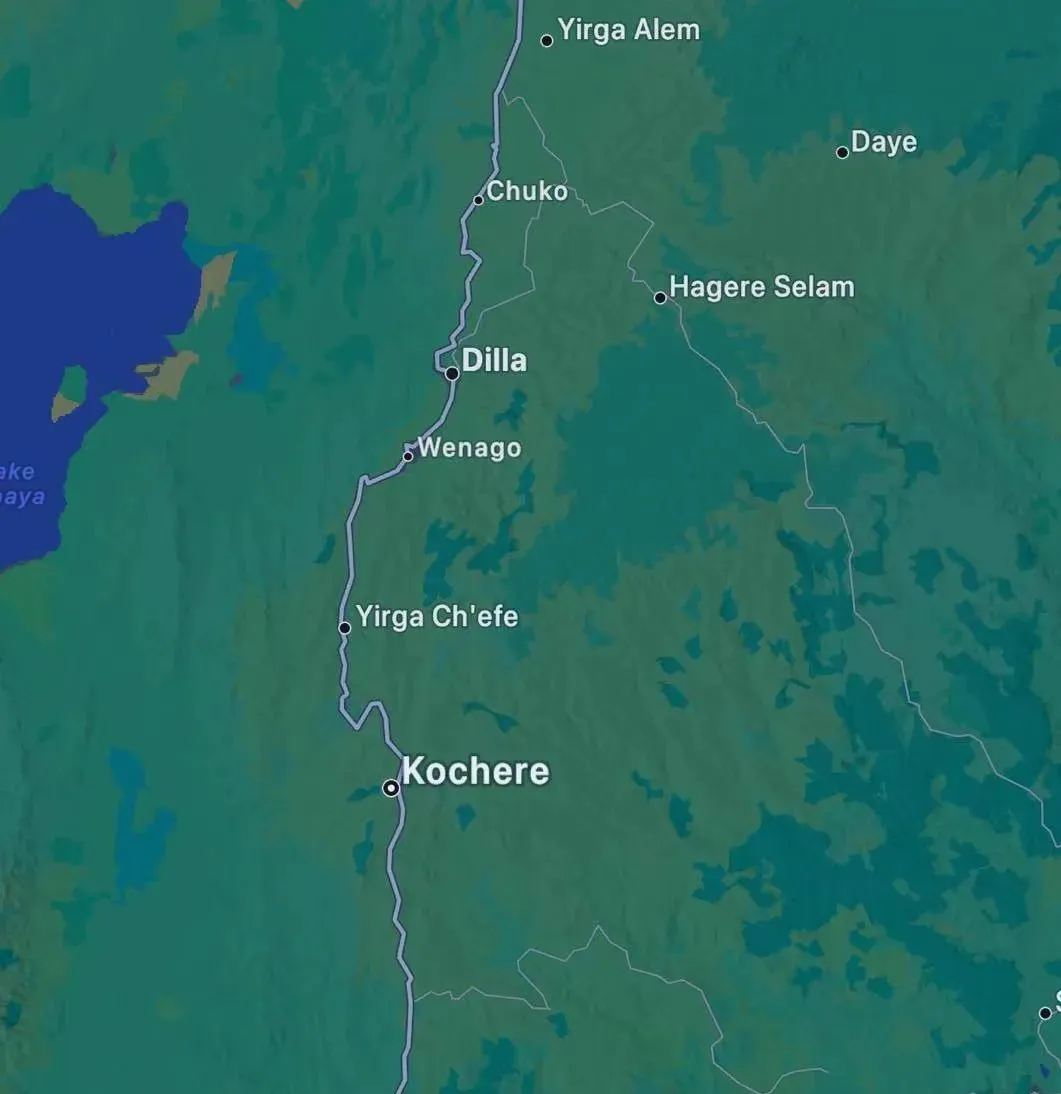
For this washed Kochere coffee bean, it is recommended to use a medium-light roast to preserve its bright acidity and delicate floral-fruity aromas. During actual pour over brewing, it is advised to use a V60 filter cone, with water temperature controlled at 91°C,and a coffee-to-water ratio set at 1:15, that is 15 grams of coffee grounds to 225 milliliters of water, with a grind size recommended as medium-fine (approximately 80% passing through a #20 Chinese sieve). A grind that is too coarse may lead to under-extraction and flat flavors, while one that is too fine might over-extract under high temperatures, resulting in bitterness.
The recommended step-by-step extraction method is as follows: the first pour injects 30 grams of waterfor the bloom phase, lasting about 30 secondsto allow the coffee grounds to fully degas; the second pour reaches 125 gramsat around 1 minute, then pause pouring and wait for the water level to drop to two-thirds of the coffee bed; the third pour goes up to 225 gramsat
1 minute and 40 seconds, with the total extraction time controlled at approximately2 minutes. After completion, let the coffee rest briefly to allow the liquid to equalize before enjoying.The final flavor profile presentslemon, citrus, and white floral notesas the top notes, followed by a gentle
The above content is compiled by CoffeeHunters, a coffee news website.


