







Introduction:Brazil is the world’s largest coffee producer, renowned for its beans that feature low acidity and rich notes of nuts and chocolate. This article delves into the evolution of Brazilian coffee varieties since their introduction in the 18th century, explores the terroir characteristics of major producing regions such as Cerrado, and explains how natural and honey processing methods shape unique flavor profiles. Whether you’re a beginner or a coffee enthusiast seeking everyday beans, you’ll gain essential insights into selecting and appreciating Brazilian coffee.
As the world’s top coffee-producing country, Brazil’s coffee industry is not only vast in scale but also historically significant. As early as 1720, Brazil imported its first batch of coffee seeds from French Guiana, a historical event closely tied to the political context of the time—Brazil was a Portuguese colony, while most of South America was under Spanish rule. Language barriers and trade restrictions made Brazil one of the few coffee-growing regions where Portuguese was predominantly spoken. Legend has it that a Portuguese military officer stationed in Brazil befriended the wife of the Governor of Guyana and successfully brought coffee seeds into Brazil, thereby facilitating the expansion of coffee cultivation from the northern regions all the way to São Paulo in the southeast.
By 1845, Brazil’s coffee production accounted for 45% of the global total, and it remains the world’s largest coffee exporter to this day. The earliest introduced variety was Typica, but due to limited yield, farmers’ profits were modest. In the 1860s, Brazil introduced the Bourbon variety from Réunion Island. With higher yields and strong adaptability, it gradually became the dominant variety. Currently, the main varieties grown in Brazil include Red Bourbon, Yellow Bourbon, Mundo Novo, and Catuaí. Among them, Red Bourbon, with its compact tree structure suitable for dense planting, offers about 30% higher yield per unit compared to Typica. Its beans are relatively round and short, often exhibiting fruity acidity, creamy texture, and pronounced aroma. The acidity is clean, and the mouthfeel is full-bodied.
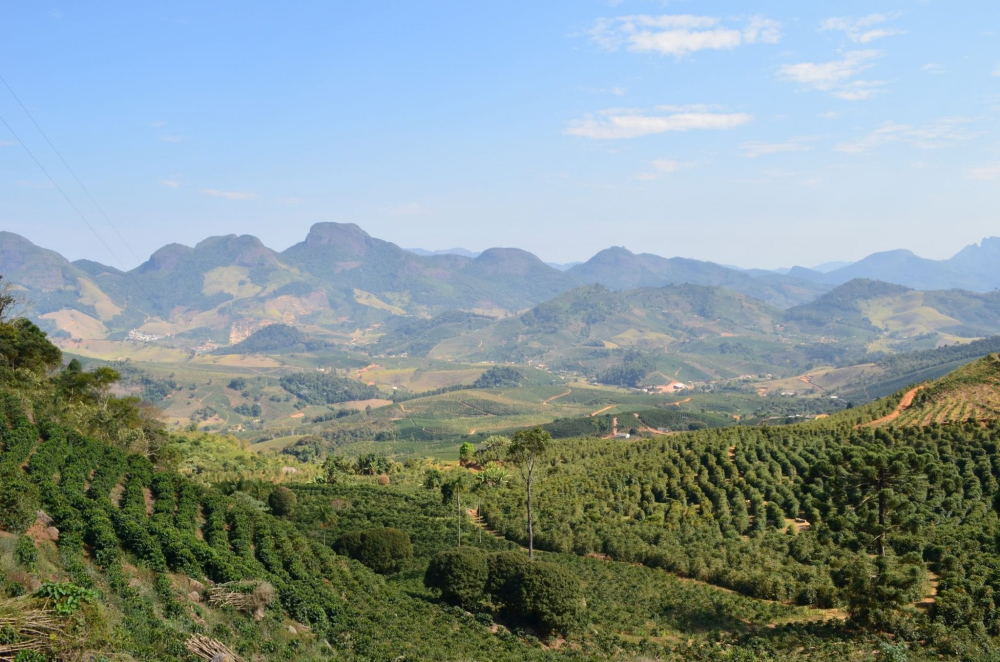
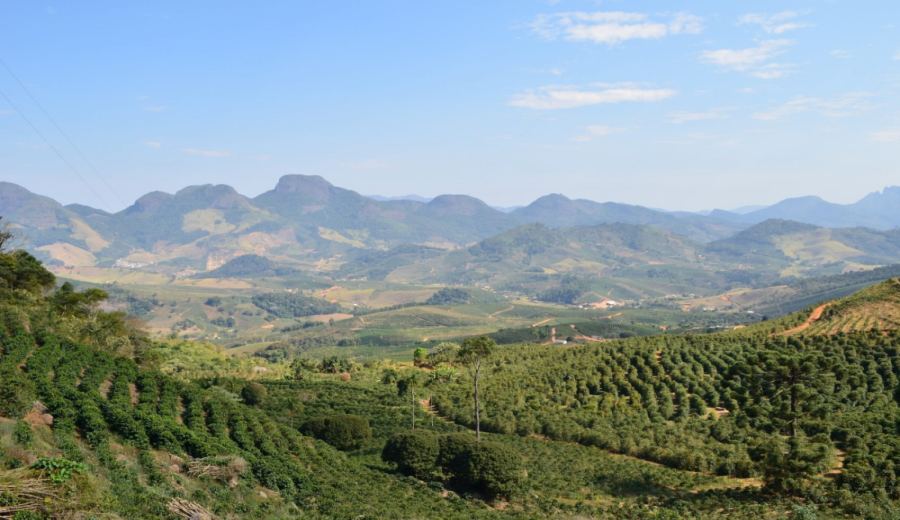
Unlike other Central and South American coffee-producing countries, Brazil’s coffee cultivation is production-oriented, mostly concentrated in flat areas below 1,000 meters in altitude. This geographical characteristic allows for mechanized harvesting, significantly improving efficiency. Once the fruits ripen, workers typically use machinery to harvest them in bulk, which are then sent to large processing facilities for standardized procedures. Additionally, Brazilian farmers developed varieties early on that could grow directly under sunlight, reducing reliance on shade. Coupled with the low-altitude environment, this results in coffee trees that grow quickly but struggle to accumulate complex aromatic compounds, giving Brazilian coffee its generally balanced, low-acid, and soft-mouthfeel profile—making it easily approachable even for those new to coffee.
Coffee is cultivated in 17 states across Brazil, with the southeastern region being the primary producing area. The region’s concentrated rainy season and mild climate are highly suitable for coffee tree growth. Minas Gerais and São Paulo are regarded as the highest-quality zones, especially the Cerrado region in Minas Gerais. Not only is it Brazil’s first coffee-producing region to receive origin certification, but it is also among the earliest areas to commercialize coffee. Home to numerous large plantations, the Arabica beans produced here deliver outstanding flavor profiles, making them a popular entry point for many coffee lovers exploring Brazilian flavors.
In terms of processing methods, because Brazil’s harvest season coincides with the dry season, sun-drying has traditionally been the norm. Early practices involved spreading coffee cherries directly on the ground to dry, which preserved rich sweetness but often absorbed off-flavors, affecting overall flavor consistency. Starting in the 1990s, honey processing (also known as semi-washed processing) gradually became widespread. The steps include first using floatation to remove defective beans and unripe fruits, then mechanically removing the skin, pulp, and part of the mucilage, followed by water washing, and finally drying the beans either in the sun or in drying rooms. This method not only saves water and labor but also results in cleaner and clearer coffee flavors. Of course, some high-end farms still opt for traditional sun-drying, with certain specialty coffees using this method to highlight intense fruitiness and sweetness.
When it comes to the flavor characteristics of Brazilian coffee, the most commonly mentioned traits are its low acidity, full body, and distinct notes of nuts and chocolate. To fully experience these qualities, it is recommended to choose freshly roasted beans—the optimal tasting window is 4 to 7 days after roasting. After more than one and a half months, the aroma may gradually fade, and woody off-notes might emerge. Therefore, ensuring bean freshness is key to enjoying Brazilian coffee. Generally speaking, medium to dark roasting can trigger moderate caramelization, enhancing the coffee’s sweetness and layers while preserving its distinctive full-bodied texture.
In summary, Brazilian coffee holds a solid position in the global market thanks to its stable production volume and unique flavor profile. From the early Typica to today’s diverse range of Bourbon and Mundo Novo varieties, from large-scale mechanical harvesting to refined honey processing, the evolution of Brazilian coffee reflects not only technological advancement but also adaptability to various consumer needs. Whether you’re a newcomer or someone looking for everyday drinking beans, understanding the regional and processing characteristics of Brazilian coffee can help you choose a coffee experience that better matches your personal taste.
The above content is compiled by CoffeeHunters, a coffee news website.


