







Introduction:Want to understand the roasting highlights and pour over techniques for the washed coffee beans from Gedeb Cooperative in Yirgacheffe? This article provides an in-depth analysis of the region’s background and the washed processing method, along with practical pour over parameters and a three-stage pouring guide to help you master key variables such as grind size, water temperature, and brew ratio, extracting a balanced flavor profile with bright acidity and floral notes.
Yirgacheffe is renowned for its bright citrus and lemony acidity, paired with berry sweetness and delicate floral aromas. These flavor characteristics are particularly well-suited to medium-light roasting and can be fully expressed through pour over brewing. Using the washed beans from Gedeb Cooperative in Yirgacheffe as an example, this article starts with the regional features and processing craftsmanship, further analyzes the green bean information, and provides a complete set of recommended pour over parameters and practical pouring techniques. This helps you grasp everything from the flavor profile to extraction variables, establishing your own stable brewing system.
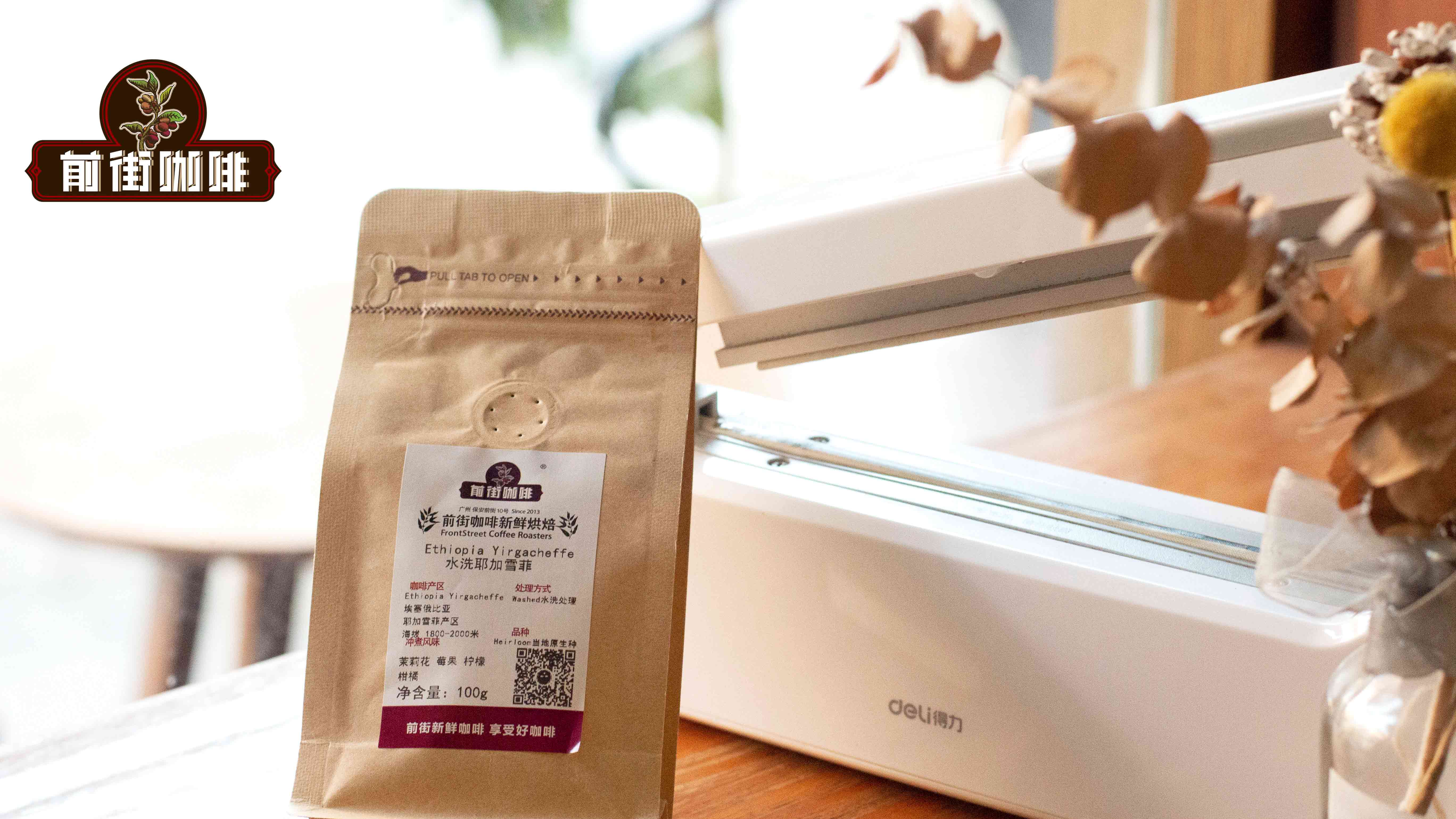
The preference for medium-light roasting in the Yirgacheffe region is mainly to preserve the essence of its fresh acidity and complex floral notes. These beans typically exhibit a clean acidity reminiscent of citrus and lemon, complemented by berry sweetness and a soft tea-like body, resulting in a layered and clean overall flavor. Many drinkers familiar with the flavors of this origin note that the coffee has a bright and lively acidity without being overly sharp, accompanied by subtle floral notes—all of which are inseparable from its refined washed processing and appropriate roast level.
The Yirgacheffe region consists of over forty small cooperatives, mostly based on family farming, and includes several well-known micro-regions such as Kochere, Guji, and Gedeb. The coffee beans produced in each area vary in character due to differences in microclimates and processing methods. Among them, Gedeb Cooperative, located southeast of Yirgacheffe, stands out with its excellent fruity and floral profile and consistent quality, making it a top choice for many pour over enthusiasts.
Gedeb Cooperative is situated in the Wolkite region and was originally part of the Wolkite Cooperative under the Yirgacheffe Coffee Farmers Cooperative Union (YCFCU). As the global specialty coffee market began to emphasize “single-origin” and “traceability,” the community separated from the original organization in 2012 and officially became an independent cooperative—Gedeb Cooperative. Gedeb Village was also one of the first to achieve independent operation, with its members primarily coming from within the Wolkite Cooperative system and having a solid farming foundation. The area is often referred to as “the last pure land of Yirgacheffe,” not only for its superior natural environment but also for its traditional and meticulous washed and natural processing methods.

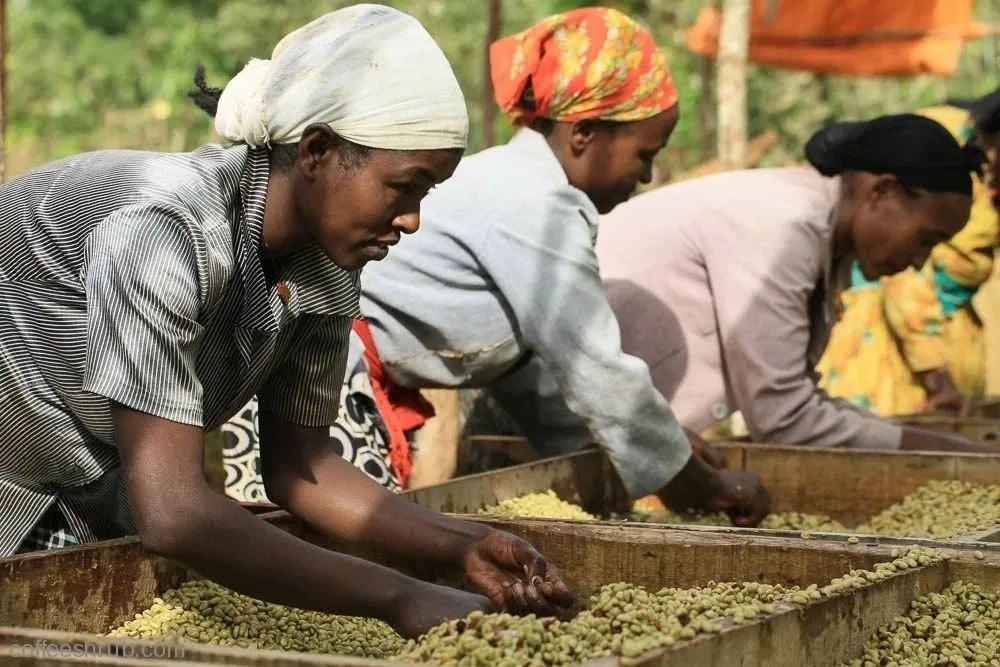
The washed coffee beans from Gedeb Cooperative analyzed here are refined using the washed processing method. The process is as follows: first, a machine removes the outer skin and pulp of the coffee cherry, then the mucilage-covered beans are placed in fermentation tanks for 18 to 36 hours of fermentation. The duration of this stage is fine-tuned according to local temperature and humidity to allow the mucilage layer to break down naturally. After fermentation, the parchment beans are washed in channels for about 30 to 60 minutes. The design of the water flow and racks allows beans with lower density or poorer quality to be eliminated at this stage, leaving only high-quality parchment beans. Finally, these beans are dried on African-style raised beds for about 14 days. Once the moisture content stabilizes, they are sent to a dry mill for subsequent processes such as hulling, silver skin removal, polishing, gravity sorting, and color sorting to ensure consistent export quality.
The star of this analysis—the washed coffee beans from Gedeb Cooperative in Yirgacheffe—are grown in Ethiopia’s Gedeo Zone at an altitude between 1900 and 2300 meters. The variety is a local landrace (Heirloom), and the grade is G1, classifying it as a high-altitude premium washed bean. Its flavor profile is dominated by berries, cream, honey, and citrus, with a distinct juiciness, balanced acidity and sweetness, and clear layers.
Before starting the pour over, it is recommended to prepare the following basic equipment: pour over kettle, filter cone, server, grinder, filter paper, digital scale, and thermometer, and use freshly roasted Gedeb washed coffee beans. Generally, coffee beans are at their best in flavor within 5 days of roasting, and it is advised to ship them within 24 hours post-roast to ensure they arrive during their golden tasting window.
For this medium-light roasted Yirgacheffe washed bean, it is recommended to use a Hario V60 filter cone, with water temperature controlled at 92℃, a suggested coffee dose of 15 grams, using a 1:15 brew ratio, for a total water volume of 225 milliliters. For grind size, a medium-fine grind is advised. Tested with a Chinese standard No. 20 sieve, the passing rate should be around 80%, similar in texture to granulated sugar. Note that too coarse a grind may lead to under-extraction and flat flavors, while too fine may cause over-extraction and bitterness.
When adjusting grind size, a standard No. 20 0.85mm sieve is used for testing. For medium-light roasted beans, the general target passing rate is 75% to 80%, achieving a uniformity similar to granulated sugar; for medium-dark roasts, it falls between 70% to 75%, akin to coarse sugar. Since Yirgacheffe is a high-altitude medium-light roast, to fully release its aromatic compounds, a grind size with an 80% passing rate corresponds to setting 10 on the shop’s EK43s grinder.
It is recommended that beginners use the three-stage pouring method, which helps stabilize the release of flavor compounds, enhances layering, and avoids over-soaking that can lead to off-flavors. Based on a dose of 15 grams, a 1:15 brew ratio, and a total water volume of 225 milliliters, the three pours can be distributed as follows:First pour: 30 milliliters (30g), second pour: 95 milliliters (125g), third pour: 100 milliliters (225g), with a total extraction time of approximately 2 minutes.
Steps are as follows: First, fold the filter paper and place it in the filter cone, wetting it with hot water to make it adhere to the walls while preheating the equipment. Add 15 grams of ground coffee to the cone, reset the scale, and start timing. Pour 30 grams of water for the bloom, maintaining it for 30 seconds. The water flow should be fine and circled outward from the center to ensure even saturation of the coffee bed. After 30 seconds, switch to a slightly larger and steady stream to pour the second 95 grams of water. The water stream should be vertical and even, completing this stage around the 55-second mark, with the scale showing approximately 125 grams. When the liquid level drops to about half, begin the third pour, using a fine stream and small circles to add 100 grams of water. Avoid large circular movements that could disperse the coffee bed. The final total water volume reaches 225 grams, with the dripping time around 2 minutes. Remove the filter cone, gently swirl the coffee in the server, and enjoy.
Please note that the above water volumes and times are for reference only. In practice, you can fine-tune based on personal taste and experience. Pour over brewing is essentially an experiment combining science and experience. Understanding the meaning behind each parameter is the key to gradually developing your own brewing logic and flavor profile.
The above content is compiled by CoffeeHunters, a coffee news website.


