







Introduction:Indonesian Sumatran Mandheling coffee is renowned for its low acidity and full body, yet it often elicits polarized reactions due to its intense flavors. This article delves into its origin story, the history behind its classic name, analyzes the grading standards of PWN Golden Mandheling, and highlights how the wet-hulling process shapes its distinctive spice and caramel notes. It also provides practical pour over parameters and a three-stage brewing guide using the KONO filter to help you extract a balanced, richly nutty cup at home.
Mandheling coffee has long been a highly discussed item among coffee enthusiasts. Some drinkers are deeply captivated by its deep, full-bodied aroma, while others find it leaves only a one-dimensional bitter impression. What kind of historical background and flavor characteristics does this classic bean from Sumatra, Indonesia, possess? Where does its name come from, and why does it deliver such uniquely low-acid, bold taste? This article will take you on a comprehensive journey through Mandheling’s allure—from regional history and naming origins, to PWN Golden Mandheling grading criteria, and the pivotal role of the wet-hulling process—while also offering useful three-stage KONO filter pour over tips, including ideal water temperature, brew ratio, and grind size, to help you easily recreate that captivating nutty and caramel profile.
Mandheling coffee has always been known for its bold personality, often receiving polarized reviews in the coffee community: one camp is made up of loyal fans drawn to its rich, robust aroma and mouthfeel, while the other finds its bitterness too pronounced, lacking subtle complexity. Yet, as a classic coffee that gained international fame as early as the last century, Mandheling’s appeal is no accident. Next, we’ll explore this legendary coffee from Sumatra in greater depth.
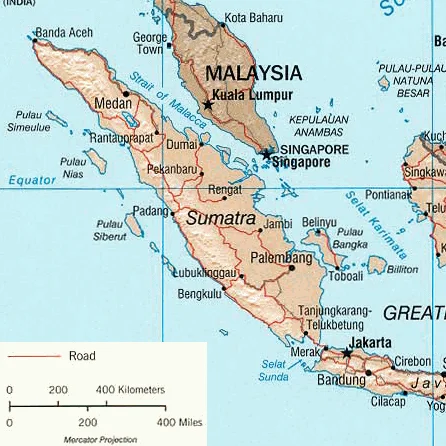
Sumatra is the world’s sixth-largest island, part of Indonesia, with a population exceeding fifty million. Along with Borneo and Java, it is one of Indonesia’s three major islands. Indonesia’s coffee cultivation history dates back to the late 17th century, when Dutch colonists introduced coffee to Indonesia via Yemen, which then quickly spread across Java and Sumatra, establishing Indonesia as one of the world’s key coffee-producing regions. Early Indonesian coffee was mostly exported from Jakarta Port on Java Island, which is why the name “Java” once became synonymous with high-quality coffee.
Among the many Indonesian coffees, aside from Java coffee, “Mandheling” is another widely recognized name. However, Mandheling does not represent a specific region or variety—the origin of its name stems from an interesting historical anecdote. It’s said that during World War II, a Japanese soldier tasted a coffee in Indonesia with a rich aroma and full body, and asked the shopkeeper for its name. Due to a language misunderstanding, the shopkeeper thought he was being asked about identity and replied “Mandailing”—a local pronunciation very similar to the Japanese “Mandheling.” The soldier remembered the name, and after returning home, sought out this coffee through Japanese merchants, eventually importing and promoting it in the Japanese market. Since the specialty coffee evaluation system at the time was heavily influenced by Japan, Mandheling gradually gained international recognition.
Regarding the name “Golden Mandheling,” it is actually a trademark registered by Indonesia’s PWN company, representing the highest quality Mandheling coffee. PWN initially registered “Golden Mandheling” as an exclusive name, but Japanese merchants were not to be outdone, launching their own “Dingshang Golden Mandheling.” Both have distinct brand positioning and marketing strategies—the question of which is superior depends on individual taste preferences. It’s important to note that since “Golden Mandheling” is a patented name owned by PWN, only beans produced by PWN are considered authentic. Many sellers label their roasted beans as Golden Mandheling, so when purchasing, consumers can ask to see the green bean sacks and related certification documents to confirm they are from PWN.
The PWN Golden Mandheling used by this brand is grown in Sumatra, Indonesia, at altitudes between 1100 and 1600 meters, with the Ateng variety. It is processed using Indonesia’s unique wet-hulling method and is classified as the highest-grade G1, with all green beans measuring 18 mesh or larger, and no more than 3 defective beans per 300 grams. The company implements strict screening procedures during production, including not only mechanical grading but also three rounds of manual hand selection to ensure bean purity and sweetness.
Sumatran coffee is generally known for its low acidity, a flavor trait largely stemming from its distinctive post-harvest processing method. Compared to the washed process commonly used in Latin America, Sumatran farmers mostly employ the wet-hulling method, which is relatively primitive and highly localized. On the day of harvest, the coffee cherries are mechanically stripped of their skin and pulp, after which the sticky mucilage-covered parchment beans are piled in water tanks or bags for fermentation. Once fermentation is complete, the mucilage is washed off with clean water, and the parchment beans are spread out in the open air for initial drying. When the beans reach a semi-dry state, farmers sell them to coffee processing mills, where the parchment layer is further removed, exposing the green beans directly to air for final drying.
Mandheling processed via the wet-hulling method often exhibits pronounced spice, herbal, and earthy aromas, with low fruit acidity but a rich, smooth mouthfeel. Its finish frequently carries sweet notes of caramel and nuts. This deep, full-bodied flavor profile has secured Mandheling a place in the global coffee market, and its unique wet-hulling process has also gained fame, becoming a technique that perfectly complements Mandheling coffee.
In terms of roasting, the brand’s roasters noted that the PWN Golden Mandheling green beans had uniform particle size and a healthy blue-green hue. To fully showcase Mandheling’s bold character, they opted for a medium-dark roast to balance the flavor layers. For home brewers looking to fully experience Mandheling’s rich aroma, it’s recommended to use freshly roasted beans, with optimal flavor within 45 days post-roast—but allowing at least 7 days of degassing time is essential to let the beans release CO₂, resulting in a rounder flavor.
To perfectly highlight the full body of PWN Golden Mandheling, it’s recommended to use a slow-flow KONO filter with a medium-coarse grind (approximately 70% passing through a Chinese standard 20-mesh sieve), brewed at 88°C. This parameter combination effectively avoids over-extraction while emphasizing nutty and spicy notes.
A three-stage pouring method is suggested: first, pour 30 grams of hot water and bloom for 30 seconds to awaken the coffee grounds; then, using a small stream, slowly circle from the center to add the second pour up to 125 grams; when the filter water level is about to expose the coffee bed, continue with the third pour up to a total of 225 grams. Keep the total extraction time around 2 minutes to achieve a well-layered and balanced cup.
The brewed Mandheling coffee presents a distinct nutty profile upon the first sip. As it cools slightly, herbal and cinnamon spice aromas, along with subtle melon notes, gradually emerge, with a lasting caramel sweetness in the finish. The overall profile is clean and full-bodied—a classic interpretation of Sumatran coffee flavors.
The above content is compiled by CoffeeHunters, a coffee news website.


