







Introduction:Kenyan coffee is renowned for its high acidity, bright profile, and clean taste. Its rigorous grading system is key to selecting high-quality green beans. This article delves into the classification criteria for Kenya’s eight grades—from E to T—compares the differences between AA and TOP, and provides detailed parameters and practical tips for popular Kenyan beans like “Little Tomato,” suitable for both hot and iced pour-over brewing. This will help you fully showcase its cherry tomato, dark plum, and creamy sweetness.
Kenyan coffee holds a respected place in the global specialty coffee market thanks to its bright fruit acidity and clarity of flavor. The country’s green bean grading system is overseen by official institutions, which classify beans into eight grades—E, PB, AA, AB, C, TT, T, MH/ML—based on criteria such as bean size, cupping quality, and more. Among these, AA is the most popular specialty grade, while TOP is an additional high-quality certification label given by some coffee merchants based on cupping results. This article will take you deep into the grading logic of Kenyan coffee and, using common beans like Kenya Little Tomato and AA TOP as examples, share practical hot and iced pour-over parameters to help you fully bring out their unique berry, dark plum, and creamy sweet aromas.
Kenya’s coffee grading system originates from the government’s emphasis on quality control in the coffee industry. Led by the Coffee Board of Kenya (CBK), established in 1933, this institution oversees the production, evaluation, and auctioning of coffee nationwide. At the weekly coffee trading market held in the capital, Nairobi, the auction price of green beans largely depends on their grading. The core criteria for grading include bean size, physical appearance, and cupping score. Among these, bean size has the greatest impact on roast evenness and final flavor, making it the primary indicator for grade classification.
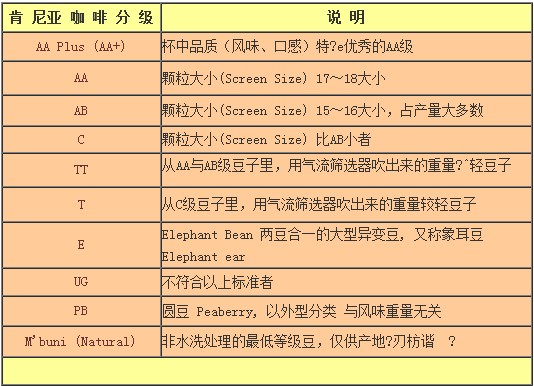
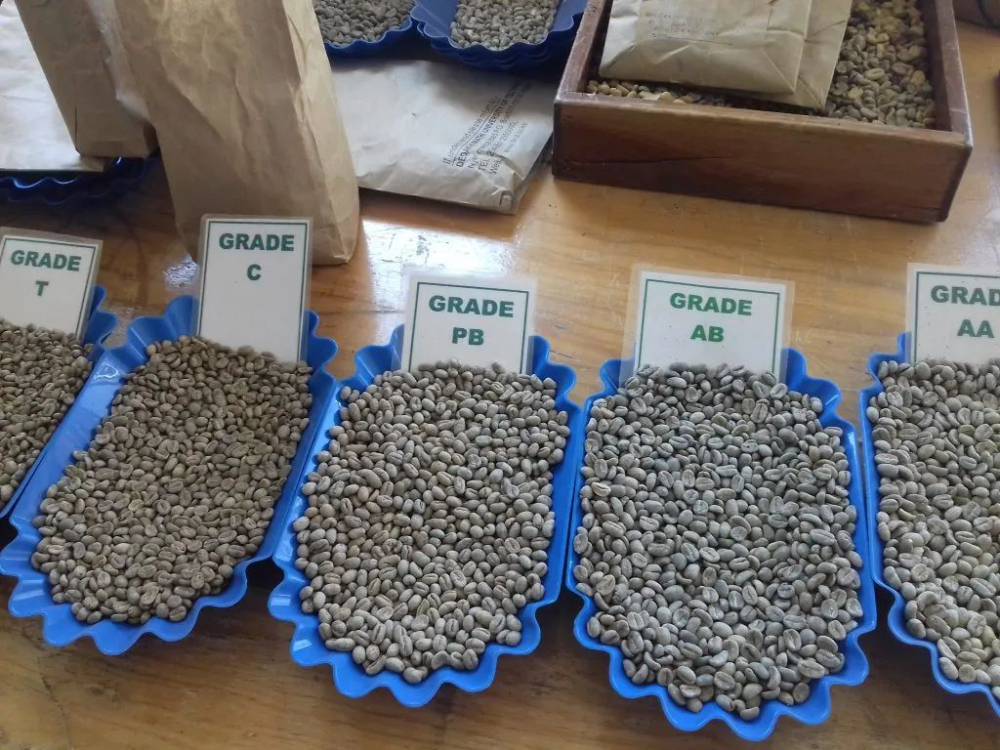
Kenyan coffee beans are mainly divided into the following eight grades based on size, shape, and hardness:E, PB, AA, AB, C, TT, T, MH/ML. Among them, Grade E, also known as “Elephant Bean,” is the rarest and largest bean size, though it has relatively low production.PB (Peaberry) refers to the peaberry bean. Normally, a coffee cherry contains two seeds, but a peaberry has only one oval-shaped seed. It occurs in specific batches and often delivers a more intense flavor due to its concentrated fermentation.
Grade AA is the most common specialty grade in Kenya, typically sourced from plantations at elevations above 6,600 feet. The beans are sized at 17/18 mesh, representing the largest particle size category, and possess high cupping potential. Grade AB consists of 16/17 mesh beans, a mix of Grade A (screen size 6.8 mm) and Grade B (screen size 6.2 mm). Though slightly smaller in size, they still offer solid flavor performance. Grades C and below have even smaller sizes—below 14 mesh—and show a relative decline in both quality and consistency.
Grade TT comprises lightly dense beans left after removing high-density beans from higher-grade lots such as AA, AB, and E through air classification. Although these beans may have a large mesh size, their lower density generally excludes them from top-tier classification, although they can still fall within the specialty coffee range. Grade T includes low-quality small beans under 14 mesh, with limited quality and flavor expression. Finally, MH/ML refers to overripe or sun-dried low-quality beans, often defective beans naturally dried on the tree, and are not recommended for use in specialty coffee.
Among the many Kenyan producing regions, the Thika region is known for its Grade AA beans commonly found in the market, such as the well-received Kenya Little Tomato bean. This bean uses the SL28 and SL34 varieties and undergoes Kenya’s unique 72-hour double-washed fermentation process, delivering clear, bright cherry tomato and dark plum acidity, along with a soft creamy sweetness. With a light to medium roast, it fully showcases its floral and fruity characteristics, making it ideal for hot pour-over to highlight its layered profile.
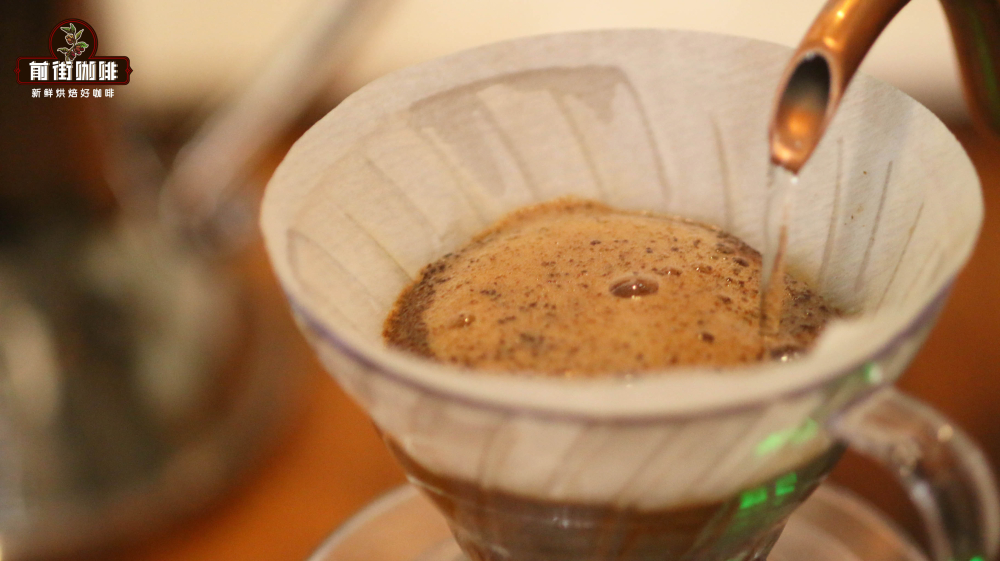
For hot pour-over parameters, lightly roasted Kenyan coffee retains more floral and fruity aromas. It is recommended to usea high water temperature of 92–93°C, paired witha fine grind (such as EK43s setting 10) with about 80% passing rate through a 20-mesh sieve, to fully extract the acidity and sweetness. A V60 dripper is recommended, using 15 grams of coffee, a 1:15 coffee-to-water ratio, and the following multi-pour method: begin with a 30-second bloom using 30 grams of water, then pour 95 grams (total ~125 grams) around the 1-minute mark, followed by another 100 grams (~total 225 grams) shortly after. Total brew time is approximately 1 minute 35 seconds to 2 minutes, effectively releasing its juicy mouthfeel and rich finish.
If you prefer iced pour-over, it is recommended to use the golden ratio of“coffee grounds + 10 times hot water + 5 times ice”to accentuate its sweet-tart juice-like character. Taking Kenya Little Tomato as an example, use 15 grams of coffee, with 160 grams of 91–93°C hot water and 75 grams of ice. Adjust the grind size to that of superfine sugar (approximately EK43s setting 9.5 or C40 setting 22). Use a Hario V60 dripper and follow a three-pour method: start with a 30-second bloom using 30 grams of water, then pour 90 grams of hot water in a circular motion with stirring, and finally add 45 grams of water when the brew bed is nearly drained. Total brew time should be controlled between 1 minute 50 seconds and 2 minutes, effectively balancing acidity and sweetness, and presenting a refreshing iced drink flavor.
The above content is compiled by CoffeeHunters, a coffee news website.


