







Introduction:This article delves into how Panama’s Boquete region gives rise to the renowned flower-patterned coffee variety — Flower Butterfly — based on the Geisha cultivar. We will explore everything from the region’s geography and microclimate to the varietal composition and roast profile of Flower Butterfly, gradually breaking down its flavor characteristics and pour over brewing techniques. With practical suggestions on brew ratio, water temperature, and extraction, we aim to help readers master the brewing secrets of this high-value specialty bean and fully appreciate its layered notes of floral, citrus, and berries.
Among the many specialty coffee regions, Panama’s Boquete is world-famous for the Geisha beans of Hacienda Esmeralda and is considered a pilgrimage site for many coffee enthusiasts. Among them, one highly praised bean — Flower Butterfly — stands out with its accessible price and outstanding flavor, becoming a top choice for both beginners and seasoned coffee drinkers. This coffee is a blend of 70% Geisha, along with Caturra and Catuai. Although it’s a mixed variety, because it comes from the same region and is processed in the same batch, it is still classified as a single-origin coffee.
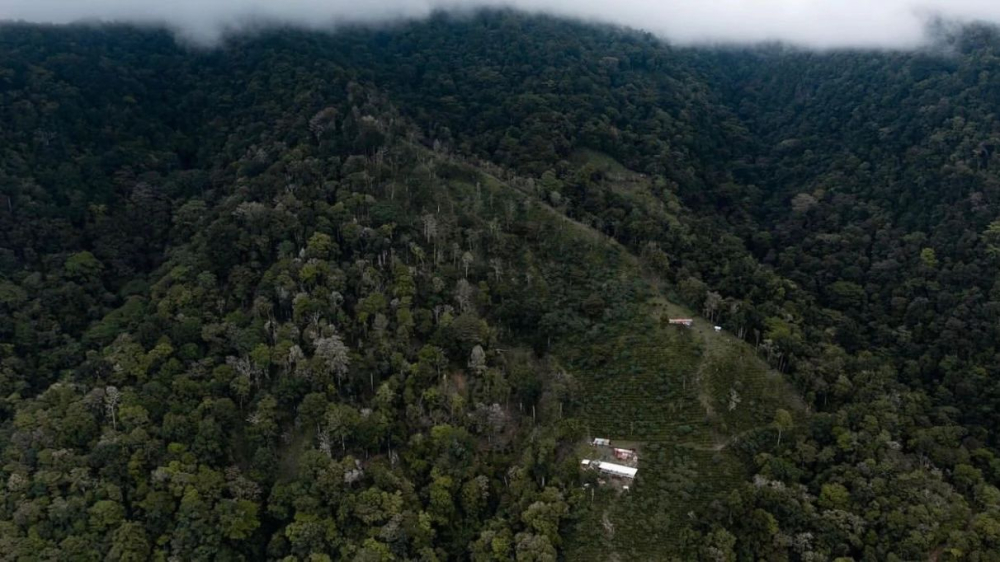
The Boquete region is located in western Panama, bordering Costa Rica, situated in the Chiriquí Province and adjacent to the famous Barú Volcano. This area not only boasts fertile volcanic soil but also benefits from altitude and microclimatic conditions that create an ideal environment for cultivating high-quality coffee. Especially in areas around 1,600 meters above sea level, where there is a significant day-night temperature variation, stable rainfall, and volcanic soil rich in minerals, the growing conditions for coffee trees are exceptionally favorable.
In fact, the Boquete region is home not only to Hacienda Esmeralda but also to several other well-known estates such as Elida and Duncan. The coffees produced by these estates generally feature bright acidity, rich layers, and good sweetness. What makes Flower Butterfly stand out is not only its excellent flavor profile but also its high cost-performance ratio, allowing more consumers to experience coffee flavors close to the Geisha grade.
Flower Butterfly is grown in the Barú volcanic region at an altitude of about 1,600 meters. It is cultivated and harvested in traditional ways by local smallholder farmers and undergoes meticulous washed processing. Thanks to the area’s abundant rainfall, notable day-night temperature differences, and the unique nutrient structure of the volcanic soil, this coffee exhibits delicate floral notes, bright citrus tones, and a long-lasting finish of berry and honey sweetness. Even with Geisha making up over 70% of the blend, it maintains a balanced and layered taste, with particularly outstanding aftertaste.
Many consumers, upon first encountering Flower Butterfly, often wonder: Since it is a blend of three beans — Geisha, Caturra, and Catuai — does that make it a blend coffee? In fact, the definition of a single-origin coffee lies in being ‘from a single region or processing facility,’ not a single variety. Although Flower Butterfly combines three varieties, they are all grown in the same area and processed in the same way, thus still meeting the criteria for single-origin coffee. Moreover, due to historical planting practices, these three types of coffee trees are often interplanted together and only blended in proportion before export, preserving the regional terroir consistency.
In terms of roasting, to highlight the delicate and unique aromas of Flower Butterfly, producers typically opt for a medium-light roast. This roast level preserves the distinctive citrus, tea-like, and floral notes of the Geisha variety, while avoiding the bitterness or smokiness that can come from over-roasting. Roasters shorten the Maillard reaction time during processing, using a faster heating curve and controlling the temperature rise before the first crack after the initial drying phase. This approach retains the maximum amount of small-molecule aromatic compounds, such as those reminiscent of white grapes, caramel, honey, and black tea.
If you’d like to brew Flower Butterfly at home, here are the professional barista-recommended pour over parameters and practical tips: Use a Hario V60 filter cone, with water temperature controlled at approximately 91°C, and a suggested coffee dosage of 15 grams, paired with a 1:15 brew ratio(total water volume of about 225 grams). The grind size can be referenced to a Chinese standard No. 20 sieve passing rate ofabout 78%, similar in coarseness to granulated sugar.
Here is the specific pour over procedure: Begin with 30 grams of water for the bloom, for about30 seconds , to help release the coffee’s aromas; then pour water in small circles until you reach 125 grams , performing the first pour break, wait for the water level to drop slightly, then continue pouring until you reach 225 gramsbefore stopping. Finally, when the water level drops back near the surface of the coffee bed, remove the filter cone. The overall extraction time is recommended to be around2 minutes
. This set of parameters helps bring out the soft sweetness and clear flavor layers of Flower Butterfly.
When brewing Flower Butterfly, be aware that excessively high water temperatures may amplify acidity while suppressing sweetness, whereas too low a temperature can result in muted flavors. Additionally, grind size affects extraction evenness — adjust according to your grinder to ensure stable flow rate. If you prefer a stronger cup, you can moderately increase the brew ratio or extend the extraction time, but be cautious of over-extraction risks.
The above content is compiled by CoffeeHunters, a coffee news website.


