







Introduction:Yirgacheffe and Sidamo are two of Ethiopia’s most renowned specialty coffee regions, each with distinctive characteristics and widely beloved by coffee enthusiasts worldwide. What are the clear differences between them? This article delves into their geographical locations, altitudes, climate environments, bean varieties, and processing methods to compare their flavor profiles in depth. It also includes representative coffee offerings and practical pour-over recommendations to help you better grasp the diverse charm of Ethiopian coffee.
Ethiopia is hailed as the birthplace of coffee and boasts many iconic coffee-growing regions, among which Yirgacheffe and Sidamo are the most famous. These two regions not only have vastly different flavor profiles but also hold significant positions in the global specialty coffee market. Yirgacheffe is known for its bright citrus and floral notes, often serving as the gateway coffee for beginners exploring single-origin brews; whereas Sidamo presents a more diverse and slightly wild flavor spectrum, ranging from berries to florals, ideal for those seeking to explore the deeper layers of coffee.
Although these two regions were once part of the larger Sidamo administrative zone, Yirgacheffe was later separated due to its unique flavor characteristics and established itself as a distinguished specialty coffee micro-region. There are notable differences in geography, altitude conditions, microclimates, and even bean varieties between the two, resulting in distinctly different flavor traits.
An In-depth Look at the Yirgacheffe Region: Synonymous with Fresh Floral and Fruity Notes
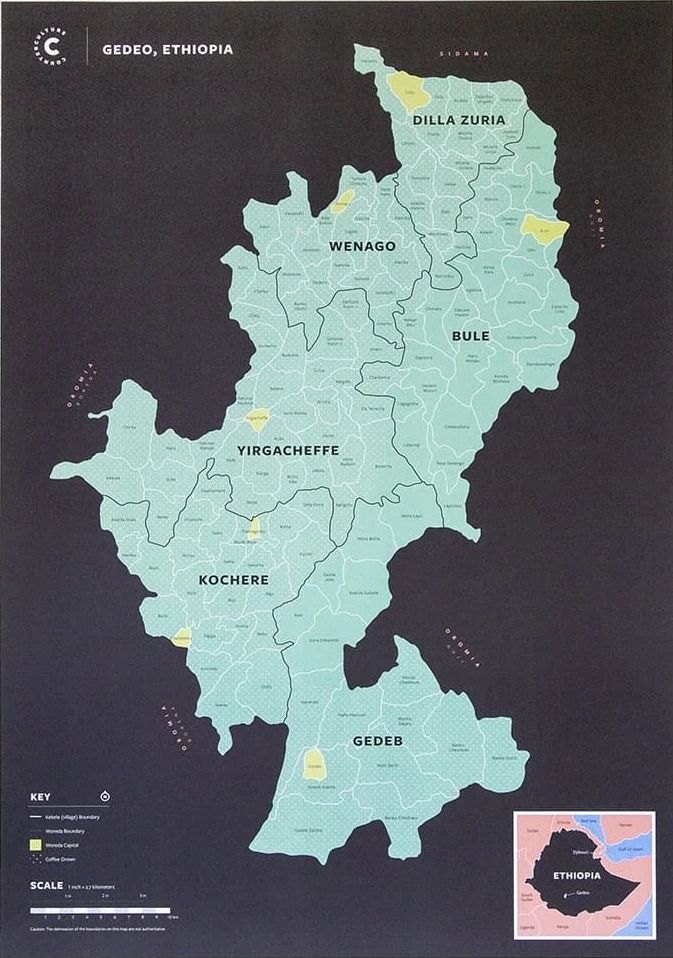
Yirgacheffe is located in southern Ethiopia and geographically falls within the Gedeo Zone. Though often regarded as an independent region, it actually encompasses several smaller areas, including Wolisho, Kochere, and Gelana Abaya. The average altitude here is around2000 meters, making it a typical high-altitude coffee-growing area with cool climates, abundant rainfall, and fertile soil—ideal conditions for cultivating Arabica coffee.
The localKurumevarieties are native strains that have evolved over time in Yirgacheffe’s unique environment. Although classified as ‘Heirloom (traditional blends),’ they are truly a reflection of the terroir of this region. The coffees here are not only celebrated for their vibrant acidity but also for their delicate aromas and high sweetness, making them especially well-suited for pour-over brewing, which can fully highlight their layered complexity.
Renowned Yirgacheffe lots such as those produced by the Guji Gedeb cooperative showcase the region’s distinct citrus and black tea undertones. As the cup cools, you may even detect creamy, caramel, and almond notes—making it highly appealing to coffee lovers who enjoy refreshing profiles.
Yirgacheffe Guji Gedeb
Region: Yirgacheffe, Gedeo Zone
Producer: Guji Gedeb Cooperative
Altitude: 1900–2300 meters
Variety: Heirloom
Processing Method: Natural
Grade: G1
The Guji Gedeb cooperative is located in the Wolisho area, southeast of Yirgacheffe. In 2012, it separated from a larger cooperative organization to focus on producing specialty coffee from a single village. The community is skilled in both washed and natural processing, and its natural lots feature pronounced citrus and black tea notes. As the cup cools, creamy, caramel, and almond undertones emerge, delivering a clean and clear flavor profile. It's a classic entry point for experiencing Yirgacheffe’s character.
Red Cherry Coffee Beans
Region: Yirgacheffe, Ararte Processing Station
Altitude: 2300 meters
Variety: Ethiopian Heirloom
Processing Method: Natural
Flavor: Citrus, berries, fruity fermentation, honey, creamy mouthfeel
The Red Cherry batch is well-known for its sweetness and fruity profile. Whether hot-brewed or cold-brewed, it reveals a rich variety of aromatic layers, making it a top choice for those who love tropical fruit flavors. Its bold yet balanced taste is best presented using a medium-fine grind and slightly higher water temperature.
Sidamo Region: Wildness with Subtle Balance
Compared to Yirgacheffe’s brightness, the Sidamo region exhibits a more diverse and complex flavor profile. Located in southern Ethiopia, its altitude ranges from about1400 to 2200 metersand borders Kenya. The terrain varies greatly, encompassing mountains, plateaus, and plains, along with fertile volcanic soils, creating diverse microclimates and soil conditions. Even neighboring areas produce coffees with unique individuality.
Sidamo coffees generally carry a gentle wildness, with acidity that is more restrained yet rich in complex aromas such as berries, florals, and honey. The green beans often appear light green, small, and elliptical in shape. Washed Sidamo beans are particularly clean and bright in flavor, making them popular in international markets. Between 2010 and 2012, Sidamo consistently received high scores in international coffee evaluations, solidifying its reputation for quality.
Huakui Coffee Beans
Region: Guji, Hambella
Processing Station: Buku Able Processing Station
Altitude: 2250–2350 meters
Variety: Ethiopian Heirloom
Processing Method: Natural
Flavor: Citrus, strawberry, passion fruit, fermentation notes, black tea
Huakui coffee is famed for its creamy texture and rich flavors of strawberry and passion fruit, making it a classic representation of Sidamo coffee. Its flavor is mellow and layered, suitable for various brewing methods, and is often considered a “go-to” bean by many baristas. Using a medium-fine grind and water around 90°C can fully release its sweet and fruity notes.
Hamashu Coffee Beans
Region: Ethiopia · Bench Maji Region
Processing Station: Hamashu Processing Station
Altitude: 1920–2020 meters
Variety: 74158
Processing Method: Natural
Flavor: Strawberry, floral, guava, sweet orange, honey, green grape
The Hamashu Processing Station is located north of Bench Maji town. The area features fertile soil and employs organic green farming practices, using fallen leaves as natural fertilizer, nurturing coffee with intense tropical fruit characteristics. This bean has outstanding sweetness, soft acidity, and is perfect for those who enjoy strong fruity notes with a hint of honey-like richness.
Pour-Over Recommendations and Extraction Parameters
Ethiopian coffee is most prized for its floral and fruity aromas. It is recommended to usefreshly roasted beans within 4 to 7 daysfor optimal flavor expression. Since both Yirgacheffe and Sidamo are high-altitude hard beans, it is advisable to usewater at 90–91°Cand afiner grind size (close to caster sugar, approximately 80% passing through a #20 sieve)to fully extract their complex aromas and balanced acidity and sweetness.
We recommend using a V60 #01 filter cone with about15 grams of coffeeand a specific brew ratio. The detailed steps are as follows:1:15. The specific method is as follows:
- First pour 30 grams of water and bloom for 30 seconds
- Then pour 95 grams of water, reaching a total of about 125 grams, taking about 1 minute
- When the water level drops to 2/3 of the coffee bed, pour the remaining 100 grams of water, bringing the total to about 225 grams, finishing in about 1 minute and 35 seconds
- Keep the total extraction time around 2 minutes and 10 seconds
Using these parameters and techniques allows for a more precise presentation of Yirgacheffe’s bright acidity and Sidamo’s rich complexity. Whether you’re a beginner or an experienced enthusiast, you’ll find your own unique coffee experience within these profiles.
The above content is compiled by CoffeeHunters, a coffee news website.


