







Introduction:Golden Mandheling is highly praised for its rich and layered flavors, but many beans on the market labeled as "Golden Mandheling" actually do not meet strict standards. This article delves into the varietal background of Sumatran Mandheling, the unique characteristics of the wet-hulled processing method, and explains the rigorous selection process by PWN for Golden Mandheling, helping you distinguish truly high-quality beans. It also provides practical pour over recommendations and extraction parameters to help you brew a balanced, rich, and aromatic coffee experience.
Mandheling coffee has always been known for its bold and full-bodied taste, making it a classic favorite among many coffee enthusiasts. Among them, Golden Mandheling stands out with its cleaner, more aromatic, and mellow profile. However, the market is flooded with products claiming to be "Golden Mandheling"—do they all live up to the name? To understand the differences, we need to explore the origins of Mandheling, regional characteristics, processing methods, and even roasting and selection standards.
Many seasoned coffee enthusiasts associate Mandheling with a deep, woody and herbal aroma, bold flavor, and a long-lasting aftertaste. This flavor profile is quite different from the bright, fruity acidity favored in today’s trends, yet its solid and reliable taste makes it a daily choice for many. When roasted appropriately, Mandheling not only significantly reduces bitterness but also reveals complex layers of cedar, licorice, and dark chocolate.
To fully unlock Mandheling’s potential, roasters often extend the duration from yellowing to first crack to build up more sweetness, and choose to roast just before the second crack. This allows the caramelization process to fully develop while retaining subtle acidity, adding dimensionality to the overall flavor. However, what ultimately shapes Mandheling's profile isn’t just roasting technique—it’s also closely tied to varietal, growing environment, and processing method.
First, "Mandheling" is not a coffee varietal, but rather refers to Arabica coffee grown in Sumatra, Indonesia. The name originates from the local Mandheling ethnic group and was a phonetic adaptation used by early Japanese importers for marketing purposes. Sumatra is located in western Indonesia; although the overall elevation is not very high, the main Arabica-growing regions are between 600 and 1200 meters above sea level.
The early cultivation of Mandheling can be traced back to the 19th-century Dutch colonial period, when the Dutch East India Company introduced coffee seeds from Java, gradually establishing plantations in northern Sumatra. The local coffee varieties were mainly TimTim and Ateng—the former being Timor with Robusta genes, and the latter being Catimor, a hybrid of Caturra and Robusta. Due to their genetics and relatively low altitude cultivation, these varieties often exhibited herbal, spicy, and forest-like notes, forming the foundational flavor profile of Mandheling.
In addition, Sumatra’s rainy climate, foggy terrain, and economic constraints have led to the widespread adoption of the wet-hulled (Giling Basah) method for processing coffee beans. This technique involves removing the fruit skin and pulp followed by a short fermentation, then drying the beans to a semi-dry state with 30%–50% moisture content before removing the parchment and mucilage, and finally continuing to dry until the moisture level reaches 12%–13%. Because the beans are processed while still soft and wet, they get flattened under pressure, which contributes to Mandheling’s signature bold, rich, and low-acidity character.
Although wet-hulling is the classic processing method for Mandheling, some producers now experiment with natural or other methods to highlight different flavor profiles—such as more pronounced fruity and sweet notes. However, for most consumers, traditional wet-hulling remains an important hallmark of Mandheling.
When it comes to high-quality Mandheling, one cannot overlook the "Golden Mandheling" produced by PWN. This coffee undergoes three rounds of manual sorting, selecting only G1 grade beans that are 18 mesh size or larger, with fewer than 3 defects (per 300g sample). The beans are plump, uniformly shaped, and deep green in color as flat beans. This stringent selection process ensures that Golden Mandheling far surpasses the typical "Golden Mandheling" products on the market in terms of flavor.
The Golden Mandheling selected by PWN not only minimizes common earthy or off-flavors, but also showcases rich notes of nuts, caramel, and chocolate. Its body is full yet clean, with a long and layered aftertaste. As a result, many non-PWN coffees marketed as "Golden Mandheling" can only be considered high-quality specialty Mandheling, not the officially certified PWN version.
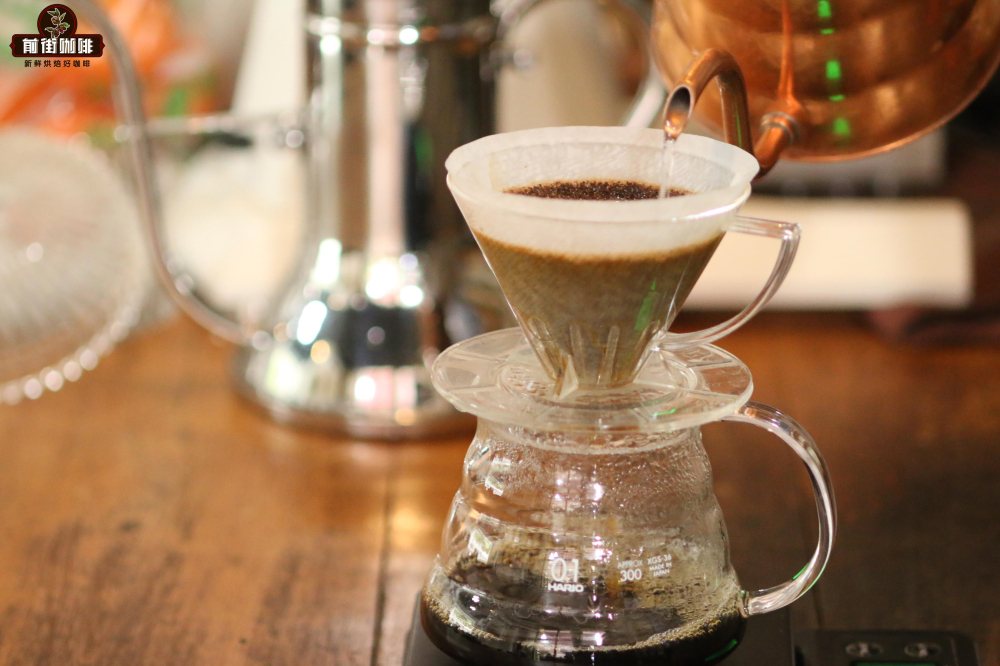
If you want to brew a balanced and rich Golden Mandheling at home, it is recommended to use a KONO filter cone with the following parameters: water temperature around 88°C, coffee-to-water ratio of 1:15, using 15 grams of coffee grounds (grind size similar to coarse sugar with 70% passing through a Chinese No. 20 sieve). The specific steps are: first pour 30 grams of water for blooming for 30 seconds; then pour in a circular motion up to 125 grams, wait until the water level drops by half, then continue pouring up to 225 grams. The total extraction time should be controlled around 2 minutes and 10 seconds to fully highlight its sweetness and delicate aromas.
The above content is compiled by CoffeeHunters, a coffee news website.


