







Introduction:Mandheling coffee often sparks polarized discussions due to its strong personality, but its rich body and low acidity have made it a reliable choice for many coffee enthusiasts. This article delves into the PWN Golden Mandheling from Indonesia’s Sumatra region, covering its cultivation background, wet-hulled processing method, pour over setup using the KONO filter, and actual flavor profile, providing a complete brewing guide and tasting reference.
Among the many coffee options, Mandheling has always held its ground with its distinctive character. Some drinkers are particularly drawn to its bold, full-bodied taste, while others shy away from its intense flavors. If you’re looking for a dark roast bean with almost no noticeable acidity and a solid flavor, industry professionals often recommend Mandheling—especially the PWN Golden Mandheling from Sumatra, Indonesia.
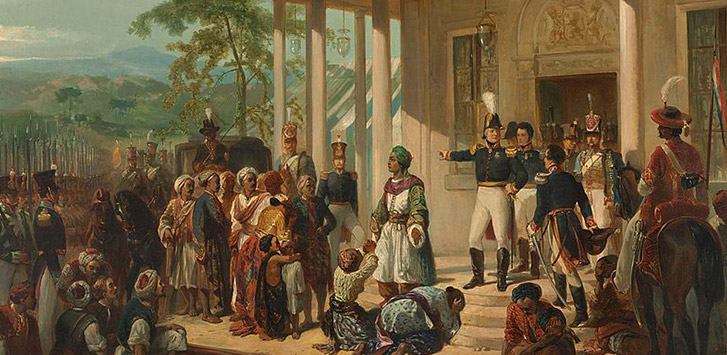
As one of the world’s major coffee-producing regions, Indonesia’s coffee-growing history dates back to the late 17th century. In 1696, Batavia (formerly known as Batavia), then a Dutch colony, received a shipment of coffee seedlings from Malabar, India. Unfortunately, these seedlings were all destroyed in a flood. It wasn’t until 1699 that the Dutch reintroduced coffee trees, which successfully took root, thereby breaking the long-standing monopoly of the Arab world on coffee. Subsequently, the Dutch colonial government established large-scale plantations in Java, Sumatra, and Sulawesi, making Indonesia one of the earliest regions to achieve large-scale coffee cultivation after the Arabian Peninsula and Ethiopia.
Entering the 20th century, with the rise of smallholder farming, more and more Indonesian farmers turned to coffee cultivation. However, the coffee leaf rust epidemic of 1876 nearly wiped out most of the local Arabica varieties. To address the crisis, disease-resistant Robusta varieties began to be promoted in low-altitude, heavily affected areas such as East Java starting in 1900.
Indonesia’s coffee-growing regions are widespread, including islands such as Sumatra, Java, Sulawesi, Flores, and Bali, with Sumatra being the primary producing area and an important source of specialty coffee. Within Sumatra, there are two well-known sub-regions: Gayo (located in Aceh Province) and Lintong (surrounding Lake Toba). The former is particularly renowned for producing high-quality Mandheling.
When it comes to the name “Mandheling,” many people mistakenly assume it refers to a place of origin, but that’s not the case. The term actually originates from the name of an ethnic group in Indonesia. During World War II, a Japanese soldier tasted an unforgettable cup of coffee in Indonesia and was told it was “Mandheling.” He mistakenly assumed this was the name of the coffee. After the war, the soldier sought the same coffee through commercial channels, and it was eventually supplied by a local Indonesian vendor—later revealed to be the now-famous PWN company (Pwani Coffee Company). Notably, the name “Golden Mandheling” has been trademarked by PWN, while the Japanese trading partner previously collaborating with PWN registered “Gold Top Mandheling (鼎上黄金曼特寧),” with little noticeable difference in flavor between the two, mainly differing in branding and market positioning.
The PWN Golden Mandheling used in the industry is grown in the Gayo highlands of Aceh Province in northwestern Sumatra, at altitudes of about 1100 to 1600 meters. This coffee bean is carefully selected, using only beans larger than 18 mesh, and undergoes three rounds of manual sorting to ensure it meets the G1 top grade—meaning no more than 3 defective beans per 300-gram sample. Such rigorous selection not only effectively reduces common earthy flavors but also results in a purer overall taste with a more pronounced sweetness.
The unique flavor profile of Mandheling is largely due to its distinctive “wet-hulled” processing method. In traditional processing, coffee beans are usually fully dried after the pulp is removed. However, Indonesia’s high humidity and frequent rainfall have led farmers to develop the wet-hulled method, better suited to the environment. First, harvested coffee cherries are floated in water tanks to remove floaters and impurities, then the skin and flesh are removed with a pulper, leaving the mucilage layer for brief fermentation before being rinsed and partially dried to around 20–24% moisture content. Next, the parchment layer is removed, and the beans are dried again until their moisture content drops to 12–13%, before undergoing final processing before export. This processing method gives Mandheling its characteristic low acidity, bold body, and herbal and spicy notes.
For brewing PWN Golden Mandheling, the KONO filter is recommended. Its rib design extends only to the lower half of the cup, allowing the wetted filter paper to adhere tightly to the walls, effectively reducing air circulation and extending extraction time. This also creates a more restrained aroma and a fuller body. Its immersion-style extraction helps enhance sweetness and overall smoothness.
Recommended actual brewing parameters are as follows: Use the KONO filter, water temperature at 88°C, coffee dosage 15 grams, coffee-to-water ratio 1:15, grind size suggested as EK43s#11 (equivalent to 70–75% passing through a Chinese standard No. 20 sieve). Specifically, start by pouring 30 grams of water for a 30-second bloom, then circle-pour up to 125 grams for the first pour. When the water level drops to just about to expose the coffee bed, pour again to reach 225 grams, then let the filter drip through completely. The total extraction time is approximately 2 minutes.
In terms of flavor, this dark-roast Mandheling exhibits rich notes of nuts, spices, and licorice, with a hint of natural herbal tones. On the palate, it has a full, creamy-like body, with extremely subdued acidity. The finish brings subtle melon and chocolate notes, accompanied by a lasting caramel sweetness. The overall profile is clean and clear, making it highly suitable for coffee lovers who enjoy dark roast flavors.
The above content is compiled by CoffeeHunters, a coffee news website.


