







Introduction:As one of the most sought-after coffee regions among specialty coffee enthusiasts worldwide, Yirgacheffe’s Washed Coffee from the Worka Cooperative has garnered significant attention. This article delves into the geographical relationship between Yirgacheffe and Sidamo, the background of the Worka Cooperative, the washed processing method, and the characteristics of Ethiopian heirloom varieties. It also details the ECX’s nine-tier coffee grading system and the definitions of Q1 and Q2 specialty grades. Additionally, it includes pour over brewing tests at 86°C, 90°C, and 94°C to explore their impact on bright acidity and tea-like qualities, helping you achieve the optimal extraction.
Yirgacheffe is often considered the starting point for many coffee beginners exploring single-origin flavors, thanks to its distinctive bright floral and citrus notes that leave a lasting impression. The washed lots produced by the Worka Cooperative are among the classic representatives of this region. This article takes a washed G1-grade Worka Yirgacheffe as a starting point to introduce its regional origins, processing methods, variety traits, and the logic behind Ethiopia’s coffee grading system. Finally, it explores pour over brewing tests at different water temperatures to help you extract the most expressive coffee flavors.
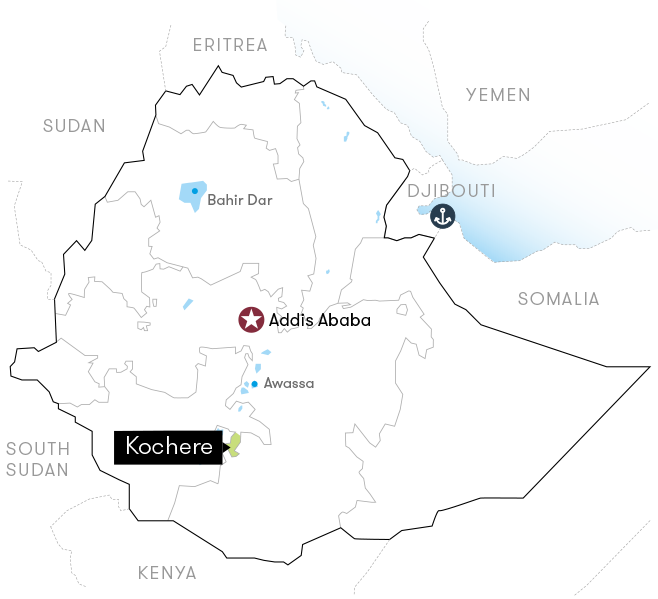
Yirgacheffe is located in the Gedeo zone of southern Ethiopia. Originally a small town under the former Sidamo province, it has now become an independent and globally renowned specialty coffee region. Situated at an altitude of 1,700 to 2,100 meters, the area enjoys a cool and humid climate with year-round fog, earning it the nickname "Valley of Mist." This environment is ideal for developing complex fruit aromas and delicate acidity. Yirgacheffe and the neighboring Kochere are both key producing areas within the zone, together forming the golden belt of Ethiopia’s specialty coffee.
The Worka Cooperative introduced in this article is located within the Yirgacheffe region, with coffee grown at an altitude of about 1,800 to 2,000 meters. Established in 2005, the cooperative joined the Yirgacheffe Coffee Farmers Cooperative Union (YCFCU) in the same year and has long been known for producing high-quality natural Yirgacheffe. In recent years, its washed processing techniques have also shown remarkable performance. The Worka Cooperative is composed of approximately 300 coffee farmers, with the Alemayehu Alako farm being one of the members supplying these washed beans.
This batch of Worka washed Yirgacheffe is processed using the traditional washed method: First, ripe coffee cherries undergo floatation and screening, followed by removal of the outer skin and some pulp using a pulper. Then, the beans, still coated with sticky mucilage, are placed in fermentation tanks for about 24 hours, where microbial action breaks down the mucilage layer. Subsequently, the parchment-covered green beans are thoroughly washed in flowing clean water to remove any remaining impurities. Finally, the beans are moderately dried until their moisture content is stabilized at around 12%, after which the outer parchment layer is removed, completing the entire washed process.
The variety of these coffee beans is Ethiopian Heirloom. Notably, coffee cultivation in Ethiopia often exists in wild or semi-wild forms, with farmers typically planting multiple varieties on the same plot of land. During harvest, coffee cherries of various genetic backgrounds are often mixed together in a single basket. This diverse gene pool contributes to the rich and varied flavor profiles of Yirgacheffe. Furthermore, many coffee trees grow under forest canopies or banana plantations—a method known as “shade-grown”—which not only reduces direct sunlight and regulates microclimates but also helps suppress pests and diseases, enhancing sustainability.
Prior to the establishment of the Ethiopian Commodity Exchange (ECX), coffee grading was primarily conducted by the CUPping and LIquoring Unit (CLU) under the Ministry of Agriculture. Grading was based on the number of defective beans in a 300-gram sample of green beans and ranged from G1 to G5. Typically, washed beans were classified as G1 to G2, while natural beans were mostly G3 to G5. With advancements in natural processing, some natural lots have now also achieved G1 to G2 quality levels.
Since the founding of the ECX in 2008, a more scientific grading system has been introduced, combining physical characteristics and cupping flavor for comprehensive evaluation. The system categorizes coffee into three classes: Specialty, Commercial, and Local/Domestic consumption. Among these, Specialty and Commercial grades are suitable for export and are further divided into nine grades based on a combined score of 40% physical attributes and 60% cupping performance. Specifically, physical attributes include metrics such as defect count, bean size, color, and aroma, while cupping evaluates aspects like fragrance, acidity, sweetness, aftertaste, and overall balance.
After scoring, samples graded G1 to G3 undergo additional cupping according to SCAA standards. Those scoring above 85 points are designated as Q1 specialty grade, while those scoring between 80 and 85 are Q2 specialty grade—both eligible for export to premium markets. If a sample scores below 80, even if it is G1 or G2, it is downgraded to G3 and grouped with G4 to G9 under the Commercial grade. This grading logic ensures that consumers can quickly identify the potential quality and flavor profile of the coffee based on its grade.
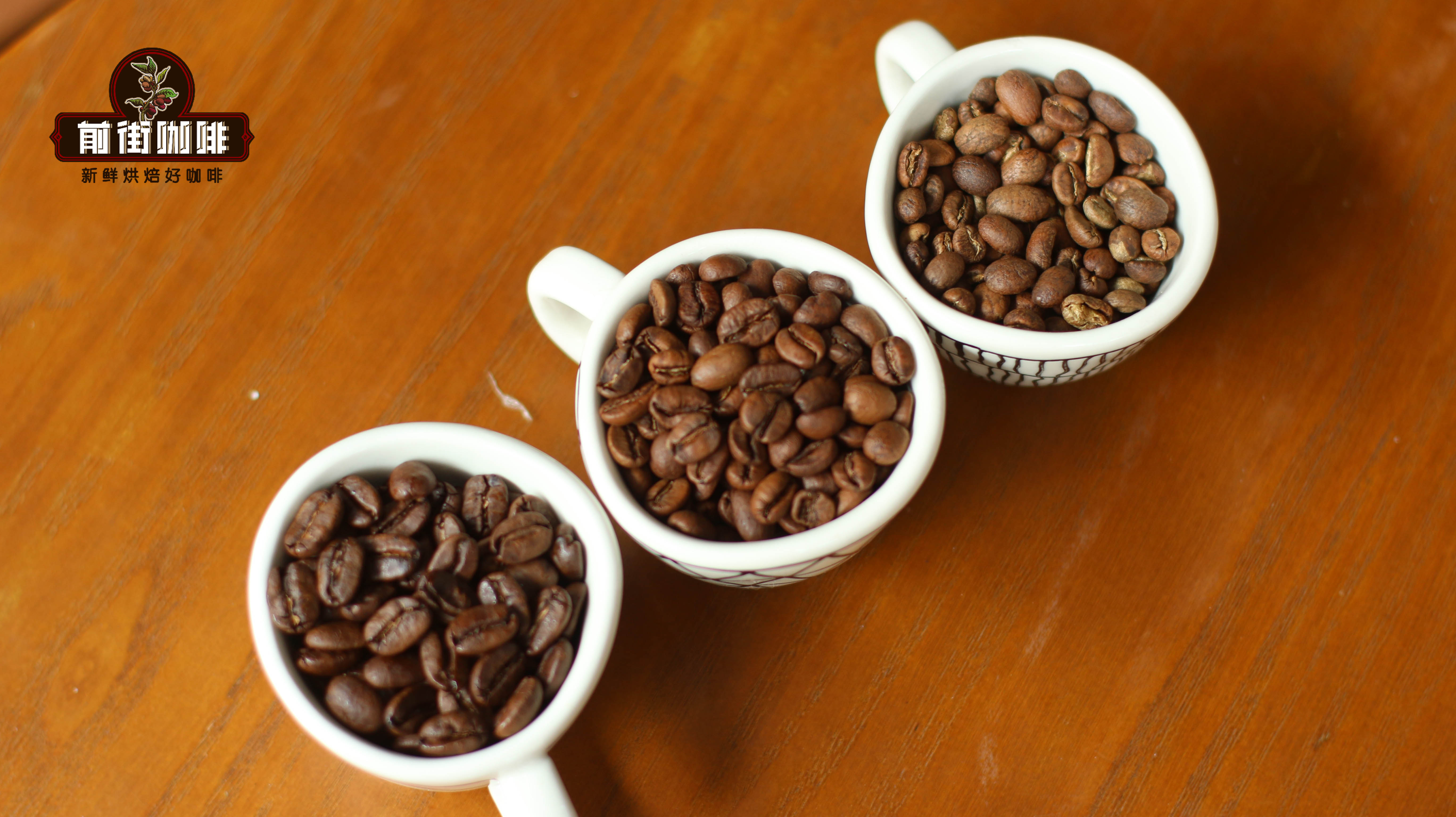
For this washed Worka G1 Yirgacheffe, a light roast is recommended to preserve its bright acidity and tea-like characteristics. During roasting, it is essential to maintain a gentle heating curve, with a total duration of at least 10 minutes, to ensure sufficient degradation of chlorogenic acids and avoid overly sharp acidity. At the same time, extending the development phase slightly after first crack to build caramelization reactions can enhance sweetness, resulting in a rounder overall flavor without sacrificing brightness.
To explore the impact of different water temperatures on this light-roasted washed coffee, we conducted pour over brewing tests under three temperature conditions. The parameters were uniformly set as: Hario V60 filter, 15 grams of coffee, a 1:15 coffee-to-water ratio, and a grind size of EK43s setting 10 (approximately equivalent to 80% passing through a Chinese standard #20 sieve). The brewing process involved a 30-second bloom with 30 grams of water, followed by a slow circular pour to 125 grams, then a second pour to 225 grams as the coffee bed begins to show. The total extraction time was about 2 minutes.
The test results showed: 86℃ At 86°C, the dominant flavors were lemony acidity and a tea-like body, with noticeable acidity but relatively simple layers.90℃ At 90°C, the cup exhibited more complex layers, such as lemon, plum, and subtle Tieguanyin tea notes, with prominent caramel sweetness, bright acidity, and a sweet, lingering aftertaste. 94℃ At 94°C, the acidity remained pronounced but shifted toward a richer berry tone, with a dense tea-like body and a fuller mouthfeel, though with slightly less brightness.90℃ Overall, 90°C best balanced the bright fruit acidity and refreshing tea character of the Yirgacheffe Worka lot, making it the recommended choice for coffee lovers seeking a clear and defined flavor profile.
The above content is compiled by CoffeeHunters, a coffee news website.


