







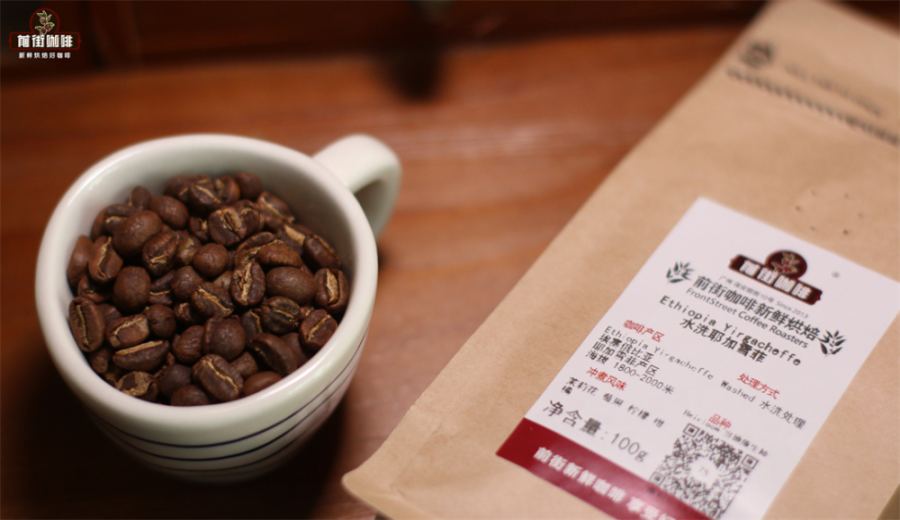
Introduction:Delve into the charm of natural-processed Ethiopian Yirgacheffe and Guji coffees, from their geographical environments and historical backgrounds to the detailed origins of the Huila batches, comprehensively analyzing their unique flavors and processing methods. This article also provides practical pour-over recommendations and parameters to help coffee enthusiasts more precisely appreciate the layers and variations of these top-tier natural beans.
When Ethiopian coffee is mentioned, many people immediately think of the bright, lively lemon acidity and delicate floral notes of Yirgacheffe, as if it were the very symbol of the country’s coffee. However, Sidama and the rising star Guji, also from Ethiopia, excel in the natural processing method, resulting in distinctly different flavor profiles. Among them, Huila, as one of the representatives of natural beans, has gained significant international attention for its rich fruitiness and full-bodied taste. This article will take you on a comprehensive journey to understand these fascinating coffees, covering everything from the regional geography, processing techniques, historical context, the evolution of the Huila batches, to pour-over suggestions.
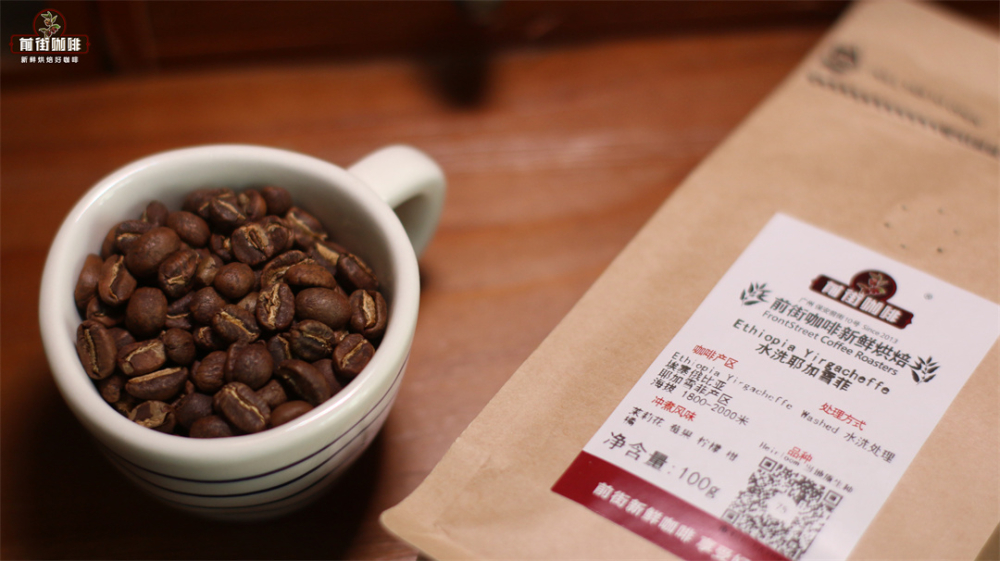 Both Sidama and Yirgacheffe are located in southern Ethiopia, but their processing methods differ greatly. Yirgacheffe is dominated by washed processing, emphasizing brightness and acidity, while Sidama mostly employs natural processing, highlighting sweetness and complexity. Among the many natural coffees, Huila stands out as one of the best, not only enjoying high market popularity but also showcasing highly recognizable flavor characteristics. This coffee comes from the high-altitude Hambella region and, through refined natural processing, exhibits intense tropical fruit and honey aromas.
 Geographically, Sidama is situated near Lake Awassa in southern Ethiopia, adjacent to the East African Rift Valley and bordering Kenya. The area generally ranges in altitude from 1550 to 2200 meters. The high elevation slows the ripening of coffee cherries, aiding the accumulation of aromatic compounds and creating deeper, more layered flavors. The region boasts fertile soils and diverse microclimates, so even neighboring villages may produce coffee with subtle flavor differences.
Ethiopia’s administrative divisions and regional classifications are complex, and Sidama is no exception. According to the classification by the Ethiopian Commodity Exchange (ECX), this region is subdivided into multiple zones and sub-regions, encompassing over 50 cooperatives and more than 200 washing stations. This diversity gives Sidama coffee an exceptionally varied and unpredictable flavor profile. Interestingly, Yirgacheffe was originally part of Sidama, but due to its standout flavors, it successfully registered as an independent brand, “Yirgacheffe®,” in 2007, becoming Ethiopia’s first region with a flavor trademark.
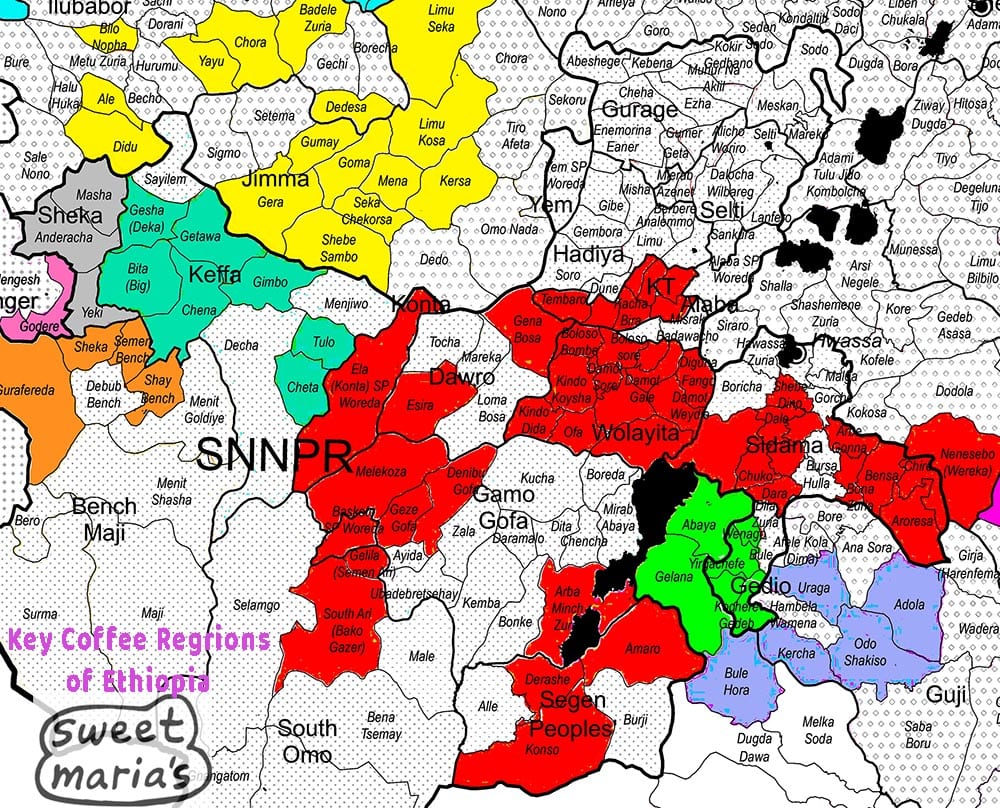 The rise of the Guji region is a more recent development. Before 2008, Guji coffees were still classified under “Sidama A” by the ECX. As Guji beans consistently performed well in international competitions such as the Cup of Excellence (COE), their unique flavors gradually garnered attention, leading the ECX to designate it as a new region in 2015. Guji features an average altitude exceeding 1800 meters, along with fertile black soil rich in minerals, providing an ideal growing environment for coffee trees. Due to past transportation challenges and isolation, the coffee industry here developed later, but this also allowed pristine forests to be preserved, adding distinctive regional character to the coffee.
Notable sub-regions of Guji include Ana Sora, Hambella, Shakiso, Uraga, and Limmu. Among them, Huila originates from the Hambella area and is known for its natural processing. Hambella is actually a coffee farm operated by METAD Agricultural Development PLC, a company founded in 2013 by Aman Adinew, who comes from a coffee-farming family. Aman previously served as the Chief Operating Officer of the Ethiopian Commodity Exchange (ECX) and, after leaving, dedicated himself to modernizing the coffee industry. He works with thousands of smallholder farmers to ensure quality and traceability.
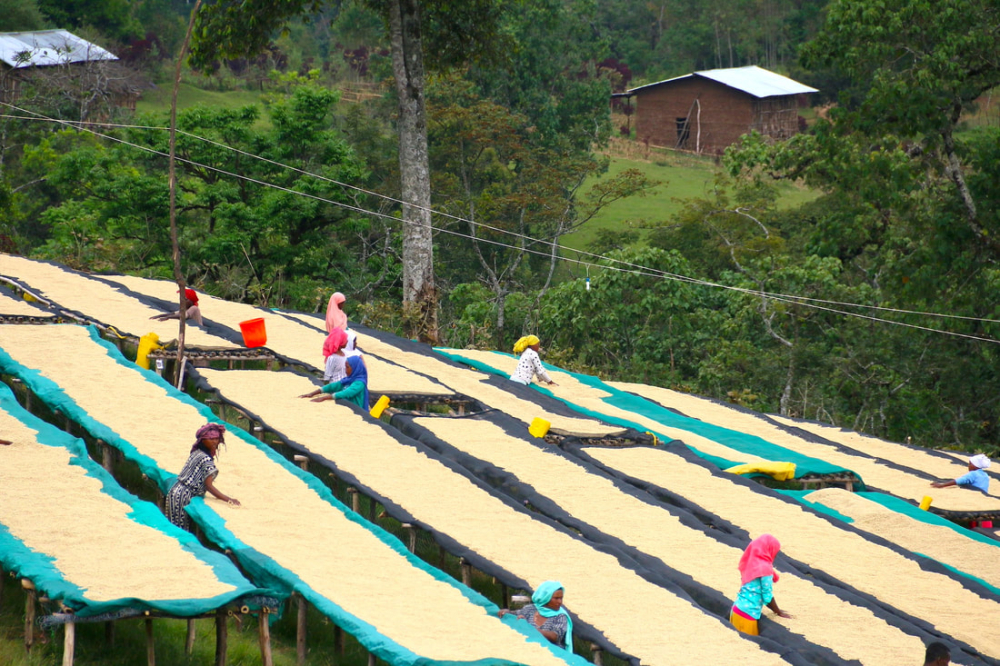 The Hambella farm spans 200 hectares, about 75 kilometers from Yirgacheffe, and lies at the heart of Ethiopia’s coffee-growing region. Its processing station is equipped with advanced facilities and managed meticulously. Coupled with volcanic soil and organic farming practices, the coffee here features intense and layered flavors. Huila was initially known simply as “Hambella,” the English translation of the region’s name. Later, due to surging market demand, DW Company established multiple independent drying stations in the Hambella Wamena Wereda district, including Buku Abel, Buku Saysay, Haro Soresa, Tirtiro Goye, and Seke Bokosa—all located within the core town of Dimtu.
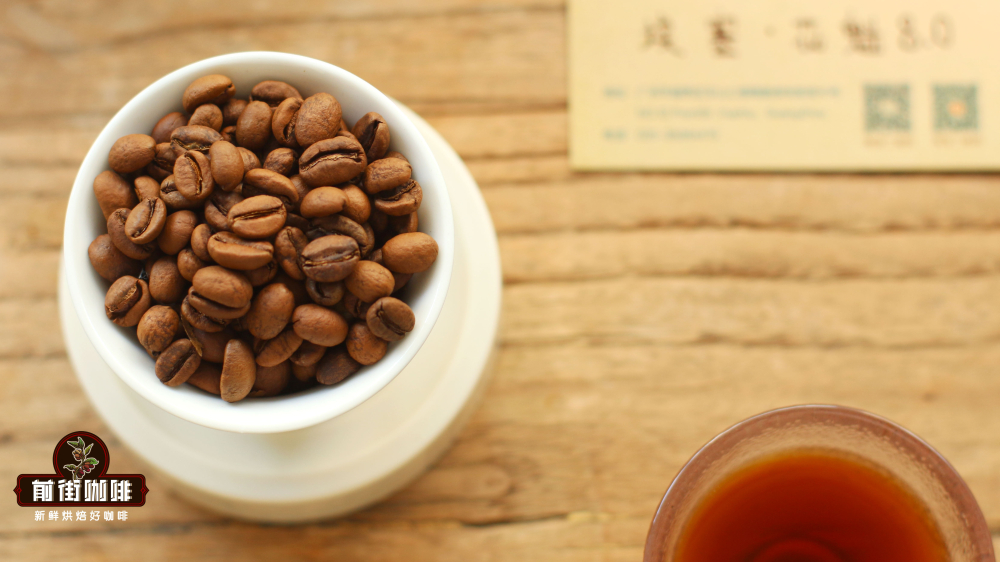
It is worth noting that since 2018, the flavor profile of Huila has begun to show subtle changes. Cupping results from a certain coffee shop revealed that while the 2018 and 2019 Huila retained some of the original flavors, they were slightly inferior to the 2017 “first-generation Huila” in terms of body and aftertaste. To differentiate batches from different years, domestic trading companies adopted an “X.0” naming system—such as “Huila 2.0” for 2018, and “Huila 3.0” and “Huila 3.1” for 2019—and so on, with the latest release being “Huila 7.0,” making it easier for consumers to identify specific vintages and flavor characteristics.
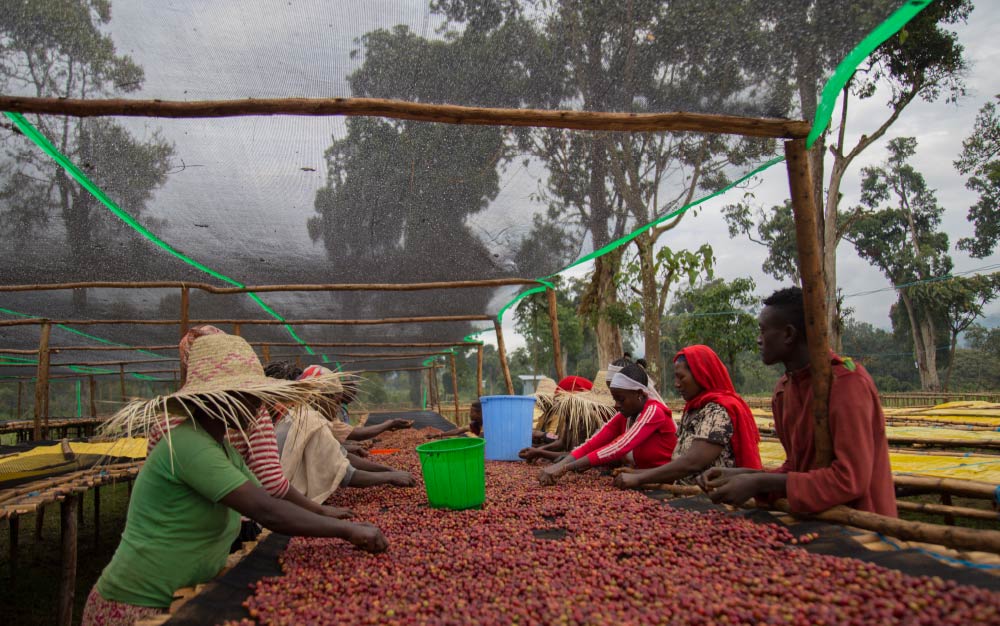
Speaking of natural processing, it is the most traditional method in Ethiopia and still dominates production, accounting for about 70% of the country’s output. Compared to washed processing, natural processing better preserves the natural sugars and fruity aromas of the coffee cherry, delivering a richer body and fermented aroma. Natural-processed Sidama coffees are typically sun-dried for 27 to 30 days, reducing moisture content from around 60% to approximately 12%. This process imparts a sweet-and-sour tropical fruit note and adds a hint of vinous fermentation complexity.
For pour-over enthusiasts, it is recommended to use a high water temperature of 92°C to 93°C for lightly roasted Huila natural beans to fully bring out their floral and fruity notes. The grind size is suggested to be medium-fine, roughly 78% passing through a Chinese No. 20 sieve—too coarse may lead to under-extraction, while too fine can result in over-extraction and bitterness. A powder-to-water ratio between 1:15 and 1:16 is advised, adjustable based on personal preference for strength. Use a V60 dripper and employ a three-pour method: start with a 30-second bloom using twice the coffee’s weight in water, then pour in a small, circular motion from the center outward until reaching 125 grams and pause; wait for the bed to drop and continue pouring to 225 grams. The total brew time is around 2 minutes, effectively highlighting Huila’s layered flavors and fruity characteristics.
The above content is compiled by CoffeeHunters, a coffee news website.


