







Introduction:Want to understand why coffee beans from a certain renowned origin can stand out in the specialty market? This article delves into how the region’s diverse microclimates, unique soils, and native varieties come together to create intense fruity aromas and rich body. We specifically focus on one particular area within the region, analyzing key steps in the natural processing method and detailing the actual flavor profile of a popular coffee bean—taking you from origin to brewing to uncover the secrets of these top-tier coffees.
This well-known origin is located in southern Ethiopia and is one of the most famous coffee-growing regions familiar to specialty coffee enthusiasts worldwide. The area sits at elevations ranging from 1400 to 2000 meters above sea level, featuring highly diverse soil conditions, complex microclimates, and a vast array of native coffee varieties. As a result, even neighboring villages or towns produce coffee beans with distinct flavor profiles. Among the many regions, two sub-regions within this origin are considered the most representative, with one officially designated as an independent origin by the ECX in 2010, highlighting its significance. Through this article, you’ll gain an in-depth understanding of the geographical diversity of this renowned origin, the terroir advantages of the sub-region, the special status of another sub-region, how natural processing enhances fruitiness and flavor layers, and the actual flavor performance of a popular coffee bean.
 Sidamo is situated in the southern part of Ethiopia, bordering the Arsi and Bale administrative regions to the east and Gamogofa to the west. Most of the coffee-growing areas in the region are distributed along the East African Rift Valley, typically at elevations between 1400 and 2000 meters, making it a classic high-altitude growing environment. Agriculture is the main economic activity here, with coffee farms spread widely across valleys and plateaus. With the rising demand for specialty coffee in recent years, Sidamo has gradually developed into an important hub for coffee export and distribution. Due to significant variations in soil composition, climate conditions, and native varieties across different areas, each town produces coffee beans with distinctive regional characteristics and unique flavor expressions.
Among the many areas in this renowned origin, the two sub-regions within the origin are two of the most notable coffee-growing zones. These areas primarily use the natural processing method, a traditional technique that fully highlights the fruity notes inherent in the coffee cherry, while also imparting a rounder body and richer complexity to the beans. Industry insiders point out that it is precisely because of natural processing that the coffee from this renowned origin boasts such captivating fruitiness and full-bodied flavors.
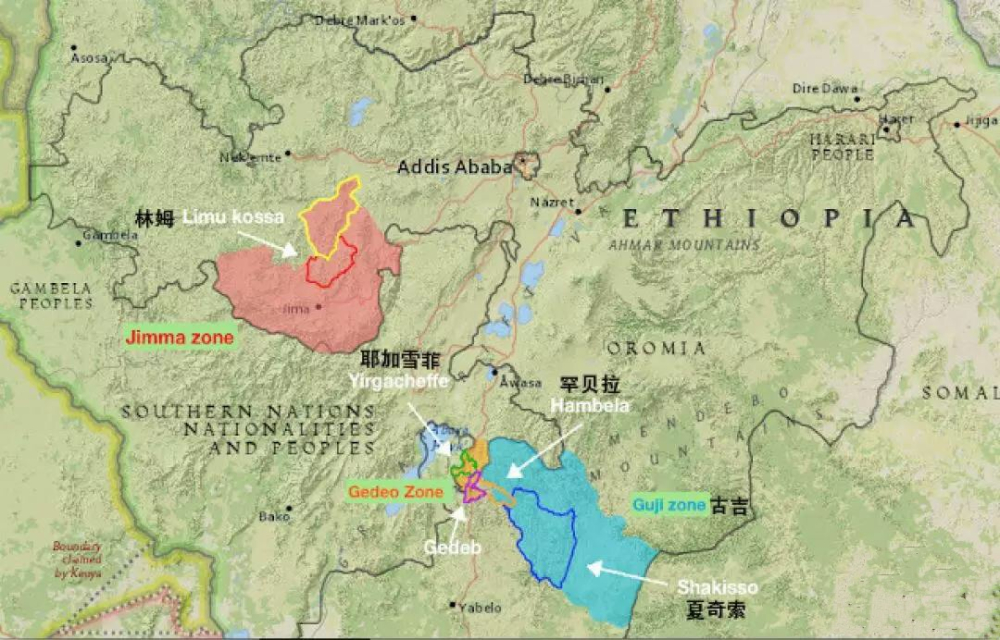 The Guji region was originally part of Sidamo until it was designated as an independent origin by the Ethiopian Commodity Exchange (ECX) in 2010. It is located southeast of Yirgacheffe and features a varied terrain with a landscape of high mountains, deep valleys, and expansive plains. The soil here is predominantly fertile black clay (Vertisol), with layer thickness reaching nearly two meters, and the average elevation exceeds 1800 meters, creating a significant diurnal temperature variation—an ideal natural condition for cultivating high-quality specialty coffee. Among the many areas in Guji, Hambella is undoubtedly one of the most well-known sub-regions.
One sub-region belongs to this origin and is administratively governed by the Oromia State. Its geographical location is particularly distinctive: to the west, it borders the Yirgacheffe Kochere Highlands, which rise up to 3200 meters and span about 30 kilometers in width, while to the east, south, and north, it connects with other sub-regions of the origin such as Shakiso, Uraga, and Kercha. Notably, this sub-region is one of the highest-altitude coffee-growing areas in Ethiopia, and such elevation greatly benefits the acidity, aroma, and sweetness of the coffee. A certain popular coffee bean comes from this area, which is why it is often referred to as the “sub-region’s Hua Kui.”
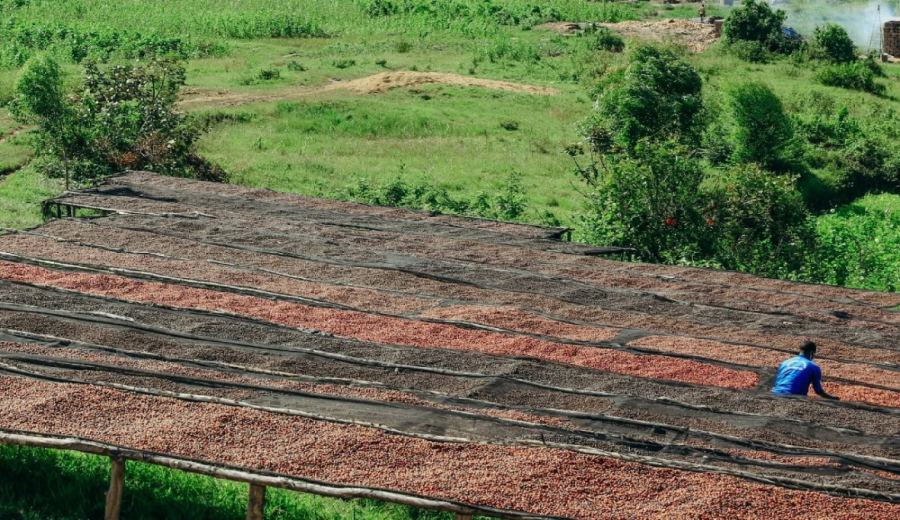
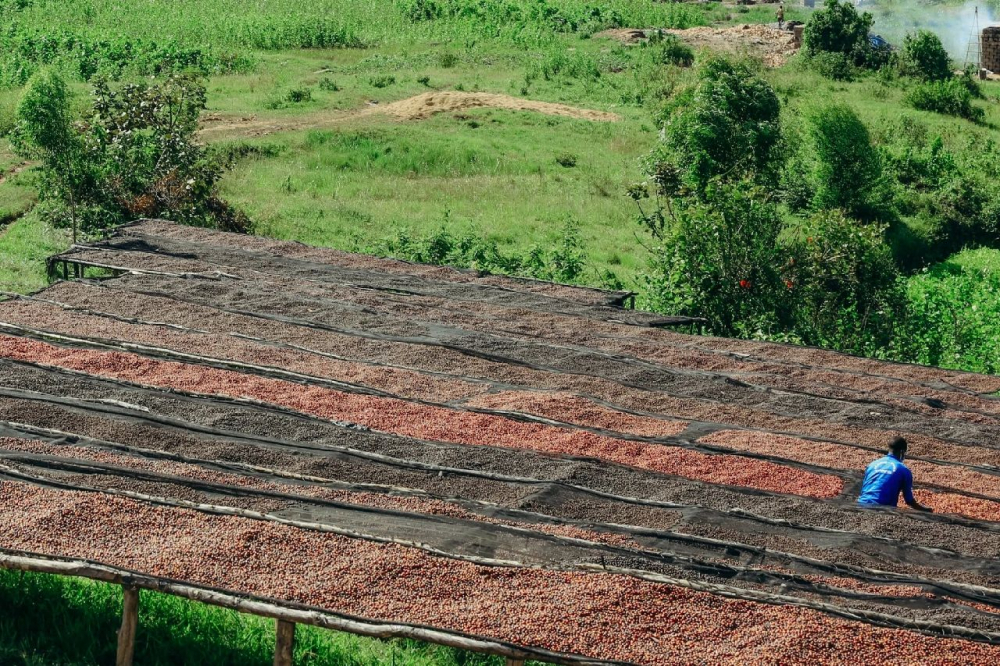
The reason a certain popular coffee bean stands out in the international market lies in its use of the natural processing method. Also known as dry processing, natural processing is a long-established post-harvest coffee method where harvested coffee cherries are laid out in the sun to dry naturally over a period of 27 to 30 days. During this time, the drying level and environmental conditions must be strictly controlled to prevent the beans from cracking or developing defects due to overexposure. Although the steps of natural processing are relatively simple, the dried beans do not have as neat an appearance as washed beans, which led to it being less favored by the market in the past. However, it is precisely this processing method that gives the coffee more intense fruity aromas, higher body, and a richer overall flavor profile.
Here’s a detailed look at the actual flavor profile of a certain popular coffee bean: This coffee comes from the Sidamo region in Guji, falling within a certain sub-region of the broader renowned origin. The beans are processed by a certain washing station, grown at elevations between 2250 and 2350 meters, and are of a local native variety, using the natural processing method. Under appropriate brewing parameters, this coffee showcases prominent jasmine floral notes, soft fermented wine-like aromas, and a rich array of fruit tones—including creamy strawberry notes and intense jackfruit sweetness—making it an excellent choice for coffee lovers who enjoy intense fruitiness and layered complexity.
The above content is compiled by CoffeeHunters, a coffee news website.


