







Introduction:Delve into the geographic advantages and microclimates of Colombia’s Huila region, exploring how its coffee beans exhibit berry acidity, nutty chocolate notes, and the aromatic complexity of unique processing methods. This article introduces you to the main variety composition of Huila and provides practical V60 pour over three-stage brewing parameters—suitable for both beginners and advanced enthusiasts alike—to help you grasp the flavor essence of this premium coffee origin.
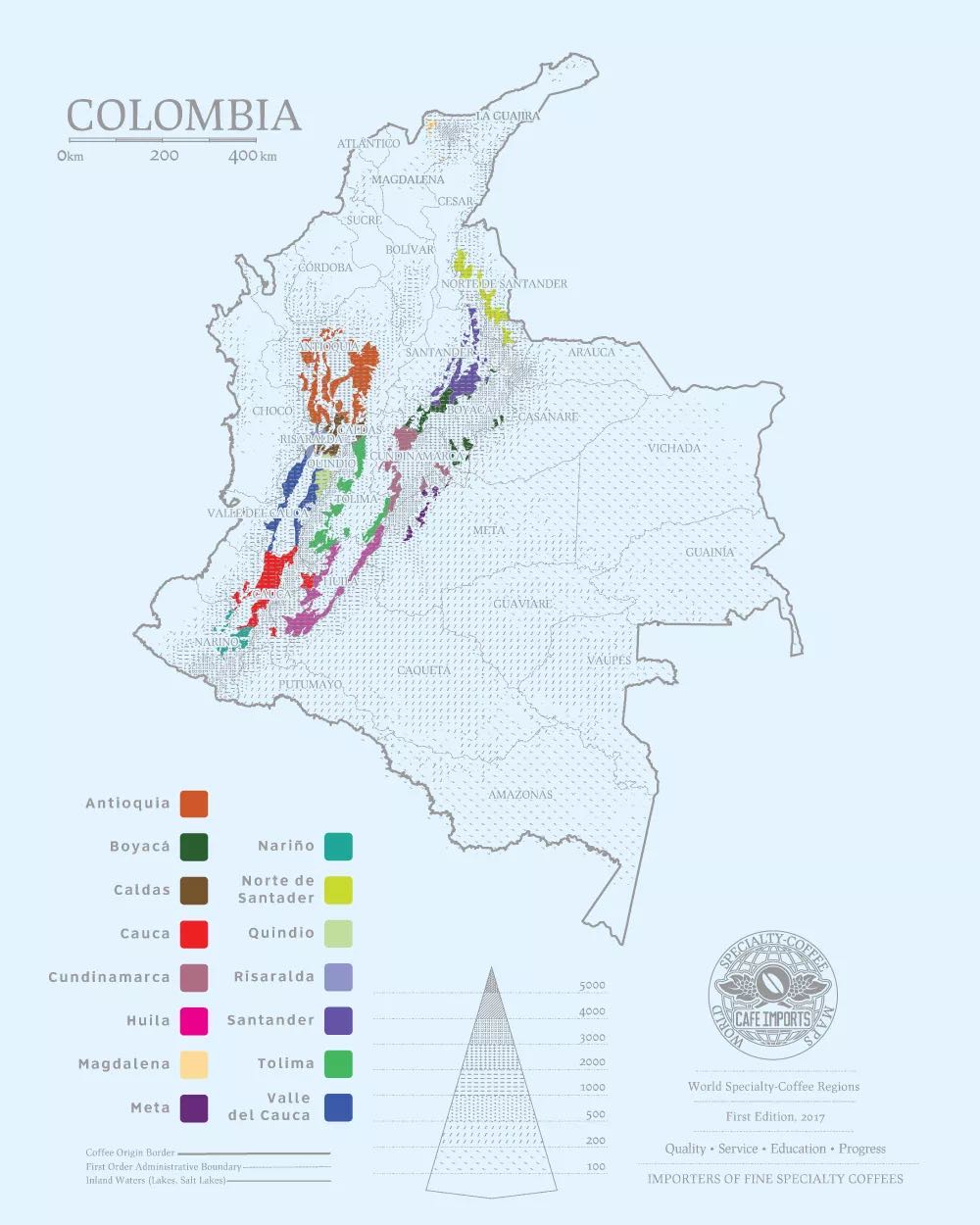
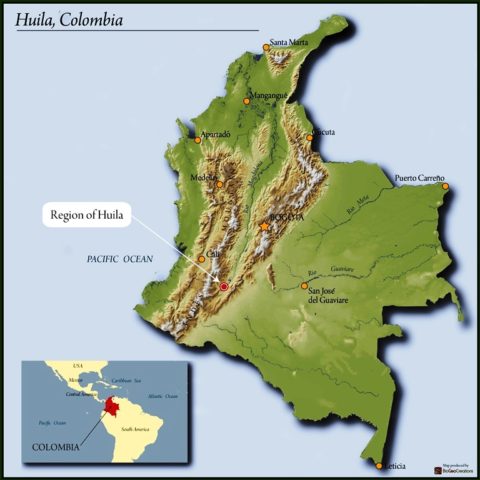
Huila (also translated as Hui Lan or Hui Lian), located in the southwestern Andes of Colombia, is one of the country’s most renowned specialty coffee regions, accounting for about 12% of the nation’s annual coffee production. Thanks to mineral-rich volcanic soils, consistent moderate rainfall, and the diverse microclimates brought by high altitudes, Huila is able to cultivate Arabica coffee with balanced flavors, rich body, and captivating berry notes.
The reason this region’s coffee is so highly regarded lies not only in its natural conditions but also in its local varietal structure. The majority of planted varieties are the widely grown Caturra and Catuai—common across Central and South America—which make up about 75% of the crop. These two varieties offer good disease resistance and consistent yield performance. In addition, Typica accounts for around 10%, the native Colombian variety Castillo makes up approximately 13%, and the rare Geisha constitutes 2%. These varieties, when grown at high altitudes and managed with care, can express a diverse range of flavors from bright citrus to deep nuts.
The region predominantly follows a smallholder farming model, with manual selection of ripe cherries during harvest to ensure high bean quality and stable flavor profiles. For these reasons, Huila is considered one of Colombia’s most representative specialty coffee regions, and its beans enjoy immense popularity in the global specialty coffee market.
Coffee from the Huila region typically features pronounced berry acidity paired with a full body and the mellow aromas of chocolate and caramel. This layered combination of flavors makes it one of the go-to origins for many coffee lovers starting their journey into specialty coffee.
Among various processing methods, washed processing highlights the most authentic flavor characteristics of the beans and is the best way to understand a region’s terroir. For example, washed beans from Huila often showcase clear citrus and berry acidity, along with nutty and subtle caramel sweetness—making them ideal for everyday drinking or as an introductory choice for those new to the region.
If you’re looking to explore more distinctive processing flavors, try the Anaerobic Natural “Flower Moon Night” from Finca El Socorro in Huila. This farm began experimenting with special anaerobic fermentation techniques as early as 2017 and overcame the challenge of over-fermentation under ambient conditions. These beans are fermented in an oxygen-free, temperature-controlled environment for 15 to 20 days, then sun-dried, resulting in intense fermentation aromas and a sweet flavor reminiscent of strawberry jam—making it an excellent choice for those who love fruity and unique profiles.
Another noteworthy bean is the washed “Hanami” from Finca Monteblanco. This is a single-origin blend based on Caturra and Catuai, with a small portion of Geisha added. The Geisha variety was introduced to the farm from Panama in 2016, with the first harvest occurring in 2020 and stable production beginning in 2021. This coffee combines the distinctive floral and citrus acidity of Geisha, while also retaining the berry vibrancy and nuttiness brought by Caturra and Catuai—a highly layered single-origin blend.
After receiving freshly roasted Huila coffee beans, it is recommended to let them rest sealed for 1 to 2 days to allow excess CO₂ to degas. The optimal flavor window is usually between 5 and 30 days after roasting, when you can fully appreciate its delicate aromas and complexity.
For brewing, using a V60 filter cone can clearly highlight the layers and sweet-acid balance of Huila coffee. Here are practical pour over recommendations: use 15 grams of coffee grounds with a 1:15 coffee-to-water ratio. The grind size should be medium-fine, roughly equivalent to the coarseness of granulated sugar, or an 80% extraction rate through a standard Chinese No. 20 sieve. Water temperature is recommended to be controlled between 90–91°C, which helps bring out the fruit acids and aromas without sacrificing body.
It is recommended to use a three-stage pouring technique: first, pour 30 grams of water for a 30-second bloom to initiate aroma release from the coffee grounds; next, pour in a small circular motion until reaching 130 grams, then pause briefly as the water level gradually drops and is about to expose the coffee bed. Pour again to reach a total of 240 grams, then stop. Finally, wait until the water level is about to expose the coffee bed before removing the filter. The overall brew time is recommended to be within 2 minutes to 2 minutes and 10 seconds to achieve a good balance and clarity of flavors.
The above content is compiled by CoffeeHunters, a coffee news website.


