







Introduction:The Bikini Coffee Shop in Washington State, USA, once made headlines for its sexy service, but has repeatedly faced government regulation due to clothing controversies. From its booming operations back then, to court rulings of "gender discrimination," and even an attempted kidnapping incident, this article delves into the evolution of such marketing models, the legal battles, and employee safety concerns, helping readers understand the social context and practical considerations behind it.
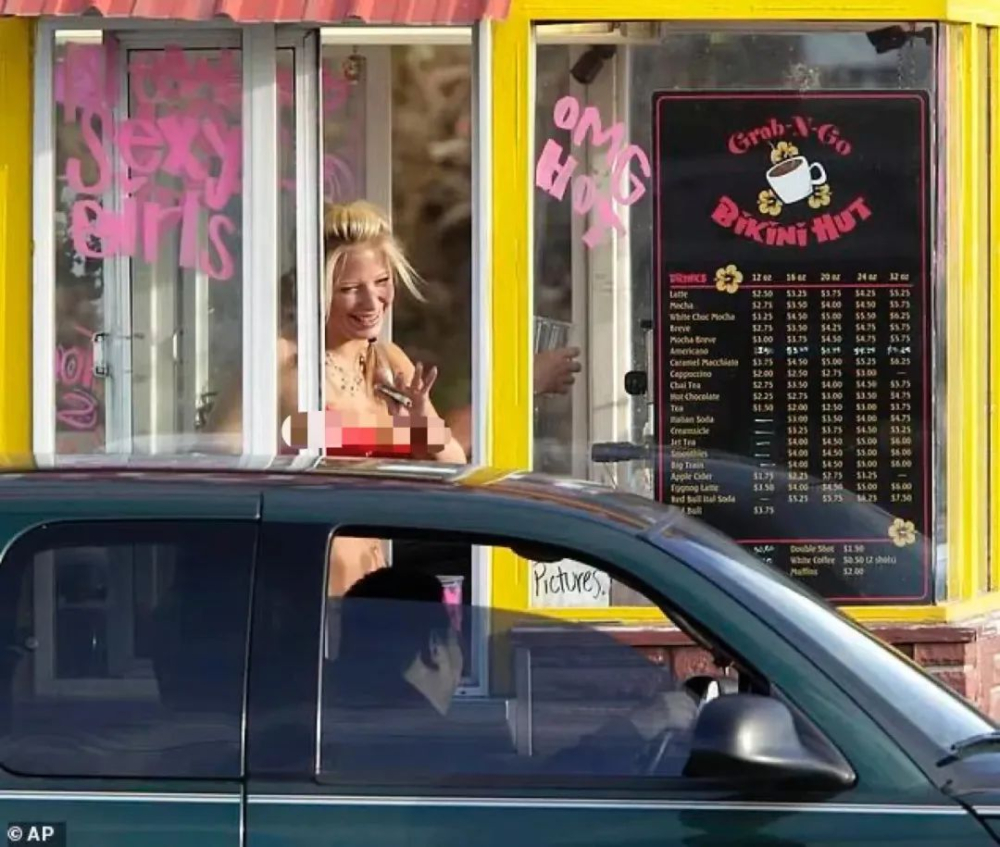
In the minds of most people, baristas are expected to have a neat appearance and a professional attitude. But in Washington State, USA, some coffee shops have made it a marketing highlight to have female baristas wear bikinis — or even just pasties and thongs — while offering drive-thru services that allow customers to purchase coffee without leaving their cars. This highly controversial business approach, which emerged in the 1980s, has brought huge business opportunities as well as long-standing social debate.
The business model of bikini coffee shops can be traced back to the 1980s, when drive-thru service was the main focus, allowing customers to get coffee without getting out of their vehicles. These baristas wore sexy lingerie, high heels, and bikini-style outfits, attracting considerable attention. Although this type of marketing approach is not directly illegal, its excessive exposure has long been questioned by women's groups, parents, and local residents, who criticize it for objectifying women. Some even have lawmakers publicly stating that it is a commercial operation that exploits women.
With the effect of online virality, these coffee shops quickly gained local fame and subsequently expanded. However, many members of the public reported feeling uncomfortable bringing their children past these establishments, especially since the queues were almost entirely male, further raising questions about the original intent of the business. Additionally, some baristas engaged in other income-generating activities after work while actively promoting themselves during shifts, behavior that drew industry backlash as it was seen as damaging the overall image and professional identity of baristas.
Faced with public pressure, local governments have regulated these businesses multiple times over the past two decades, including at one point shutting down certain branches for being deemed adult entertainment venues. In 2017, Seattle and the nearby city of Everett passed explicit regulations requiring food and beverage industry employees to adhere to certain dress codes, specifically prohibiting working while wearing only pasties or thongs, with violators subject to fines.
However, these regulations sparked strong backlash from baristas. Many industry workers stated that dressing is a basic freedom, especially for women who rely on this job as a key source of income. They further filed lawsuits in federal court, questioning the constitutionality and gender fairness of the local dress codes.
After reviewing the case, the federal court ruled that the local regulation was clearly discriminatory based on gender, and it was difficult to imagine how similar rules could be applied equally to male employees. In October 2021, the court issued a ruling that removed the dress restriction clauses in the local regulations, restoring baristas’ constitutional right to clothing freedom.
While this ruling protected employees’ rights to choose their attire, it also raised new concerns. Shortly after the regulations were relaxed, an attempted kidnapping incident occurred at one bikini coffee shop. According to local media reports, the incident happened during early morning hours when a male customer, while placing an order at the drive-thru window, suddenly grabbed the female barista’s arm as she was giving him change, attempting to bind her hands with tape and pull her into his car.
Fortunately, the coffee shop was equipped with a silent alarm system and self-defense tools such as a baton and stun gun, allowing the female barista to activate the protective mechanism in time and successfully escape. Police responded swiftly and arrested the suspect that same early morning. The victim later stated that this was an isolated random incident, as few similar occurrences had happened during the many years of operation, and she still planned to continue working at the shop.
This incident reminds us that even if the law protects individual choice, the safety of the actual work environment should not be overlooked. For women considering entering the service industry, although some positions may offer higher pay or flexibility, personal safety and the overall environment of the workplace should be prioritized, with a preference for more stable and better-protected employment options.
The case of bikini coffee shops is not just a clash between marketing and law, but also reflects society’s complex deliberation on gender equality, workplace safety, and personal freedom. From the court’s ruling on gender discrimination to the occurrence of a random kidnapping incident, both are worthy of reflection by both the industry and consumers.
The above content is compiled by CoffeeHunters, a coffee news website.


