







Introduction:Delve into Ethiopia’s renowned Sidamo and Guji regions to uncover how their unique geography gives rise to the distinctive floral and sun-dried flavors of the Huacai (Flower Queen) coffee. This article details the growing backgrounds and processing methods of these regions, explores the origins and characteristics of the Huacai bean, and provides practical V60 pour over parameters and flavor profiles to help you master the brewing techniques of this popular coffee bean.
Ethiopia is the birthplace of coffee, home to the world’s richest diversity of native coffee varieties and varied regional flavor profiles. Among them, the Sidamo and Guji regions are celebrated for their pronounced fruity and floral notes and refined processing techniques, winning widespread acclaim in the global specialty coffee market. Starting with the terroir of these regions, this article takes you deep into the geography and cultivation background of Sidamo, Guji, and Yirgacheffe, focusing on the highly regarded Huacai coffee to decode the secrets behind its sun-dried processing and unique flavor origins.
Additionally, practical V60 pour over parameters will be shared to help you bring out the fullest flavor layers of this coffee bean under different brewing conditions. Whether you’re a coffee novice or an advanced enthusiast, you’ll find useful insights here.
Ethiopia is not only the homeland of coffee but also one of the few countries in the world that still retains a large number of native varieties. In terms of national coffee production, Ethiopia ranks sixth globally. Statistics show that in 2018, approximately 100 million people worldwide depended directly or indirectly on the coffee industry for their livelihoods, with Ethiopians accounting for 20% of that number. In 2017, the country produced 470,000 tons of green coffee beans, but only about 160,000 tons were exported, indicating that most of the coffee is supplied to the domestic market, showcasing the deep-rooted coffee culture.
In Ethiopia, coffee is not just a cash crop but also an integral part of the culture, woven into daily life for centuries. The country’s coffee is mainly divided into eight major regions, including Limu, Lekempti, Yirgacheffe, Djimmah, Harrar, Bebeka, Sidamo, and Guji. Among them, Yirgacheffe and Sidamo are often compared—Yirgacheffe is known for its bright acidity and floral notes, while Sidamo, with its diverse micro-regions and processing methods, exhibits a richer flavor potential.
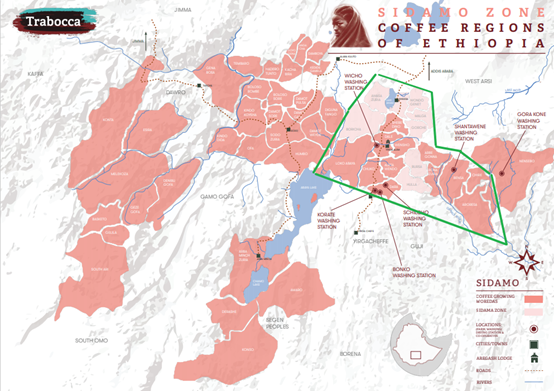
Within the Sidamo region, the most notable micro-regions are Guji and West Arsi. Sidamo is located on the southern highlands of Ethiopia, featuring diverse terrain with altitudes ranging from 4,600 to 7,200 feet. Bordering Kenya, it enjoys ideal climate and soil conditions for cultivating high-quality coffee. The coffee beans here benefit from rich organic matter cycling in the soil and distinct microclimates, resulting in diverse flavors and regional characteristics.
Sidamo coffee beans typically have a grayish hue and inconsistent sizes, with acidity and body that are flexible, ranging from soft to bold, often accompanied by delicate floral and spicy notes. Compared to other African regions, its fruit acidity is clearer, the mouthfeel smoother, making it suitable for coffee lovers who prefer mild and bright flavors.
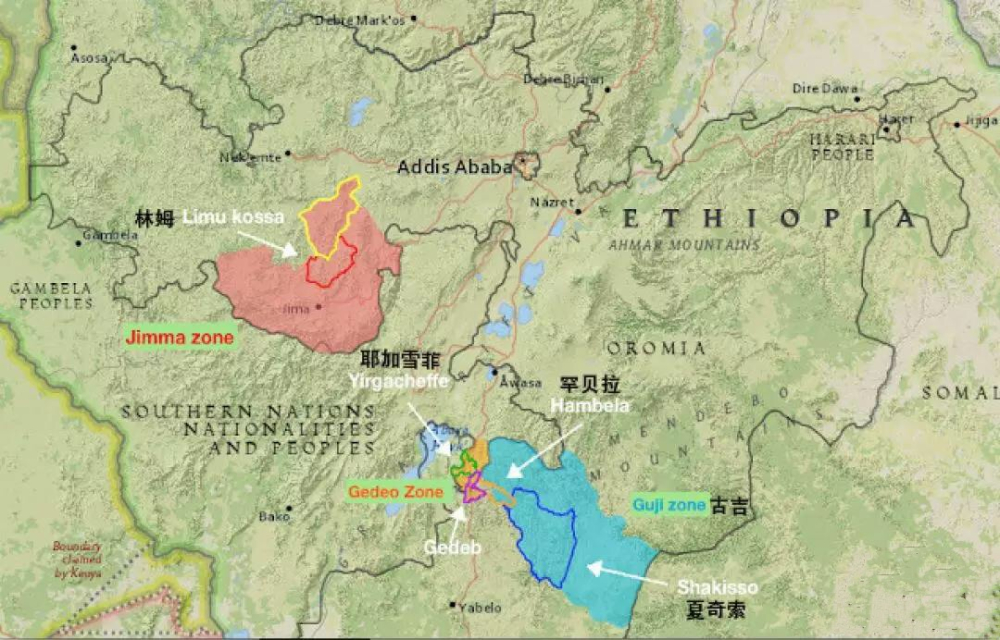
The Guji region was originally part of Sidamo but was designated as a separate region by the Ethiopian Commodity Exchange (ECX) in 2010. It is located southeast of Yirgacheffe and is known for its terrain of high mountains and deep valleys. The area has fertile black soil (Vertisol) with deep layers, an average altitude exceeding 1,800 meters, and significant day-night temperature variations, providing excellent conditions for growing premium specialty coffee.
When it comes to Guji, one cannot overlook the flagship Huacai coffee. This bean comes from the Hambella area within Guji, administratively part of the Oromia Region. Hambella borders Kochere in Yirgacheffe to the west, separated by a 3,200-meter-high mountain range, and is adjacent to other sub-regions of Guji to the east, south, and north. It is one of the highest-altitude coffee-growing areas in Ethiopia, contributing to the extraordinary flavor potential of Huacai coffee.
The Hambella region currently hosts nearly 20 coffee processing facilities of various scales. In 2017, a sun-dried batch from the local “Buku Abel” processing plant won the TOH (the Taste Of Harvest) green bean competition with its intense strawberry and cream aromas. These beans were later introduced to China, where roaster Li Jianfei used them to win second place in the 2017 China Brewers Cup. Due to its outstanding performance among many Geisha entries, it was named “Huacai,” symbolizing its top-tier quality.
In the following years, due to climate and processing variations, this series of beans has successively been released in versions such as Huacai 2.0, 3.0, 3.1, 4.0, 5.0, and 6.0, allowing coffee enthusiasts to enjoy the unique flavor evolution of each year.
Besides Guji and Hambella, West Arsi in Sidamo is also an important micro-region for specialty coffee. Located between Yirgacheffe and Harerghe, West Arsi sits at an altitude of 1,900 to 2,200 meters, with terrain and microclimate conditions also highly suitable for growing high-quality coffee. The area’s residents are mostly Oromo people, considered one of the earliest ethnic groups to begin drinking coffee, exerting a profound influence on coffee culture.
Coffee in West Arsi is mostly grown by smallholder farmers, with each farm covering only 2 to 3 hectares—slightly larger than the 1.5 to 2 hectares typical in many other parts of Ethiopia. These family-run farms are often known for their meticulous management, with coffee fruit selection usually done personally by family members, helping to improve consistency in quality. Additionally, processing stations often offer premium pricing for red cherries, incentivizing farmers to invest more care in harvesting and processing.
In Sidamo, sun-drying is the most common processing method, especially in contrast to the washed process widely used in Yirgacheffe. Sun-drying allows the coffee beans to fully absorb the sugars from the fruit pulp, resulting in intense fruity aromas and a rich mouthfeel.
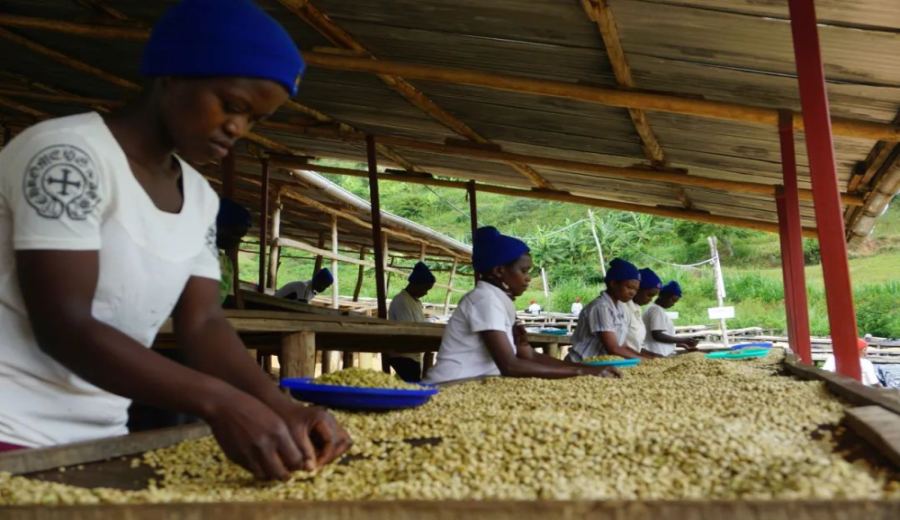
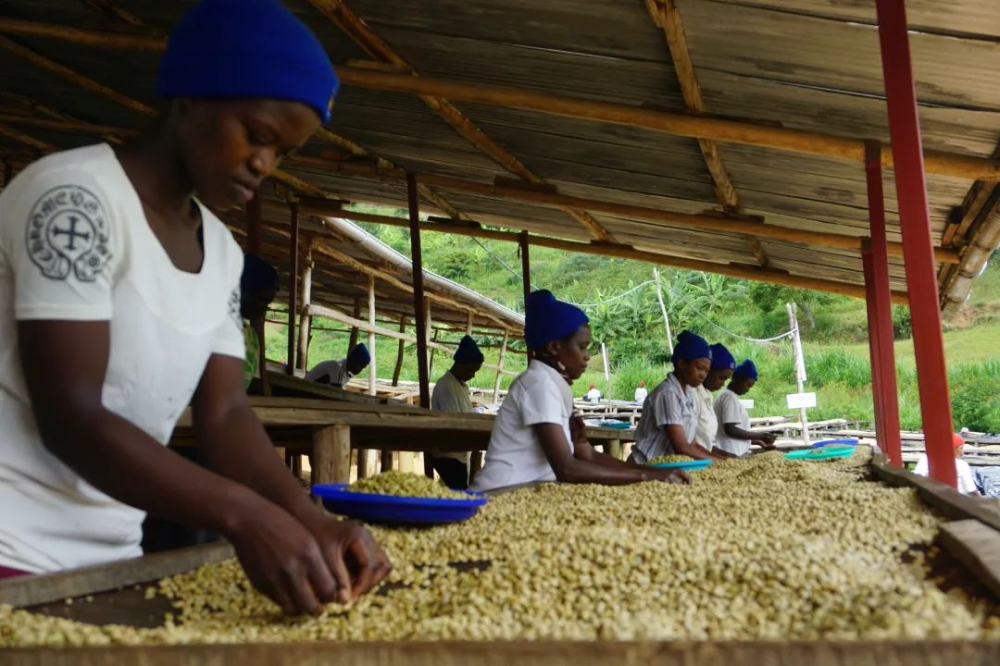
Local farmers harvest only fully ripe red cherries, manually removing unripe or overripe ones to ensure only the highest-quality coffee fruits enter the subsequent processing. The red cherries are then evenly spread on raised wooden frames or racks to avoid contact with the ground and reduce off-flavors. During sun-drying, the beans are constantly turned to ensure even drying, and moldy or defective beans are regularly removed. Only when the pulp is completely hardened is the fruit flesh and parchment removed using a hulling machine, followed by a final screening to meet the high G1 grade standard.
This refined sun-drying processing technique is the key to the Huacai coffee’s rich berry, creamy, and dried fruit aromas.
For coffee enthusiasts, understanding how to brew to fully highlight the flavors of sun-dried beans like Huacai is crucial. Freshness is the primary factor affecting flavor expression—choose beans roasted within five days and allow them to rest for 4 to 7 days for optimal flavor development.
If purchasing coffee powder, it is recommended to use it as soon as possible, as powdered coffee oxidizes faster upon exposure to air, losing aroma and complexity. Whole beans retain more volatile aromatic compounds, so grinding them fresh for brewing ensures the best flavor.
Below are the recommended V60 pour over parameters for Huacai coffee:
• Filter: V60
• Water temperature: 90°C
• Coffee-to-water ratio: 1:15
• Coffee dosage: 15 grams
• Grind size: Approximately 80% passing through a 20-mesh sieve in China (medium-coarse)
Brewing steps are as follows:
1. Start by pouring twice the amount of coffee dosage (about 30 grams) of water for a 30-second bloom to release CO₂ from the coffee grounds.
2. Then, pour water in small circles, performing the first pour when the water level reaches 125 grams.
3. Continue pouring until the total water reaches 225 grams, then let the V60 drip through.
4. Starting from the initial pour, keep the total extraction time around 2 minutes.
5. Finally, swirl the coffee liquid and pour it into your cup to enjoy its full flavor.
[2025 New Crop Season Sidamo Huacai Coffee Flavor Profile]: Prominent floral notes, accompanied by the bright acidity and sweetness of berries, citrus, and plums. The mid-palate delivers a juicy mango-like sensation, while the finish exhibits the sweet aromas of honey and black tea.
[Sun-Dried Arsi Coffee Flavor Profile]: At higher temperatures, it shows intense berry juice flavors, gradually revealing the soft aftertastes of plums, nectarines, mangoes, and honey as it cools.
The above content is compiled by CoffeeHunters, a coffee news website.


