







Introduction:Caturra and Catuai are two of the most widely planted coffee varieties in Central America, commonly found in regions such as Honduras, Costa Rica, and Panama. These two coffees not only look similar but are also often intercropped, yet they actually differ significantly in flavor profile, plant characteristics, and environmental adaptability. This article will delve into the origins, cultivation advantages, cupping flavor differences between Caturra and Catuai, and provide selection suggestions suitable for beginners using pour over methods, helping you choose your favorite coffee beans more precisely.
When visiting Central American coffee-growing regions—whether it’s the high-altitude estates in Honduras or the microclimate zones in Costa Rica—you’ll often see the names “Caturra” and “Catuai” on variety information sheets. They are not only the main Arabica varieties cultivated locally but are also frequently intercropped within the same area due to their similar plant traits and adaptability to the growing environment. However, upon closer tasting, the two still show clear differences in appearance, flavor, and even cultivation strategies.
Caturra was first discovered by chance in 1915 in coffee farms in the state of Minas Gerais, Brazil, and is a natural mutation of the Bourbon variety. Local farmers, noticing that its plants were noticeably shorter than traditional Bourbon, borrowed the Guaraní word “Caturra” (meaning “small”) to name the variety. By the 1930s, the Agricultural Research Institute of São Paulo State (IAC) in Brazil included it in a systematic variety selection program, aiming to develop a new generation of coffee plants that combine high yield with premium flavor.
The most distinctive feature of Caturra is its compact tree structure, with short branch spacing and dense leaf distribution, allowing more plants to be grown per unit area and thereby increasing overall yield. In addition, compared to traditional varieties like Typica that require shaded environments, Caturra can adapt to full-sun cultivation. It maintains stable growth even at altitudes ranging from 700 to 1700 meters, and generally speaking, the higher the altitude, the richer the flavor complexity, with brighter acidity and pronounced sweetness.
As for Catuai, its name comes from the Guaraní word “Catuai” (meaning “very good”), highlighting its excellent overall performance. This variety was hybridized by the Agricultural Research Institute of São Paulo State in Brazil through crossing Yellow Caturra with the Mundo Novo variety, which itself is a natural cross between Bourbon and Typica. As a result, Catuai not only inherits Caturra’s short plant stature and strong light tolerance but also combines Mundo Novo’s high yield, disease resistance, and diverse flavor potential.
From an actual cultivation perspective, Catuai plants also maintain a relatively short height, which not only facilitates harvesting and management but also allows planting density to be increased to about twice that of traditional varieties, making efficient use of limited land resources. Additionally, it shows stronger resistance to wind and rain. Although it is susceptible to leaf rust, overall, it remains a practical variety preferred by many farms in Central and South America.
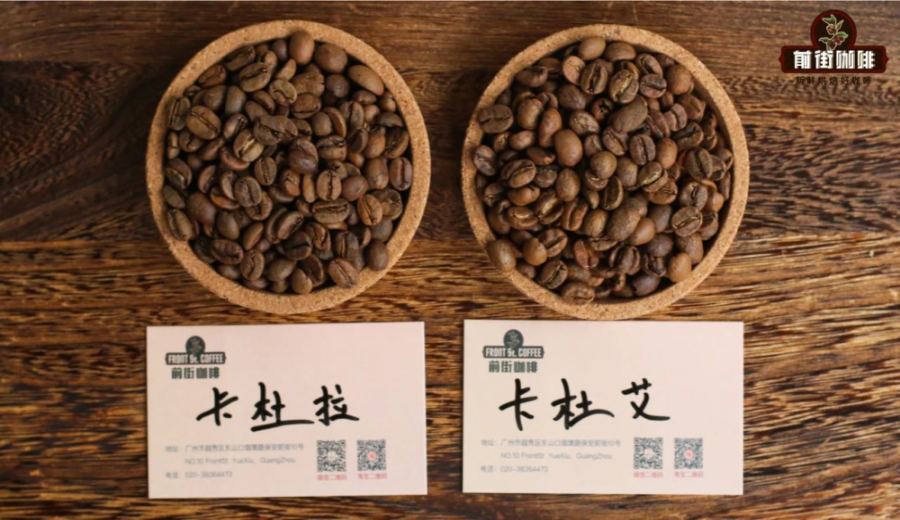
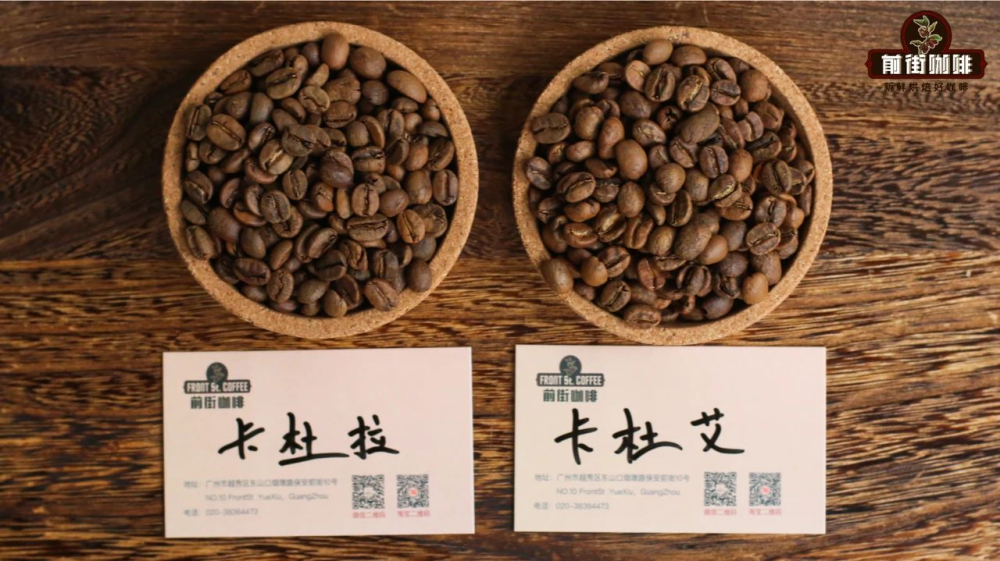
If you carefully compare the appearance of their green beans, Caturra beans tend to be more rounded with a slightly elongated shape, and the ends of the beans usually have a naturally curved arc, giving them a more streamlined visual appearance. In contrast, Catuai beans are distinctly more oval and flattened, with finer and longer tail ends, and an overall more regular contour. In past cupping records, when brewed alone, Caturra often delivers a clean and bright acidity paired with distinct sweetness and medium body, making it suitable for drinkers who prefer a refreshing style.
In contrast, Catuai’s extraction profile showcases a softer acidity, often accompanied by rich fruit notes such as citrus and berry aromas upon tasting, with a clean finish and a long-lasting aftertaste. These characteristics make it a favored choice among many roasters and consumers seeking layered fruitiness and balanced mouthfeel.
So why are these two varieties often intercropped or even co-harvested in actual Central American production settings? According to field test data from the Honduran Coffee Institute (IHCAFe), there is no significant difference between Caturra and Catuai in terms of yield per unit area, growth cycle, or disease resistance. Moreover, many farms originally used Caturra as a substitute for Bourbon, and when Catuai was later introduced for localized cultivation, the two varieties gradually developed similar biological habits. Since Catuai itself carries Caturra genes, forcibly separating them not only incurs additional labor costs but also has limited impact on overall quality.
Therefore, in many well-known blended coffee formulas on the market, these two “sibling varieties” often appear together. For example, some Honduran wine-barrel fermented sherry-flavored beans, Panamanian Geisha blends like La Esmeralda Flower Butterfly, and Costa Rican high-altitude micro-lot products all include both Caturra and Catuai in their blends, leveraging the complementary flavors of the two to create a richer taste experience.
For beginner pour over enthusiasts looking to explore the unique flavors of these two varieties, it is recommended to start with single-origin beans grown at medium to high altitudes from either Caturra or Catuai, using a medium-fine grind (approximately the coarseness of fine to white sugar) and water temperature between 90–93°C. Employing a pulsed or split pouring technique helps highlight their bright acidity and distinct fruity characteristics. If you prefer a rounder and more balanced mouthfeel, you might also opt for a blend of the two, experiencing the harmonious charm between different varieties.
The above content is compiled by CoffeeHunters, a coffee news website.


