








Introduction:Costa Rican coffee is renowned for its bright acidity, aromatic richness, and balanced flavor profile, with honey processing being its most distinctive feature. This article delves into the definition and steps of honey processing, analyzes the strengths of three of Costa Rica’s seven major producing regions—Central Valley, Tarrazú, and Brunca—highlights the high altitude and Strictly Hard Bean (SHB) characteristics of Tarrazú, and spotlights three popular beans from Tarrazú. It explores their regional background, processing method, variety, and flavor profile, and concludes with V60 pour-over parameter recommendations to help you fully appreciate the charm of Costa Rican coffee.
Costa Rican coffee has long been beloved by coffee enthusiasts worldwide for its clean acidity, intense aroma, and overall balanced flavor, with honey processing being the key factor that sets it apart. This article will start with the basic principles and processing flow of honey processing, gradually dissecting the distribution and characteristics of Costa Rica’s seven major coffee regions, with a special focus on the geographic conditions of the Tarrazú region and the high-quality standards of “Strictly Hard Bean (SHB).” It also provides an in-depth analysis of three representative Costa Rican coffee beans—including Bach, Beethoven, and Mozart—covering their region, altitude, processing method, variety, and flavor characteristics in detail. Finally, practical V60 pour-over parameters are provided to give you a deeper understanding of why Costa Rican coffee is so captivating.

When it comes to “honey processing,” many people immediately think of whether honey is added during production, but this is actually a misunderstanding. The name Honey Process originates from the layer of coffee mucilage retained during processing, which is sticky and glossy, resembling honey. Compared to traditional washed processing, honey processing involves deliberately retaining the mucilage layer after removing the outer skin and pulp of the coffee cherry, then drying it directly in the sun without fermentation. This allows the coffee beans to absorb the natural sugars from the mucilage during drying, resulting in a richer sweetness and complexity. This process not only enhances sweetness but also softens the acidity, delivering a more rounded overall flavor profile.
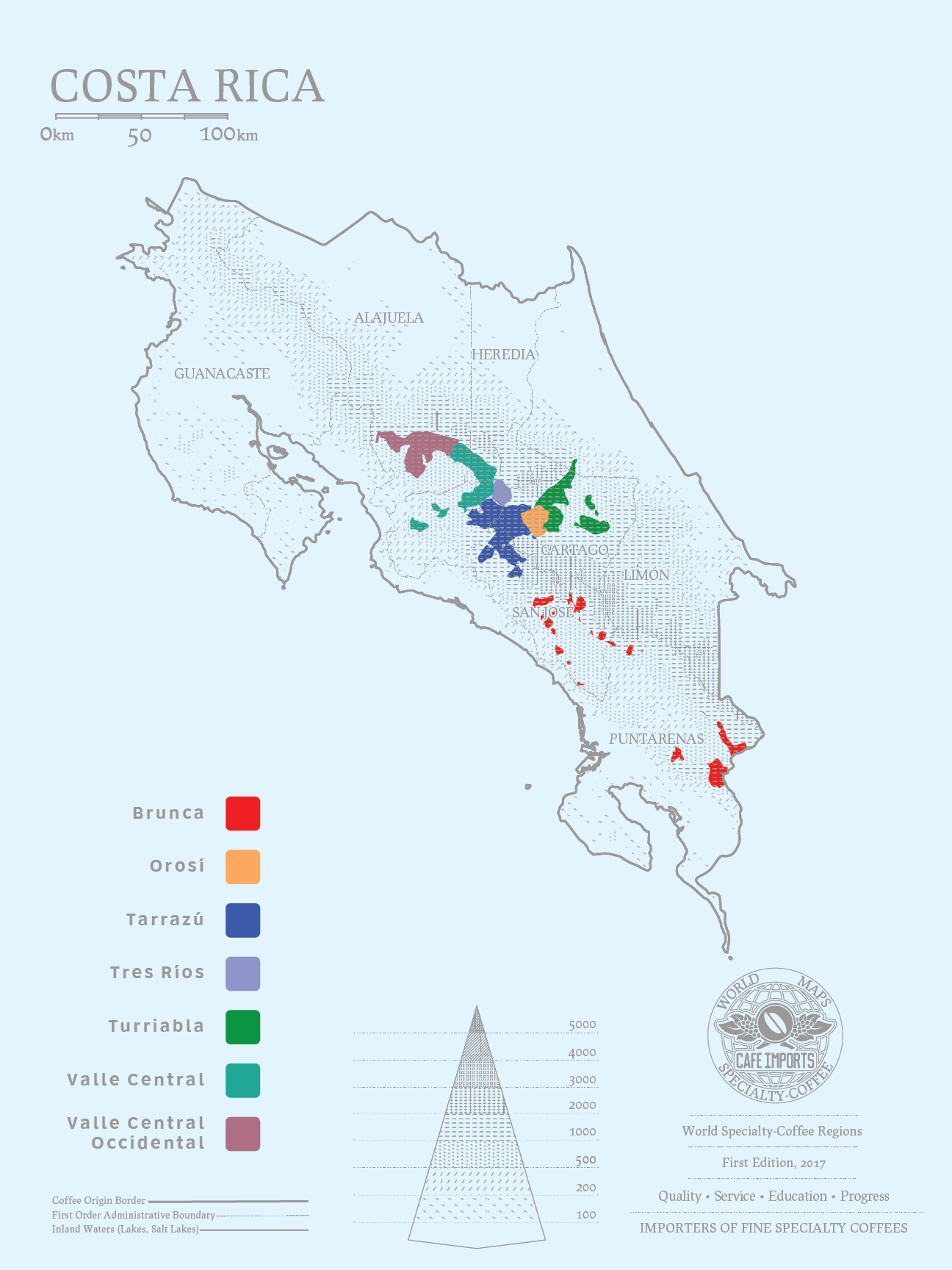
As a major coffee-producing country in Central America, Costa Rica not only boasts a naturally advantageous environment but also invests significant effort in coffee cultivation and processing techniques. Despite its small size, the country features diverse coffee-growing regions, each with unique characteristics. It is divided into seven major producing regions: Turrialba Valley, Central Valley, Western Valley, Tres Ríos, Brunca, Orosi, and Tarrazú. Among these, Central Valley, Tarrazú, and Brunca stand out in the market for their consistently high quality and distinct flavor profiles.
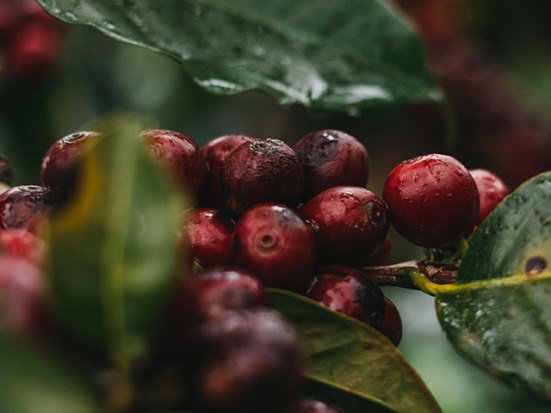
Among the many producing regions, Tarrazú is undoubtedly one of Costa Rica’s most iconic specialty coffee origins. Located in a volcanic terrain area, it benefits from fertile volcanic soil, abundant rainfall, a moderate climate, and high-altitude conditions, along with natural shade provided by surrounding forests, creating ideal growing conditions for coffee trees. More importantly, coffee farming in Tarrazú uses almost no pesticides or chemical fertilizers, ensuring the coffee’s natural purity. Notably, over 95% of the coffee beans from Tarrazú are classified as Strictly Hard Beans (SHB), typically grown at altitudes above 1,500 meters, offering firmer bean structure and greater flavor potential.
Among the many popular coffee beans from Tarrazú, three have received particularly high praise in the market: Bach, Beethoven, and Mozart. They not only showcase the regional characteristics of Tarrazú but also reflect the profound impact of different processing methods on flavor.
First up is “Costa Rica · Bach,” grown in Tarrazú at an altitude of 1,950 meters, classified as Strictly Hard Bean, and of the Caturra variety, processed using the raisin honey method. This bean offers a rich flavor profile, with dry aromas of strawberry, blackberry, and raisin. Upon brewing, it releases intense fruit aromas such as strawberry, apple, lemon, grape, and citrus, accompanied by noticeable honey and toffee sweetness. The mouthfeel is as delicate as silky cream, with a long-lasting aftertaste reminiscent of high-quality Darjeeling black tea. As the temperature drops, hints of candied fruit sweetness and a subtle plum wine-like intoxicating note emerge.
The second bean, “Costa Rica · Beethoven,” also hails from Tarrazú, grown at around 1,900 meters and classified as SHB, with the Yellow Caturra variety but processed using the traditional washed method. This coffee features dry aromas dominated by red berries, particularly standout strawberry notes, along with floral undertones. After brewing, it presents a balanced acidity and sweetness of green grapes and red berries, with a clean and smooth mouthfeel and a lingering aftertaste of slightly acidic green kiwi. Compared to other honey-processed beans, Beethoven showcases a brighter and cleaner flavor profile, making it highly suitable for coffee lovers who prefer a crisp taste.
Lastly, “Costa Rica · Mozart,” grown in Tarrazú at 1,800 meters, is also classified as Strictly Hard Bean and meets SHB standards. It is of the Catuai variety and processed using the raisin honey method. This coffee stands out for its exceptional sweetness and berry aroma, with flavors reminiscent of the rich sweetness of dried bananas. The dry aroma carries white floral notes like orange blossom. Upon tasting, deep berry flavors are prominent, followed by a subtle plum-like acidity and soft candy sweetness in the mid-to-late stages, delivering a richly layered flavor and long-lasting aftertaste. Notably, this bean was previously processed with yellow Caturra using the red honey method, but it has now switched to Catuai to highlight different sweet aromatic qualities.
Regarding the differences between honey processing and washed processing, raisin honey processing is a double-fermentation method. Defective beans are first removed on the day of harvest, then the coffee cherries are placed on raised beds to dry for at least three days before the outer skin is removed, retaining the intact mucilage layer for prolonged sun drying. Frequent turning is required during this period to prevent over-fermentation. In contrast, washed processing involves removing the pulp first, then using a centrifugal washer to remove the mucilage, followed by rinsing with clean water, and finally drying on raised beds for 12 to 14 days to ensure even drying.
For brewing, it is recommended to use a V60 filter cone, with a water temperature of 91°C and a coffee-to-water ratio of 1:15 (15 grams of coffee). The grind size should be 80% passing through a Chinese No. 20 sieve. The specific pour-over technique is as follows: start with a 30-second bloom using 30 grams of water, then pour in a small circular motion until reaching 125 grams for the first pour. Once the water level drops, continue pouring to 225 grams, then stop. Remove the filter just before the bed of grounds is exposed, with a total extraction time of about 2 minutes.
The above content is compiled by CoffeeHunters, a coffee news website.


