







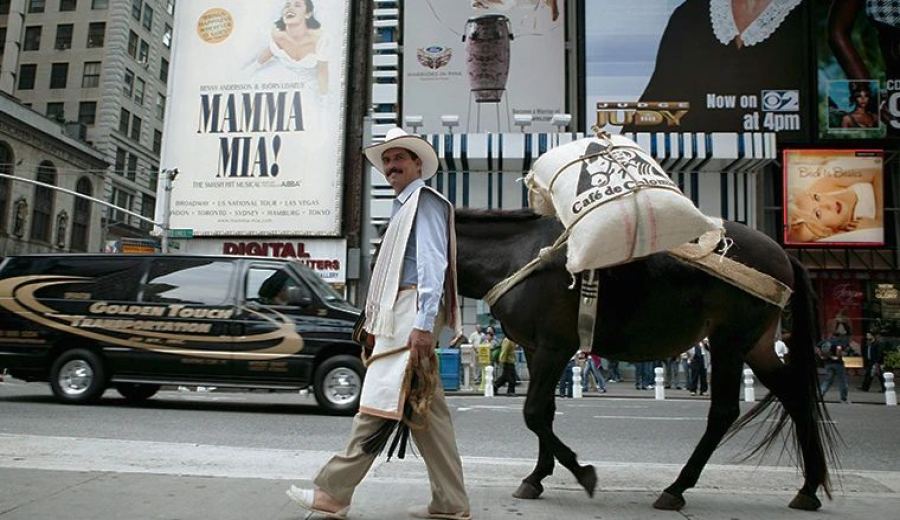
Introduction:Colombia is a globally renowned producer of high-quality coffee, with diverse terrain and climate that give rise to a rich variety of regional flavors. This article delves into the characteristics of Colombia’s major coffee-growing regions—including the MAM Golden Triangle, Santander, Huila, and Cauca—explores the traits and differences of six major coffee varieties, and explains how green bean grading systems and common processing methods influence flavor. With practical examples of regional coffee offerings, it provides detailed brewing recommendations and parameters to help you explore the diverse charm and potential of Colombian coffee in depth.
Blessed by the Andes Mountains and blessed with varied microclimates, this South American country has become one of the world’s premier sources of top-tier coffee. From the northern Santander region, through the central MAM Golden Triangle, to the southern Huila and Cauca regions, each area—shaped by its elevation, terrain, and day-night temperature variations—produces coffee beans with distinctly unique flavors. This article will comprehensively analyze the terroir conditions of Colombia’s main producing areas, the origins and characteristics of six major coffee varieties, green bean grading standards, as well as processing techniques such as washed, anaerobic natural, and anaerobic enzyme-washed methods, taking you on a journey from region to cup to fully understand the diversity and appeal of Colombian coffee.
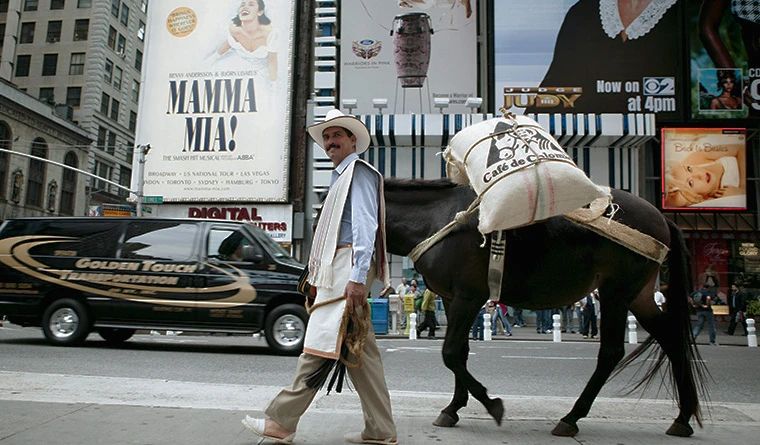
Colombian coffee is celebrated for its rich, full-bodied aroma, bright acidity, and outstanding balance—all inseparable from its exceptional geographical conditions. The country’s coffee-growing belt stretches along the Andes Mountains, and when viewed from above, the distribution of producing regions resembles three paw prints left by a cat in the western part of the country. Due to its vast geographic expanse, differences in elevation, climate, and micro-ecology across regions result in staggered coffee harvest seasons, allowing Colombia to have fresh coffee cherries available for picking nearly year-round.
Among the many producing regions, the “MAM Golden Triangle” in the central mountainous zone is the most prominent core area, consisting of the three major cities of Medellín, Armenia, and Manizales—their initials in English forming the acronym MAM. This region is not only a key base for Colombia’s specialty coffee, but Medellín’s output is particularly outstanding. The coffee produced here typically features large bean size, rich aroma, well-balanced sweetness and acidity, and a smooth mouthfeel. It responds well to dark roasting, yielding a rich body that is highly favored by coffee enthusiasts.
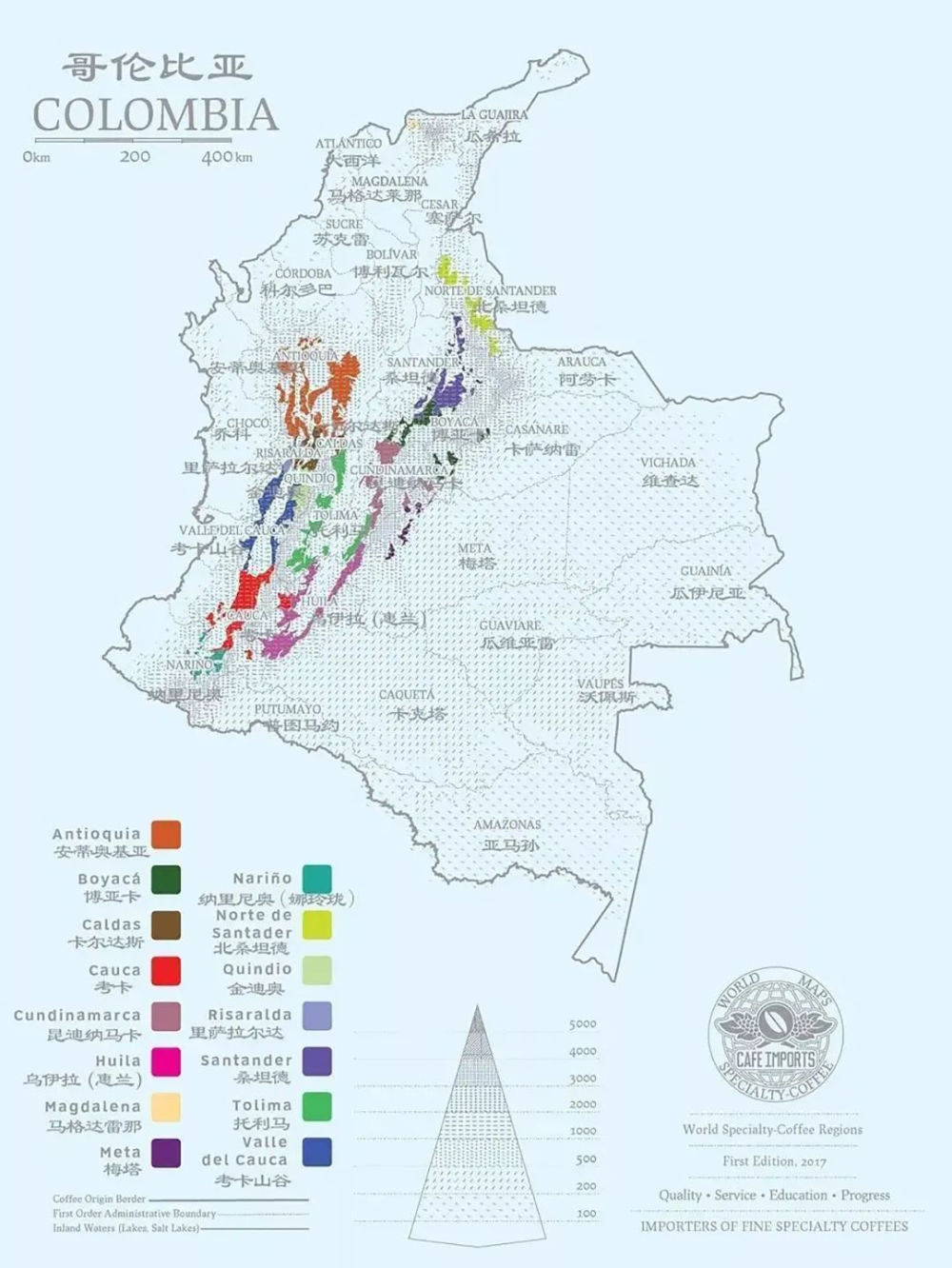
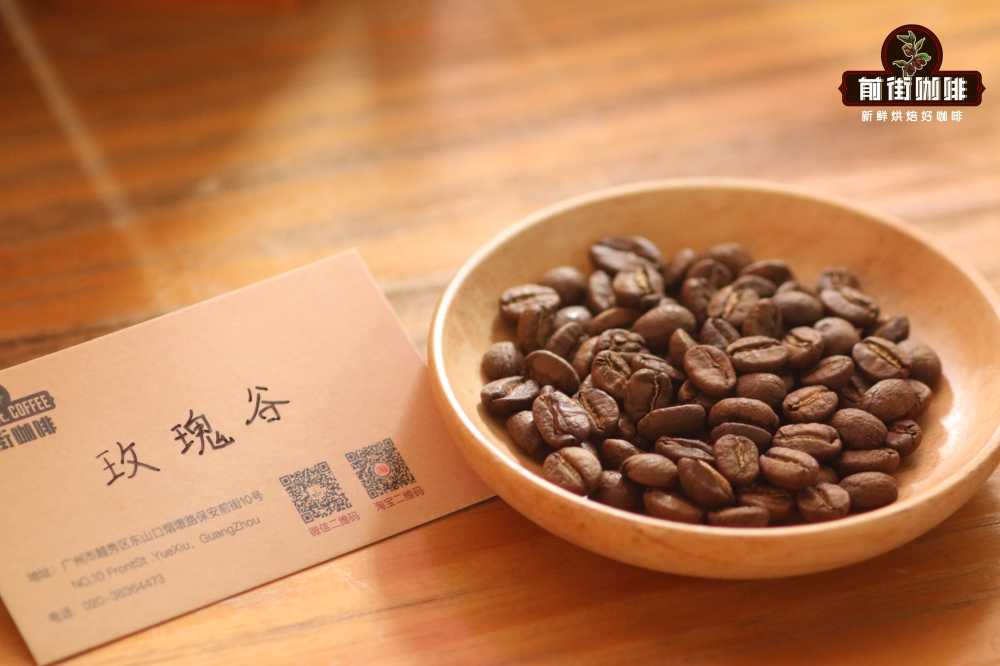
Located in northern Colombia, the Santander region is characterized by a relatively dry climate and an elevation of about 1,400 to 1,600 meters. Local coffee trees are mostly planted in forest environments, enjoying natural shade, which slows their maturation. Coupled with fertile soil and significant day-night temperature differences, the coffee produced here often exhibits intense and bold aromas, long-lasting aftertastes, and a hint of unique herbal notes. For example, the industry’s “Rose Valley” coffee lot comes from this region, and its peach-like profile is especially popular among female consumers. It is processed using anaerobic enzyme-washed method, grown at an altitude of 1,700 meters, with the Caturra variety. When brewed, it presents a complex flavor profile of rose, peach, winey chocolate, cream, and cranberry.
The Huila region in southern Colombia is also an important origin for specialty coffee, accounting for about 12% of the country’s total production. The area features hilly terrain, with elevations generally exceeding 1,500 meters, and is further enriched by several tributaries of the Colombian river that provide ample water supply. Unlike the traditionally perceived flavors of Colombian coffee, Huila is dominated by smallholder micro-lots, where various microclimates and processing methods create individuality in each batch. Washed Huila beans best showcase the region’s fundamental flavor characteristics and are therefore often chosen as everyday drinking beans. Their flavor profile is anchored by nuts, dark chocolate, and caramel, paired with soft fruit acidity, delivering a balanced and approachable cup.
The even higher-altitude Cauca region represents Colombia’s high-elevation coffee growing areas, with some coffee trees even cultivated at elevations as high as 2,100 meters, resulting in extremely pronounced day-night temperature differences. This environment slows the growth rate of coffee cherries, aiding in nutrient accumulation, and ultimately delivering a more distinct balance of sweetness and acidity—one of the hallmarks of the region’s flavor.
Colombia cultivates a diverse range of coffee varieties, among which six main varieties are the most representative. Caturra is the most widely planted variety locally, a natural mutation of Bourbon. It does not require shade, is high-yielding, and has a compact tree form that makes harvesting easier. Introduced in 1952, it quickly became widespread. Typica is one of the oldest varieties, introduced as early as the late 16th century. It offers delicate flavors and bright acidity but is vulnerable to disease and has low yields, so it is now mostly preserved through selective planting. Bourbon, a mutation of Typica, has even brighter acidity, but its cultivation area is limited. In response to the threat of coffee leaf rust, Colombia successfully developed the “Colombia variety” in 1982, a hybrid of Caturra and Timor. It is highly resistant to disease and high-yielding, but its cup quality is slightly inferior to Caturra and is mostly used in commercial blends. Additionally, Castillo and Tabi are new disease-resistant varieties promoted officially since 2005, with continuously improving flavor profiles.
In terms of green bean grading, Colombia employs strict classification based on defect rates and bean size. The highest grade is “Supreme,” which requires plump beans, with over 95% being 17 mesh or larger, and no more than 8 defective beans in a 500g sample. If beans larger than 18 mesh are further selected, they are classified as “Supreme 18+” grade, forming the foundation of top-tier specialty coffee.
Washed processing is the predominant method for Colombian coffee, with small farms usually equipped with their own depulping equipment. The basic process involves removing the pulp, then placing the parchment beans in a fermentation tank for about 24 hours to break down the mucilage, followed by rinsing with clean water and drying in the sun. In case of rain, controlled-temperature equipment is used to dry the beans at around 50°C until the target moisture content is reached. The industry’s everyday Huila beans are processed using the washed method, showcasing a core flavor profile of nuts, dark chocolate, and caramel.
In recent years, an increasing number of small farms have experimented with innovative processing methods. For instance, “Flower Moon Night” employs anaerobic natural processing: the coffee cherries first undergo anaerobic fermentation (with temperature controlled at 10–15°C for three days), followed by sun drying to enhance the aromatic complexity. Another common method, anaerobic enzyme-washed, involves injecting carbon dioxide in a sealed environment to displace oxygen while adding specific enzymes to slow down fermentation, resulting in a sweeter taste and more balanced flavor. The process still concludes with washing to ensure cleanliness.
For brewing recommendations, washed Huila beans, with their dominant notes of nuts and dark chocolate, are advised to be brewed using a medium-fine grind (e.g., 75% passing through a Chinese 20-mesh sieve), with a Hario V60 filter cone, water temperature around 89°C, a coffee-to-water ratio of 1:15, and a coffee dose of 15 grams. The brew is divided into three pours: first, a 30-second bloom with twice the coffee dose in water, followed by pouring up to 125 grams, then waiting for the bed to drop before pouring up to 225 grams to complete extraction, with a total brew time of about 2 minutes. These parameters highlight the beans’ sweetness and rich base tone, and a slight drop in temperature can also bring out the layered changes of soft fruit acidity. It is recommended to use freshly roasted beans (with the 4–7 day post-roast period being the optimal flavor window) to achieve the best flavor expression.
The above content is compiled by CoffeeHunters, a coffee news website.


