







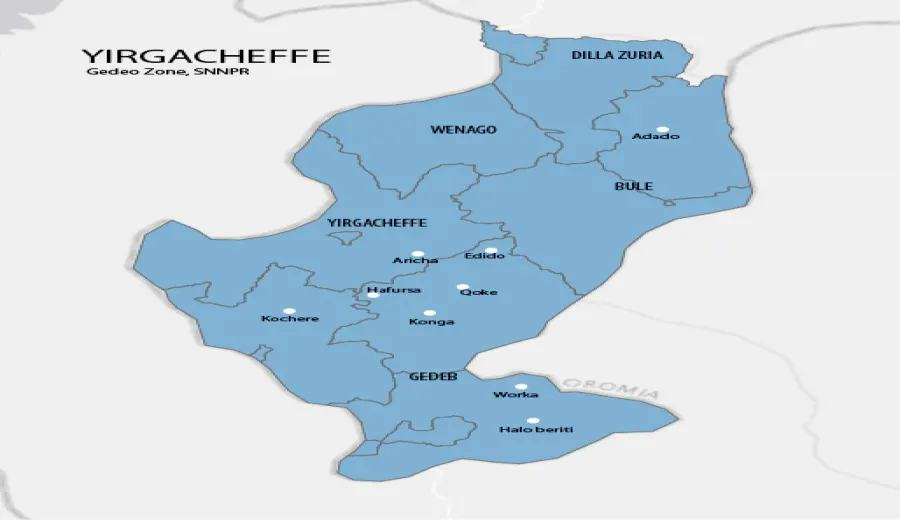
Introduction:Yirgacheffe Wolkite is a top-tier coffee-growing region located in the highlands of Ethiopia at nearly 2,000 meters above sea level, renowned for its distinctive floral and fruity aromas as well as its refreshing citrus notes. This article delves into the geographical environment and the evolution of processing methods in this region, and provides a detailed overview of how it performs with various brewing methods such as pour over, French press, and cold brew, helping coffee enthusiasts understand how to extract its most captivating flavor profiles.
Located in Ethiopia at an altitude of nearly 2,000 meters, Yirgacheffe Wolkite is considered one of the holy grails for specialty coffee lovers around the world. This highland area not only enjoys a pleasant climate but also, thanks to its exceptional natural environment, produces coffee beans with delicate and diverse flavors. With just one sip, you may be greeted by subtle jasmine floral notes, followed by the freshness of citrus and the sweetness of peaches, and even a hint of tea-like mellowness on the finish — this is the unforgettable charm of Yirgacheffe Wolkite.
Flavor Characteristics of Yirgacheffe Wolkite Coffee
Many people’s first impression of the "Yirgacheffe flavor" is that distinct white floral aroma, often accompanied by the sweet scents of lemon, peach, and almond, along with a tea-like aftertaste. When sipped, it’s like being in a garden, with the fragrance blossoming simultaneously in your nose and on your tongue — layered and harmonious. In terms of mouthfeel, its body is silky smooth, gently coating the palate without excessive bitterness, instead excelling with bright acidity and fruity notes. Whether brewed using pour over, French press, or cold brew, it showcases different personalities and is especially suitable for both beginner and advanced coffee drinkers who enjoy fruity and floral profiles.
Growing Environment and Terroir Conditions
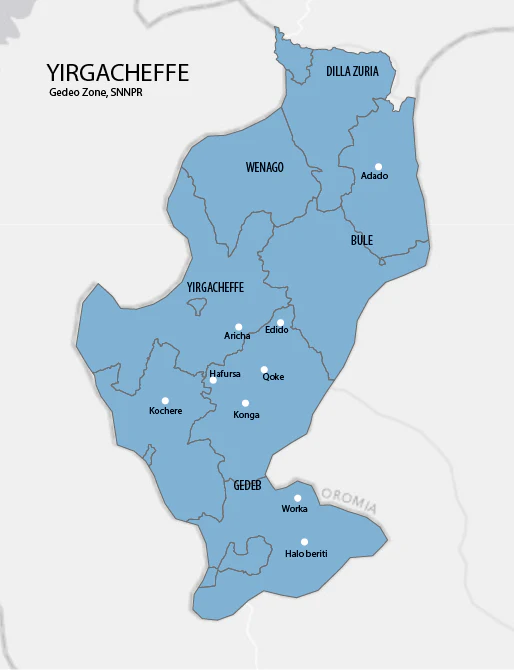
The Yirgacheffe region has an average altitude of 1,900 to 2,100 meters, making it one of the few coffee-growing belts in the world situated at such heights. Originally named "Yirgacheffe," where "Yirga" means "a place of rest" and "Cheffe" stands for "wetland," it's clear that the natural environment here is humid and ecologically diverse. Nearby large bodies of water such as Lake Turkana, Lake Abaya, and Lake Chamo provide a continuous supply of moisture and fog, creating a cool microclimate with significant day-night temperature differences — ideal for growing Arabica coffee trees. Especially in the Misty Valley area, which is often shrouded in fog, with stable temperatures and fertile soil, the coffee trees are able to develop a complex and fascinating spectrum of flavors.
Evolution and Characteristics of Processing Methods
In the early days, coffee from Yirgacheffe Wolkite was mainly processed using traditional sun-drying methods. However, in 1972, Ethiopia introduced modern washed processing techniques originating from Central and South America. This change significantly improved the clarity and purity of the coffee’s aroma. Washed processing allowed the beans to exhibit brighter acidity and more delicate floral and fruity notes, also establishing Yirgacheffe’s status in the global specialty coffee market as one of the benchmarks for washed coffee. Since then, washed has become the dominant method in the region.
However, in recent years, Ethiopian coffee farmers have innovated once again, producing several stunning lots of natural (sun-dried) processed coffee. These natural beans undergo extremely strict selection and processing: only fully ripe red cherries are picked during harvest, with unripe or defective ones removed beforehand; during the two-week drying period, the cherries are continuously monitored and any moldy or damaged ones are promptly removed to ensure sugars convert and penetrate the beans evenly. Only when the pulp moisture content drops to 12% is the hulling process carried out, followed by multiple screenings including density grading and bean color checks, and finally manual sorting to remove any remaining defective beans. This meticulous process results in natural Yirgacheffe with intense fruitiness, rich sweetness, and a full-bodied mouthfeel — an unmissable choice for coffee drinkers who love bold flavors.
Performance Across Different Brewing Methods
Yirgacheffe Wolkite coffee beans, with their vivid and multi-layered flavors, are highly suitable for exploring their potential through different brewing methods. For pour over, it is recommended to use medium-light roasts, with water temperature between 90°C and 92°C, a grind size of medium-fine (such as that of fine sugar grains), and a coffee-to-water ratio of about 1:15 to 1:16. This setup can fully highlight its floral and citrus characteristics, offering a clean and bright taste. If using a French press, slightly coarsen the grind and extend the steeping time to 4 minutes to bring out a rounder tea-like feel and fuller body. As for cold brew, Yirgacheffe Wolkite also performs admirably — using a 1:12 ratio and extracting at room temperature or chilled for 12–16 hours will yield sweet fruity notes and gentle acidity. It is especially refreshing when served chilled.

Cultivation Methods and Regional Culture
Coffee in Yirgacheffe is mostly grown by local farmers in their backyards or intercropped with other plants, representing a typical small-scale garden cultivation model. Each household produces modest quantities, but the quality remains consistent. This meticulous farming approach also gives each batch of coffee beans unique regional flavors. The local climate is spring-like all year round, with cool summers, gentle breezes, moderate and well-drained rainfall, and winters that aren’t overly cold — providing ideal growing conditions for coffee trees. This exceptional environment, combined with centuries of accumulated planting and processing experience, has established the irreplaceable status of Yirgacheffe Wolkite coffee.
The above content is compiled by CoffeeHunters, a coffee news website.


