








Introduction:From the Dutch colonial period to today’s specialty coffee market, Indonesian coffee has forged a unique developmental path. This article takes you on a journey to explore how the high-altitude regions of Sumatra have given rise to the world-renowned Mandheling, understanding its evolution from Typica to disease-resistant varieties, as well as the critical impact of the wet-hulling process on its flavor. It also details the certification origins of Golden Mandheling, defect sorting standards, and provides practical pour over parameters along with a clear flavor profile—making it an essential beginner’s guide to understanding Indonesian coffee.
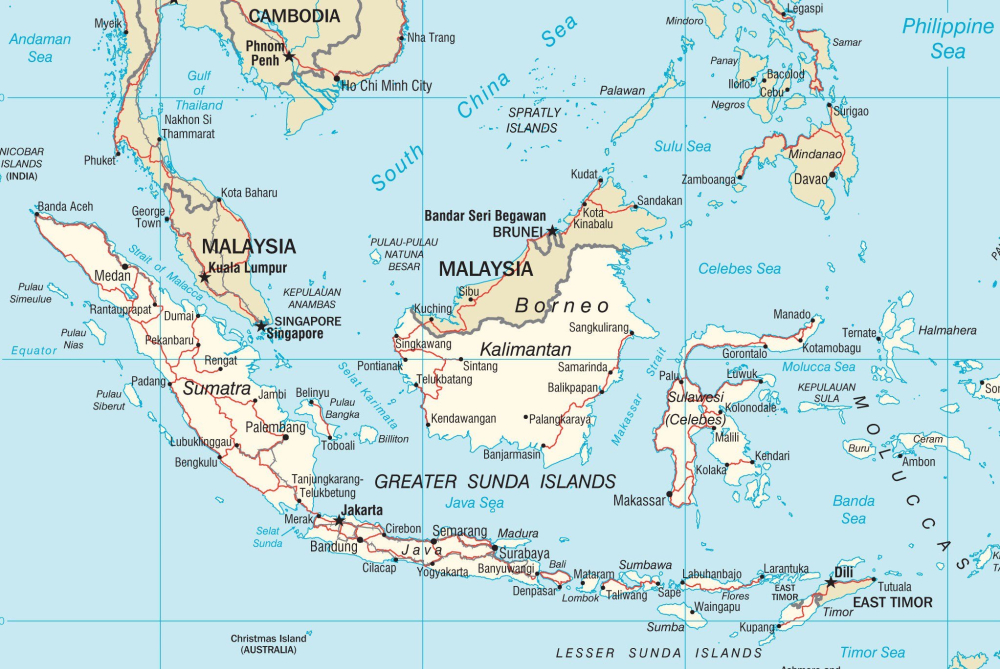
Indonesia holds a pivotal position in the global coffee supply chain, not only being one of the first Asian regions to introduce Arabica coffee but also, due to its unique geography and climate, fostering distinctive varieties such as Mandheling. Dating back to 1699, the Dutch East India Company (VOC) first introduced coffee plants to then-colonial Indonesia in an effort to break the Arab monopoly on coffee trade. The initial planting areas were concentrated around Jakarta (formerly Batavia), later expanding gradually to East Java, Sumatra, and Sulawesi.
Between the 18th and 19th centuries, as cultivation scale expanded, Indonesia once became a major global coffee exporter—until the devastating leaf rust epidemic of 1876 destroyed much of the highly susceptible Typica variety. To salvage the industry, Robusta was introduced to low-altitude regions like East Java starting in 1900, creating the enduring coexistence of high-altitude Arabica and low-altitude Robusta in Indonesian coffee. Among these, Sumatra, situated on the equator with its hot, humid climate and volcanic soils, emerged as a key Arabica-producing region.

When discussing Indonesian coffee, one cannot overlook the widely recognized name “Mandheling.” Although “Mandheling” is actually an ethnic term rather than a coffee variety, it has become synonymous with high-quality Arabica coffee from Sumatra. The regions of Lintong, Lake Tawar (Gayo Highlands), and Lake Toba in Sumatra, with their high altitudes and significant day-night temperature variations, are particularly suited for growing bold-flavored Arabica varieties. The most commonly cultivated variety here is Ateng (the local term for the Catimor group, also known as Tim Tim), a hybrid of Arabica and Robusta that offers certain disease resistance and adaptability.
It’s worth noting that although both Lintong Mandheling and Golden Mandheling use the Ateng variety, they exhibit distinctly different flavor profiles due to differences in microclimate, selection level, and post-harvest processing. Meanwhile, so-called “Tiger Mandheling” often refers to premium lots from the Lintong region that have undergone rigorous selection, typically featuring a clearer and more consistent flavor profile.
What makes Indonesian coffee most fascinating is its globally unique “wet-hulling” processing method. Due to Sumatra’s perpetually high humidity and frequent rainfall, traditional sun-drying or washed processing is less feasible. Locals developed this semi-washed, semi-dried innovative technique: after harvesting, coffee cherries are immediately depulped and partially stripped of mucilage, undergo brief fermentation, and then have their parchment layer removed while the beans are still at 30% to 50% moisture content (“wet state”). They are subsequently dried in the sun. This method not only drastically shortens processing time (reducing moisture content to 12%–13% in just about 2–4 days) but also, by disrupting the bean’s cellular structure midway, transforms fermentation flavors into rich woody, herbal, and spicy notes, while reducing acidity—creating Mandheling’s signature full body, low acidity, and steady aftertaste.
When it comes to the pinnacle of Indonesian coffee, “Golden Mandheling” is undoubtedly a hot topic in the market. However, the term “Golden” does not refer to roast level or grade, but is a registered trademark owned by Indonesia’s PWN (Pusat Niaga Wortel Nusantara) coffee company. Established in 1957, PWN was the first Indonesian enterprise focused on exporting high-quality Mandheling from North Sumatra. Its products successfully penetrated the Japanese market early on and are renowned for their strict quality control. Genuine Golden Mandheling must be directly produced by PWN and come with an official certificate. Each batch of beans undergoes three rounds of manual hand-picking to ensure an extremely low defect rate (fewer than 3 defects in a 300g sample), with green beans sized at 18 mesh or above and graded as top-tier G1.
Common counterfeits in the market often lack original certificates or standard jute sacks. Consumers should pay special attention to sourcing information when making purchases. The Golden Mandheling listed in a well-known coffee brand’s menu, for example, is a genuine PWN product, and its flavor performance is particularly outstanding: a robust nutty base gradually releases melon, spice, and herbal aromas as the temperature changes, with a finish marked by distinct dark chocolate and caramel sweetness. The taste is clean and layered.
For brewing recommendations, Mandheling benefits from a medium-dark roast, paired with a fine powder-to-water ratio and moderate water temperature, to fully showcase its characteristic flavors. It is recommended to use a Kono filter, with water temperature controlled at approximately 88°C, a dose of 15g, grind setting at 11 on the EK43s grinder (equivalent to 75% passing through a Chinese standard No. 20 sieve), and a water-to-coffee ratio of 1:15. The specific operation can be divided into a two-stage extraction: first, perform a 30-second bloom with 30g of water, then pour in a slow circular motion until reaching 125g for the first pour, followed by continued pouring up to 225g before stopping. Total extraction time is approximately 2 minutes. Once dripping from the filter is complete, remove it and gently swirl before enjoying.
Different producing regions and processing batches of Mandheling also display diverse flavor profiles:Lintong MandhelingDominated by a bold nutty character, with subtle melon aromas emerging in the mid-to-late stages. As the temperature drops, herbal and foresty notes become more pronounced. The mouthfeel is full-bodied and richly layered.A well-known coffee brand’s PWN Golden MandhelingOpens with a rich nutty profile, followed by gradually unfolding layers of melon, spice, and herbs as the temperature cools slightly. The finish lingers with deep black chocolate and caramel sweetness. The overall expression is clean and soft, making it a classic choice for experiencing high-altitude Sumatran Arabica.
The above content is compiled by CoffeeHunters, a coffee news website.


