








Introduction:Do you think a cappuccino must always follow the golden ratio of 1:1:1 for espresso, milk, and foam? In fact, this is not the standard in international barista competitions. An overly high coffee ratio can actually affect the overall flavor and integration. This article delves into the WBC standards for cappuccinos, explains the correct foam thickness and the origin of the “golden ring,” and provides a complete step-by-step guide—from cup selection, extraction, to frothing and pouring—to help you craft an authentic cappuccino with rich foam and well-preserved crema.
Is the ratio of espresso, milk, and foam in a cappuccino really a strict 1:1:1? This widely believed notion is actually not the standard recipe recognized by the World Barista Championship (WBC). Many coffee enthusiasts even learn from textbooks that a cappuccino should consist of equal parts: 60 ml of espresso, 60 ml of milk, and 60 ml of foam. However, in practice, this ratio often leads to an overly strong coffee flavor, uneven integration with milk, a bitter taste, and a loss of the desired balance.

According to the official WBC rules, a standard cappuccino must include one shot of espresso, uniformly textured milk, and dense foam with a minimum thickness of 1 cm. The entire drink should be served in a handled cup with a capacity between 150 and 180 ml, and the total volume of the beverage should match the actual capacity of the cup—for example, if using an 180 ml cup, it should be filled to 180 ml. These details may seem simple, but they are key criteria for judging whether a cappuccino meets the standard.
Many beginner coffee enthusiasts, and even some professionals, mistakenly believe that the only differences between a cappuccino, latte, and flat white are their ratios—especially since latte art has become the mainstream aesthetic. This often leads to the question: why is latte art rarely seen on cappuccinos? The reason actually lies in the historical background and traditional presentation of the cappuccino.
The word “cappuccino” comes from the Italian “Cappuccio,” meaning hood or cowl. Its name is deeply connected to the Capuchin friars of Italy. The monks of this order wore dark brown robes and pointed hoods. Inspired by their attire, Italians noticed that when steamed milk was poured into espresso, it created a brown ring of coffee resembling the friars’ robes, while the foam formed a shape similar to their hoods—hence the name. Over time, the hood shape became optional, but the “coffee golden ring” has remained, symbolizing this classic coffee.
So, what is the “coffee golden ring”? Simply put, it’s the ring of dark coffee crema around the rim of the cup that isn’t fully covered by milk, showcasing the original color and layers of the espresso. Preserving this golden ring hinges on the thickness and stability of the foam. The foam needs to be dense and thick enough to form a protective layer between the coffee crema and the milk, preventing the crema from being diluted or spreading out. Therefore, the foam for a cappuccino is generally recommended to be about 1.5 cm thick—thicker than the foam typically used for latte art (around 1 cm).
Precisely because cappuccino foam is thicker and less fluid, it’s also why it’s not ideal for latte art. The foam used for latte art is lighter and more fluid, allowing it to blend evenly with the espresso and form patterns. But the goal of cappuccino foam is to protect the crema, shape the drink, and maintain a stable height—so the pouring sequence and technique differ as well.
To make a proper cappuccino, start with selecting the right cup. It’s recommended to use a 180 ml tulip-shaped coffee cup. This cup style is wider at the top and narrower at the bottom, which not only highlights the tall “hat” of foam but also helps observe the overall flavor profile and layer distribution.
For espresso extraction, it’s advised to use a single shot, extracting 35 grams of coffee liquid with 20 grams of coffee grounds, with a total extraction time of around 27 seconds to achieve the ideal concentration and flavor balance. If your equipment or needs differ, you can also adjust to 12 grams of coffee grounds for 30 grams of coffee liquid, with an extraction time of about 23 seconds, which will still produce a solid single-shot base.
The choice of milk is also crucial. Always use fresh, chilled whole milk, as lower temperatures help retain more proteins and milk fats—key components for forming stable foam. Proteins aid in foam formation, while fats increase the foam’s stability and density, as well as enhance the drink’s richness.
When frothing the milk, it’s recommended to use a small steam pitcher and pour in about 150 ml of chilled fresh milk. Before starting, insert the steam wand into the pitcher to purge it, releasing any water vapor from the steam tip to avoid affecting the foam texture. Then, position the steam wand about 1 cm below the milk surface and turn on the steam. You’ll initially hear a distinct “hissing” sound—that’s air being mixed into the milk to create foam, known as “stretching.” To achieve the 1.5 cm foam thickness needed for a cappuccino, it’s suggested to stop stretching after about 6 to 7 hissing sounds, then tilt the pitcher to about 45 degrees and use a swirling motion to break up large bubbles while evenly heating the milk to approximately 55°C.
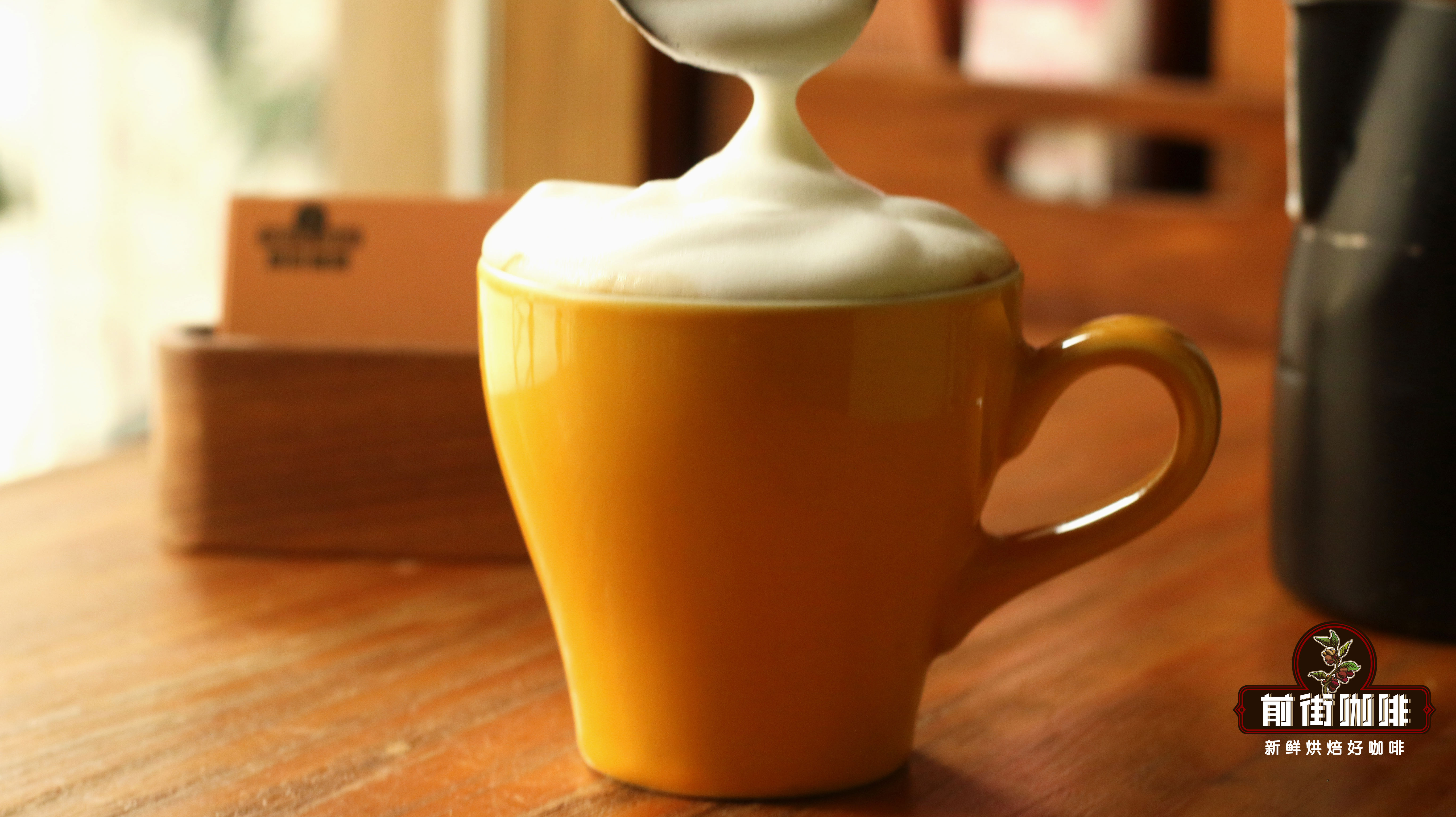
Before pouring, remember to gently swirl the pitcher to recombine the settled foam and milk, preventing layering that could affect the taste. Next comes the key to pouring technique: to protect the coffee crema, you should pour the foam first, creating a barrier between the crema and the milk, then add the milk. However, because the foam is denser and flows more slowly, milk often starts pouring out first. Here’s a tip: aim the pitcher spout at the center of the coffee surface, slightly tilt the pitcher to the point of pouring without actually letting the liquid flow out yet, wait for the foam to gather at the spout, then steadily pour from the center, keeping your hand steady. Let the foam cover the surface first, then gradually blend with the milk. This way, you’ll craft a true cappuccino with tall foam, clear crema, and distinct layers.

The above content is compiled by CoffeeHunters, a coffee news website.


