







Introduction:Explore the transformation of Yunnan coffee from historical varieties to modern blends, understand the differences between Typica and Catimor, and how a certain Lincang estate creates unique flavors through sun-dried processing. This article delves into the cultivation evolution of Yunnan’s small beans and provides practical parameters for brewing Iced Americano, helping you comprehensively grasp the characteristics of Yunnan coffee—from variety and processing to extraction.
In recent years, with the rise of the domestic cultural trend, Yunnan coffee has gradually become a market focus. Many consumers walking into coffee shops often ask if there is any small-bean coffee from Yunnan. This article will start with the growing environment of Yunnan coffee, outline its three waves of development and varietal changes, focus on how Catimor replaced Typica as the mainstream, and introduce how a certain estate established in Lincang showcases the unique flavors of Typica through sun-dried processing and medium roasting. Additionally, we’ll share how to use a certain brand’s Black Cocoa espresso blend to make a balanced Iced Americano, taking you on a comprehensive journey to understand the charm of Yunnan coffee—from variety and processing method to extraction techniques.
 Under the global trend of specialty coffee, the visibility of Yunnan coffee continues to rise. Many customers, upon entering a coffee shop, often ask first: “Do you have any Yunnan beans?” or “Do you have Yunnan small-bean coffee?” As consumers’ demands for coffee quality increase, more attention is being paid to the bean variety and origin background. Next, we’ll take readers on an in-depth exploration of the development trajectory and characteristics of Yunnan coffee.
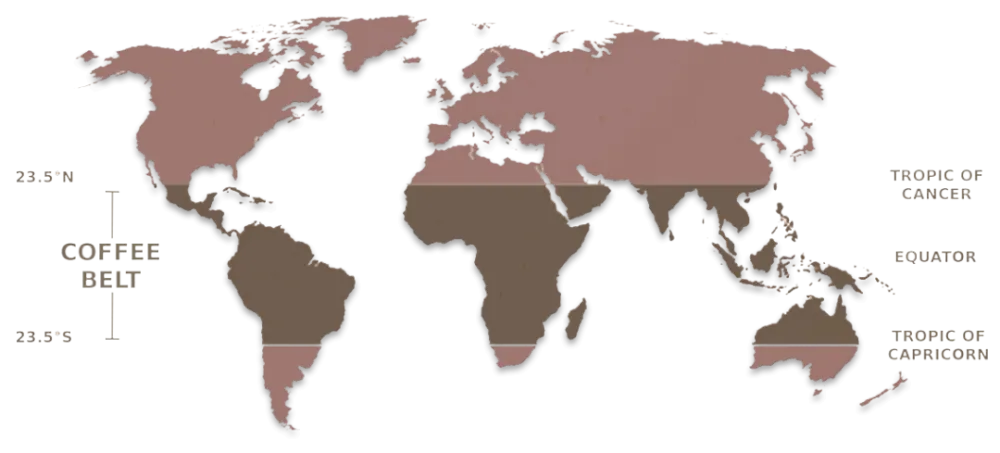
As is well known, the flavor expression of crops is closely related to their growing environment. Altitude and climate conditions are key factors determining coffee quality. Globally renowned coffee regions are mostly located within the “coffee golden belt” between the Tropic of Cancer and the Tropic of Capricorn, an area with suitable temperature and sunlight conditions for coffee growth. In China, Yunnan and Taiwan are situated right within this golden belt and possess sufficient altitude, providing a solid natural foundation for coffee cultivation.
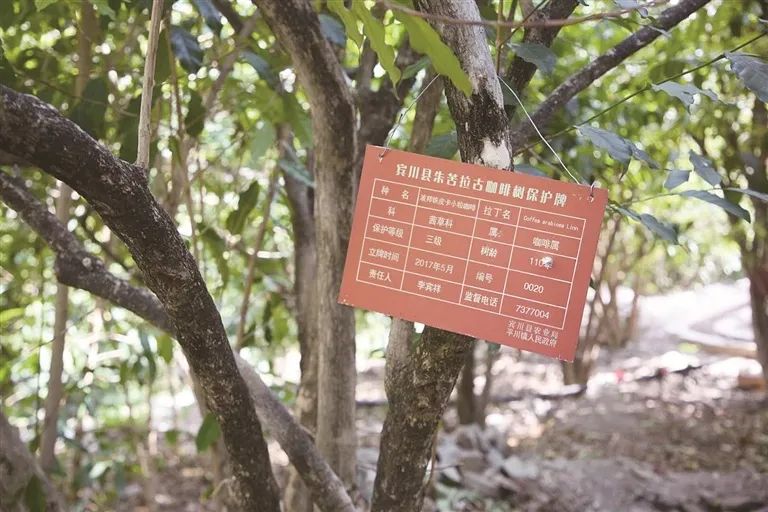
However, coffee is not native to China but was introduced as an economic crop. Historical records indicate that the earliest coffee cultivation in China occurred in 1877, when Fujian Governor Ding Richang, in the “Post-Suppression Regulations for Pacifying the Aborigines and Developing the Mountains,” suggested that residents of Ryukyu switch to planting various economic crops including coffee, replacing their traditional hunting lifestyle. As for mainland China, the earliest record of coffee cultivation dates back to 1904, when French Catholic missionary Tian Defeng, under orders from the Dali Diocese, went to Zhukula Village in Binchuan Prefecture to build a church and personally planted the first coffee tree, intended solely for personal consumption.
 The development of Yunnan coffee can be roughly divided into three stages. The first wave occurred during the 1950s and 1960s, when most Chinese people were still unfamiliar with coffee. Coffee beans were mainly exported to the Soviet Union to offset loans. The cultivation was managed by the Yunnan Farming and Reclamation system, with varieties primarily consisting of locally propagated Typica and Bourbon variants, and the procurement was handled uniformly by the national foreign trade department. Major planting areas during this period included Baoshan Lujang Farm, Xincheng Youth Farm, Dehong Zhefang Farm, Ruili Farm, Wanding Farm, Wenshan Babu Farm, and Tianbao Farm. However, as the loan repayment task ended, foreign trade demand decreased, and coffee diseases ravaged the plantations, leading to the death of large areas of coffee trees and a sharp reduction in cultivation area to less than 3,000 mu.
The second wave began during the reform and opening-up period of the 1980s. In 1988, Nestlé started promoting the Catimor variety in Yunnan. This variety is characterized by high yield and strong disease resistance, with a per-unit output three times that of Typica. For local farmers, harvest and profit were the top priorities, so Catimor gradually replaced Typica to become the dominant variety in Yunnan coffee, once accounting for 90% of total production. Notably, Taiwanese specialty coffee expert Han Huai-zong once described Catimor as having a “devilish aftertaste,” which is related to its Robusta genes and may produce earthy, fishy notes. However, with advancements in processing techniques, the flavor has gradually improved.
The third wave came after 2000, as China’s economy took off and international coffee brands entered the market, bringing with them the concept of specialty coffee. Yunnan coffee’s variety selection and cultivation strategies gradually shifted toward specialty production. Although still developing, a clear trend of quality improvement has emerged.
The name “Yunnan small-bean coffee” originates from the Typica variety, named for its small bean size. However, due to Catimor’s high yield and disease-resistant properties, many growers opted to switch to Catimor, making most of the “Yunnan small-bean coffee” on the market today actually Catimor. Catimor is a variety cultivated in 1959 by Portugal’s CIFC research center, a hybrid offspring of Timor (from East Timor) and Caturra. Its Robusta genes give it strong disease resistance, effectively resisting berry disease and leaf rust.
 To deeply explore Yunnan’s terroir characteristics, a certain brand established its own estate in the Lincang region. Lincang is located in the southwest of Yunnan Province, with the Tropic of Cancer passing through its southern part. It neighbors Pu’er, Dali, and Baoshan, and borders Myanmar. The area has an altitude of over 1,000 meters, an average annual temperature of about 17°C, distinct dry and wet seasons, and abundant sunshine, providing an ideal environment for Typica cultivation. The Typica coffee beans grown by this brand in Lincang are processed using the sun-dried method, where ripe fruits are evenly spread on elevated beds and regularly turned to avoid uneven fermentation. This method preserves the sugars in the pulp, giving the coffee beans richer aroma and sweetness. The roaster opts for medium roasting to highlight its aromatic features and layered taste profile.
In addition to pour over, this brand also recommends enjoying the flavors of Yunnan small beans through Americano-style coffee. For example, a certain brand’s Black Cocoa espresso blend contains a certain proportion of beans from the Yunnan growing region, employing medium-dark roasting to deliver a rich mouthfeel and intense coffee aroma. Below are the specific steps for making an Iced Americano using this blend: Prepare a 300 ml glass cup, add 90 grams of ice cubes, then pour in 120 grams of room-temperature water to about 80% full. Next, use 20 grams of coffee beans to extract 40 grams of double shot espresso, pour the espresso directly into the iced water, gently stir, and it’s ready to enjoy. This brewing ratio is approximately 1:8, suitable for consumers who prefer a refreshing taste.
The above content is compiled by CoffeeHunters, a coffee news website.


