








Introduction:Altitude is not the sole criterion for specialty coffee excellence. Hawaiian Kona coffee, grown in a relatively low-altitude island environment, has developed refined, balanced, and elegant beans through its unique climate, volcanic soil, and meticulous management. This article delves into the history, regional characteristics, varietal traits, flavor profiles, and processing methods of Kona coffee, while also offering practical brewing suggestions to help you fully appreciate the distinctive charm of this “low-altitude coffee queen.”
In the world of coffee, altitude is often seen as a key indicator of quality, with higher elevation plantings typically yielding more complex flavors and brighter acidity. However, Hawaiian Kona coffee defies this conventional wisdom. Originating from the Big Island of Hawaii, USA, it is cultivated at altitudes of only about 600 to 1100 meters, yet it has become a legendary specialty coffee among global enthusiasts due to its delicate balance, distinctive aroma, and exceptional cup quality.

Hawaii is the only U.S. state that produces coffee, with its coffee cultivation history dating back to the early 19th century. According to records, Spanish advisor Don Francisco de Paula Marin first introduced coffee to Hawaii in 1817, but initial attempts were unsuccessful. It wasn’t until 1825, when Oahu’s Governor Chie Boki brought coffee seeds from Brazil and successfully planted them in Manoa Valley, that coffee cultivation began to expand in Hawaii. Around 1828, the Bourbon variety was introduced to the Big Island, followed by its planting on Kauai in 1836. However, a pest and disease outbreak in 1858 nearly wiped out all coffee trees across the islands, leaving only the KONA region on the Big Island unscathed—this area would become the birthplace of today’s renowned Kona coffee.
Hawaii features a typical island climate, with minimal annual temperature variation but significant day-night temperature differences. Frequent cloud cover and regular afternoon showers provide an almost ideal environment for coffee growth. Although overall elevation isn’t particularly high, the maritime-influenced mountain regions experience cooler temperatures and moderate humidity, akin to growing conditions found at around 1200 meters in Central and South America. The volcanic soil is rich in minerals and well-draining, and with no threat of frost, these factors collectively create the unique terroir that defines Kona coffee.
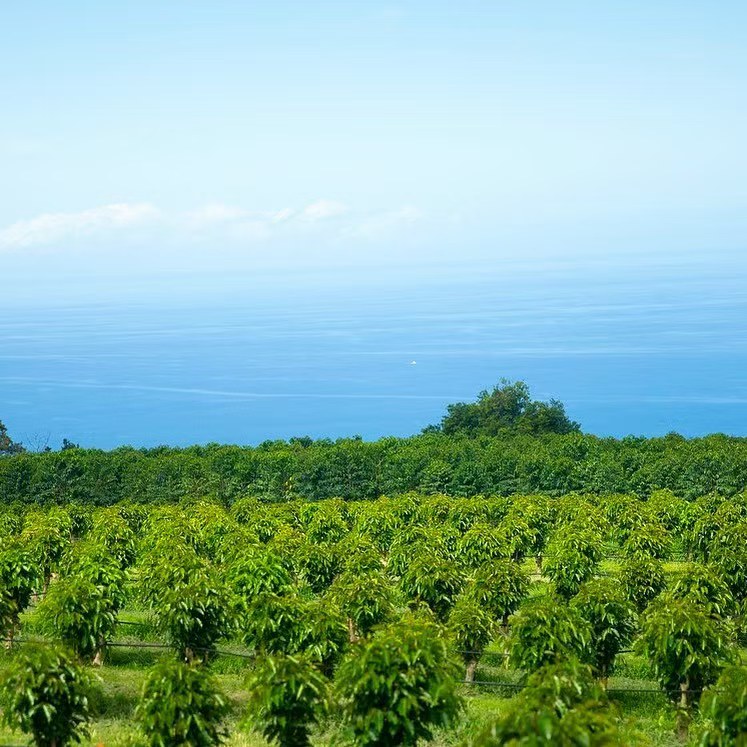
The main Kona coffee production area is concentrated in the southwestern part of Hawaii’s Big Island, covering the slopes of the Hualalai and Mauna Loa volcanoes. Though the region is small—only about 2 miles wide and 20 miles long—it is home to over 630 small family-run coffee farms. The elevation here ranges between 800 to 1100 meters, making it an ideal zone for Arabica coffee. The coffee trees enjoy ample sunlight but also benefit from the shading effect of frequent mountain fog. The rhythm of cool nights and warm days helps the coffee cherries ripen slowly, accumulating richer flavor compounds.
In addition to the famous KONA region, other Hawaiian islands such as Maui, and areas like Hamakua and Kau on the Big Island, also grow coffee, though on a smaller scale and with less recognition. For example, the Kaʻanapali farm on Maui, once a sugarcane plantation, transitioned to coffee cultivation at elevations between 100 to 550 meters, primarily growing Typica, Caturra, Catuai, and Mocha varieties. Meanwhile, the Kau region established its own processing facilities after 2010, enhancing the local coffee’s processing quality.
The success of Kona coffee is inseparable from its core variety—Typica. As one of the earliest discovered Arabica varieties, Typica originates from Ethiopia and is the ancestor of most modern coffee varieties. It offers an elegant and clean flavor profile with bright acidity, but it is relatively delicate, susceptible to leaf rust, and has lower yields. Typica has been cultivated in the Kona region for a long time, and through long-term adaptation and improved farming practices, it now exhibits outstanding quality potential. Its beans are typically elongated and pointed, contrasting with the more common round-shaped Bourbon varieties. When brewed, it often presents a clean, bright acidity, soft sweetness, and nuanced aromatic layers.
Hawaiian Kona coffee is known for its full-bodied fruitiness, balanced acidity and sweetness, and distinctive spicy notes. Its flavor profile often includes cinnamon, citrus, honey, and gentle nutty undertones. The cup is smooth without astringency, with a lingering, mellow finish. The beans have a neat and glossy appearance. Grown in volcanic highlands and managed with careful human intervention, each bean demonstrates high uniformity and refined quality. This exceptional case of “low altitude but high quality” has secured Kona coffee a place in the global specialty market.
In terms of processing, Kona coffee primarily uses the washed method, which highlights the coffee’s clarity and clean flavors. During washing, the coffee cherries are first stripped of their skin and pulp, then the sticky mucilage layer is removed through fermentation. After multiple rinses to eliminate fermentation residues, the parchment-covered beans are naturally dried in the sun. Hawaii’s pristine mountain spring water provides ideal conditions for washing, resulting in Kona coffee’s clear, bright appearance and pure flavor characteristics.
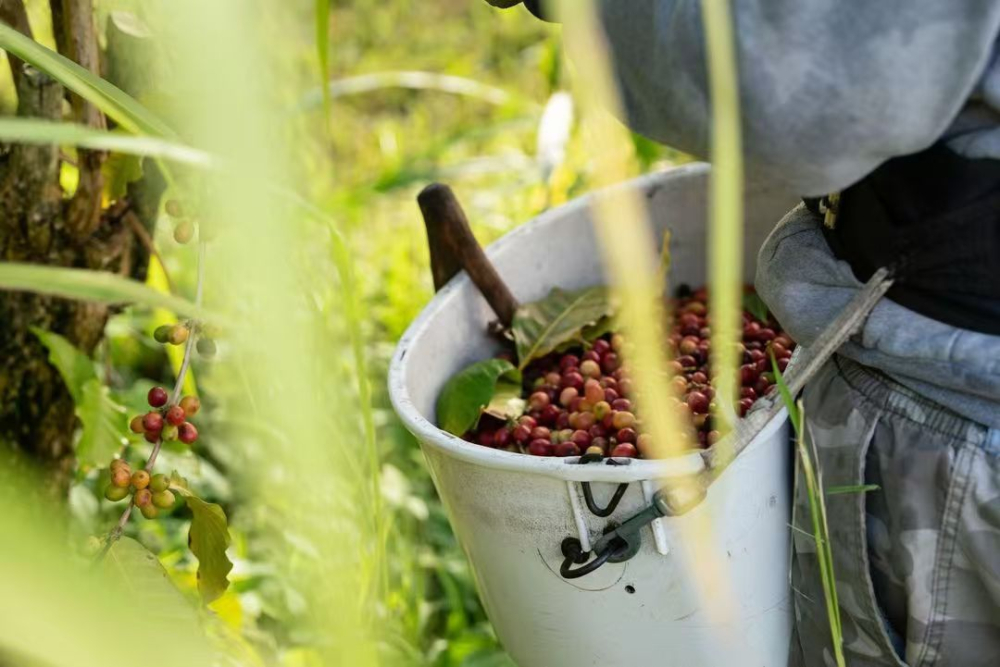
The aroma of Kona coffee is rich and unique, often blending fruity sweetness, floral notes, and gentle spice undertones. Upon tasting, its acidity is bright yet not sharp, with a full and layered sweetness, and the finish often carries a mellow honey or caramel note. This flavor combination makes it stand out in the global specialty coffee scene, especially appealing to consumers who prefer refined flavors and balanced mouthfeel.
Hawaiian Kona coffee is classified into several grades based on bean size and processing standards, with Extra Fancy, Fancy, Prime, and Gr. No.1 being the primary classifications. There is also a distinction between Type1 (standard round beans) and Type2 (small round beans or Peaberry), with the latter often considered to have more concentrated flavors due to their unique shape and higher density. Top-tier Kona coffee typically comes from carefully managed family farms, undergoing strict screening and certification to ensure each batch meets high-quality standards.
For brewing recommendations, to fully showcase Kona coffee’s delicate sweetness and aromatic layers, a medium-light to medium roast is advised to preserve the clarity of its inherent flavors. For pour over, the V60 dripper is a good choice, using a water temperature of 90°C and a 1:15 coffee-to-water ratio. A grind size similar to superfine sugar (e.g., BG#6M) is recommended. A staged extraction method is suggested: begin with a 30-second bloom using double the coffee’s weight in water (e.g., 30g water for 15g coffee), then pour in a circular motion to reach 125g before pausing, followed by pouring up to 225g until the end. Keep the total brew time around 2 minutes to help balance acidity and sweetness, and enhance mouthfeel smoothness.
In summary, Hawaiian Kona coffee, with its unique geographical environment, refined agricultural management, and delicate flavor expression, proves that low altitude does not equate to low quality. This “low-altitude coffee queen” is not only a cultural symbol of Hawaii but also an important chapter in the global specialty coffee journey exploring the diversity of regional flavors.
The above content is compiled by CoffeeHunters, a coffee news website.


