







Introduction:Jamaican Blue Mountain coffee is hailed as one of the world’s finest coffees, but in reality, it has a rigorous grading system with clear standards for growing altitude and green bean size. This article provides an in-depth analysis of the three main grades of Blue Mountain coffee—including the differences between Blue Mountain No.1, No.2, and No.3—as well as distinctions between different producing regions such as high mountain and premium washed coffee. It also covers actual export specifications and commonly seen market prices to help you select and appreciate this legendary coffee more precisely.
Blue Mountain coffee has long been regarded as the pinnacle of global coffee, yet what you might not know is that it actually follows a very strict grading classification system. Jamaica categorizes Blue Mountain coffee into three main types based on the altitude at which the coffee is grown and the size of the green beans: Jamaican Blue Mountain Coffee, Jamaican High Mountain Coffee, and Jamaican Prime Washed Coffee. Among these, the premium-grade Blue Mountain No.1 beans and Amber No.1 beans, though both considered high-end, can have a market price difference of up to 300 to 400 yuan per pound.
The Blue Mountains are located in the eastern part of Jamaica, surrounded by the Caribbean Sea. On clear days, sunlight shines onto the azure sea and reflects onto the mountain peaks, creating a unique blue-hued glow—this is the origin of the name “Blue Mountain.” The area stands at an altitude exceeding 2100 meters, with a cool, foggy climate and abundant rainfall, together forming an ideal environment for coffee cultivation and giving rise to the uniquely flavored Blue Mountain coffee.
The official grading of Jamaican Blue Mountain coffee is primarily based on two factors: the altitude at which the coffee trees are planted and the size (or screen size) of the green beans. High-grade Blue Mountain coffee is further subdivided into No.1, No.2, and No.3 beans according to bean size. No.1 beans are 17 to 18 screen size or above (with 17 screen roughly equal to 17/64 of an inch), No.2 beans are 16 screen, and No.3 beans are 15 screen. It’s worth noting that according to official cuppers, there is no significant difference in flavor among these three grades—the primary distinction lies solely in bean size.
In addition to high-grade Blue Mountain coffee, Jamaica also produces “High Mountain Coffee” from mid-to-high altitude regions, as well as “Prime Washed Coffee” mainly from mid-to-low altitude areas. Though not part of the core Blue Mountain producing zone, these coffees still maintain a certain level of quality and are all categorized under Jamaican Prime Washed Coffee. Interestingly, even among those labeled as “Blue Mountain,” the Blue Mountain No.1 (BLUE MOUNTAIN NO.1) and Amber No.1 (AMBER NO.1) are both considered specialty-grade products, yet their market prices differ noticeably—with Amber No.1 typically commanding a higher price.
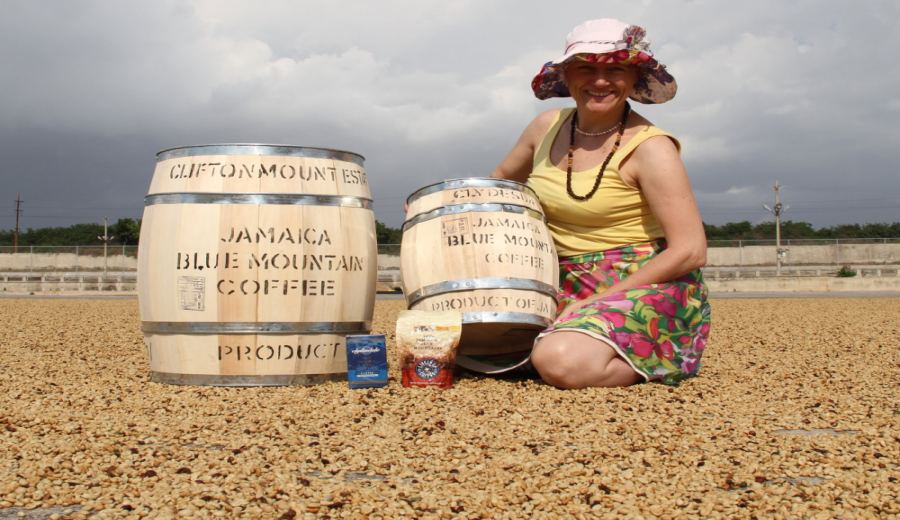
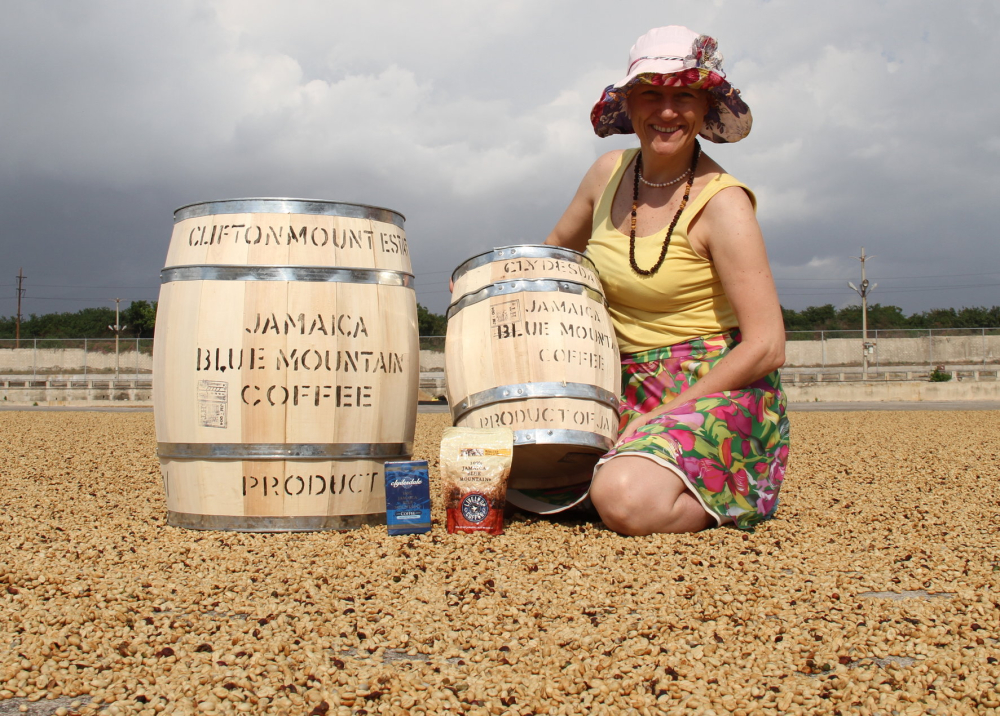
Regarding export specifications, all grades of Blue Mountain green beans must be shipped overseas in wooden barrels. Common barrel capacities include 70 kilograms, 30 kilograms, and 15 kilograms, ensuring quality stability during transit. This regulation is not only a reflection of Jamaica’s commitment to coffee quality but also the foundation of international market trust in Blue Mountain coffee.
As for actual market prices, taking the widely praised Blue Mountain No.1 coffee beans produced by Jamaica’s Clifton Estate as an example, the roasted bean price is approximately 158 yuan per 100 grams. For coffee enthusiasts who enjoy pour over or wish to deeply experience the flavors of Blue Mountain, understanding these grade and specification details will help you make smarter purchasing decisions and better appreciate the distinctive delicate, rich, and balanced flavors of Blue Mountain coffee.
The above content is compiled by CoffeeHunters, a coffee news website.


