







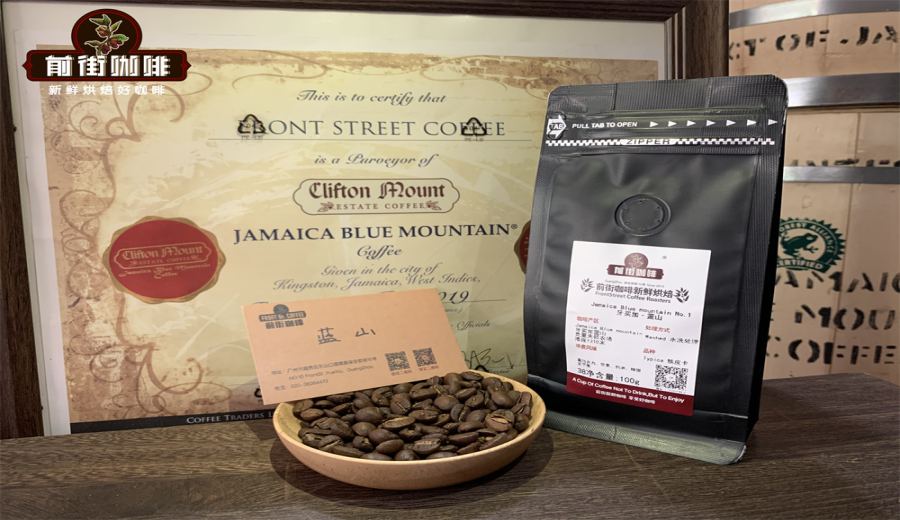
Introduction:Jamaican Blue Mountain coffee is renowned for its unique flavor and rare origin, making it the dream bean for many coffee enthusiasts. This article delves into the Typica variety background of Blue Mountain coffee, the microclimate and high-altitude growing environment of the Blue Mountains, the characteristics of the washed processing method, as well as the four-tier grading standards under CIB certification. It also provides professional pour over recommendations and parameter settings to help you better understand the essence of this premium coffee.
Jamaican Blue Mountain coffee has long been regarded as a benchmark for specialty coffee. Its allure stems from its exceptional terroir, rigorous grading system, and the distinctive traits of the Typica variety. This coffee not only delivers a layered flavor profile but also stands out as a rare and high-quality treasure sought after by coffee lovers worldwide.
The foundational variety of Blue Mountain coffee is Typica, one of the oldest lineages within the Arabica species. Legend has it that between the 15th and 16th centuries, this coffee was introduced from southwestern Ethiopia to Yemen, and later spread globally through European trade. Typica plants are relatively tall, with leaves often exhibiting a bronze hue at the tips. Their green beans are slender and pointed at both ends, resembling the streamlined shape of an egg. This variety typically showcases bright citrus acidity and a soft sweetness, embodying a clean and elegant profile. However, it suffers from low yield and susceptibility to leaf rust, leading to its gradual replacement in recent years by more disease-resistant varieties.
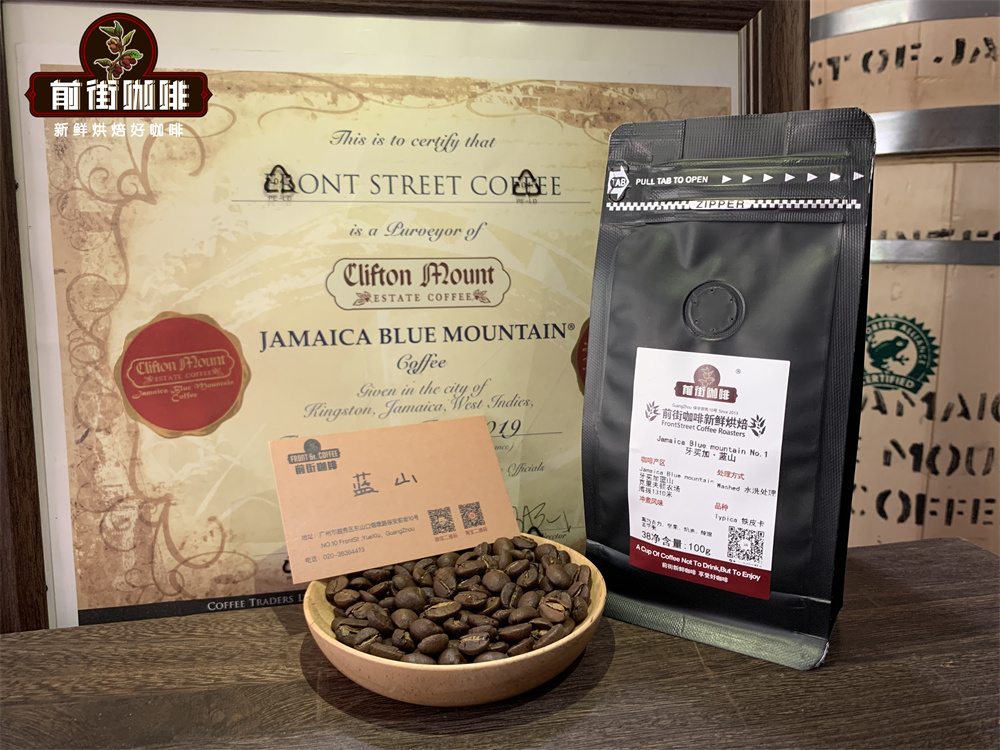
Typica was introduced to Jamaica in the 18th century by British official Sir Nicholas Lawes and soon took root in the Blue Mountain region, where it has thrived for over two hundred years. During this time, the Typica grown in the Blue Mountains has gradually adapted to the island’s unique tropical rainforest climate, particularly developing stronger resistance to common coffee berry diseases. This adaptation is largely attributed to the exceptional natural environment of the Blue Mountain range.
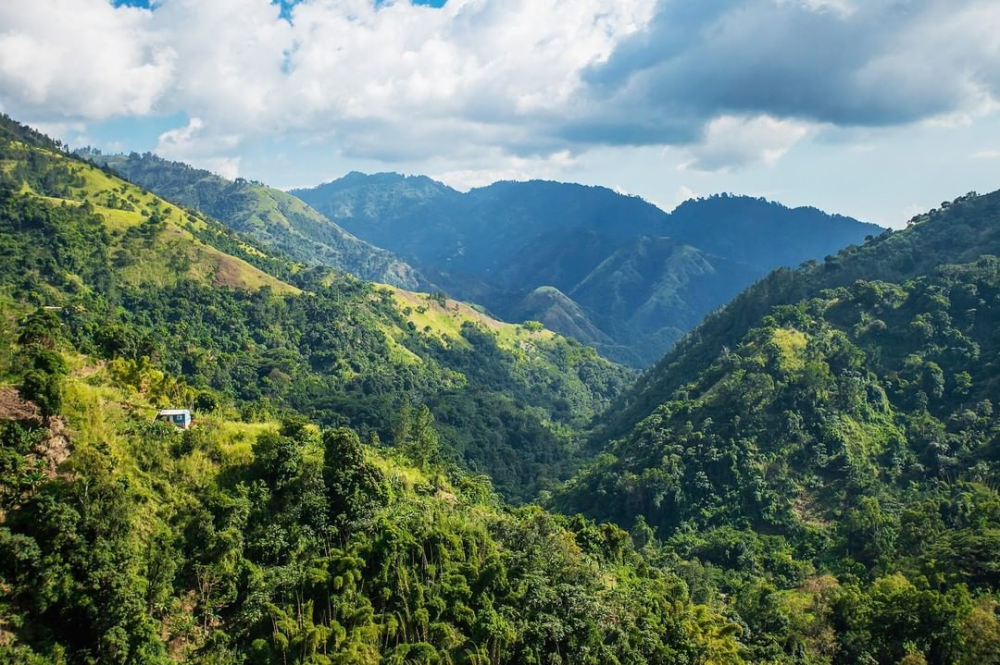
The Blue Mountains are located in eastern Jamaica, surrounded by azure seas. Under sunlight, the mountain ranges emit a captivating blue haze, hence their name. This area, far removed from urban hustle, boasts elevations exceeding 2,000 meters and is not only a renowned tourist destination but also an ideal place for coffee cultivation. The region’s mineral-rich volcanic soil, coupled with stable rainfall and ample sunshine, provides optimal nourishment for coffee trees. Additionally, many farms interplant bananas and avocados as natural shade trees, helping to maintain the microclimate essential for coffee tree growth.
Blue Mountain coffee is primarily cultivated across four regions at elevations between 910 and 1,700 meters: St. Andrew, St. Mary, St. Thomas, and Portland. Elevations above 1,700 meters are designated as protected natural forest zones, where no commercial cultivation takes place. Notably, due to the steep terrain, harvesting is extremely challenging and relies almost entirely on skilled local female pickers. These workers can accurately assess the ripeness of coffee cherries, picking only the optimally mature red ones to ensure the highest quality of raw materials.
The freshly picked coffee cherries are typically subjected to washed processing on the same day. Although a few estates have recently experimented with limited sun-dried batches, most experts agree that washed processing better highlights the clear and balanced classic flavors of Blue Mountain coffee, making it especially suitable for those new to its profile.
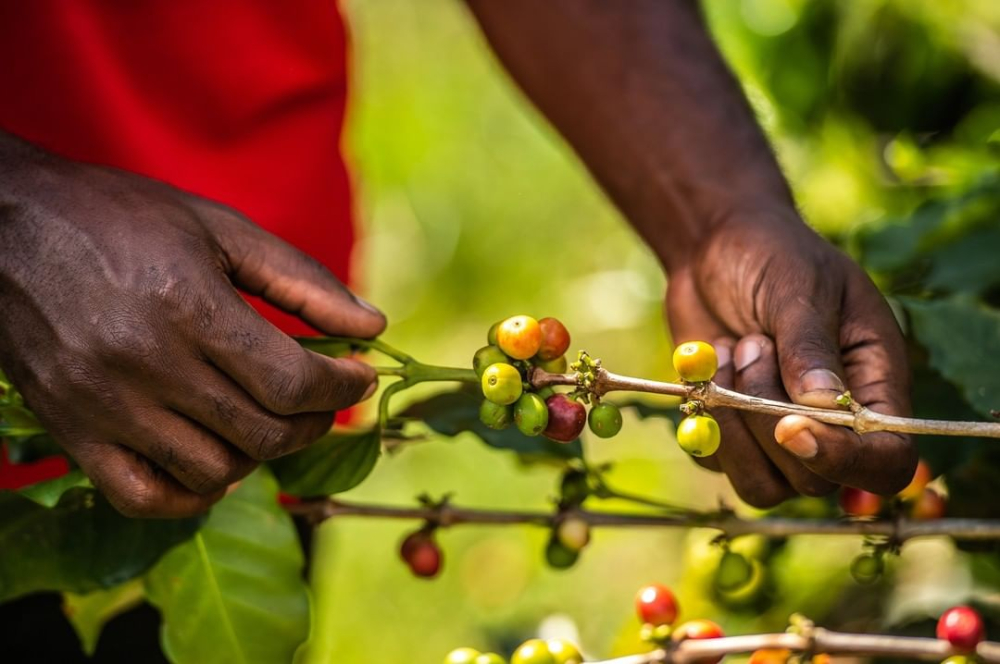
The washed processing procedure is highly meticulous: freshly harvested cherries are first soaked in water, where buoyancy helps preliminarily sort out unripe or overripe defective beans. The pulp and flesh are then removed, allowing the beans to enter the fermentation stage, which usually lasts 12 to 18 hours. After fermentation, residual mucilage and impurities are cleared through manual agitation and water flushing, resulting in smoother bean surfaces. Finally, the beans are evenly spread under the sun to dry naturally until their moisture content stabilizes between 12% and 14%, after which they undergo final quality control before packaging and export.
The Jamaica Coffee Industry Board (CIB) oversees the entire process of Blue Mountain coffee—from cultivation to sales—and enforces a strict grading system. Only coffee certified by the CIB and bearing its official label can be called authentic Jamaican Blue Mountain coffee. The CIB’s evaluation criteria cover bean size, defect ratio, exterior color, uniformity, as well as cupping performance post-roasting, including attributes such as dry fragrance, wet aroma, acidity, flavor, body, cleanliness, and sweetness.
Based on green bean specifications and quality, Blue Mountain coffee is divided into four grades: Blue Mountain No. 1, Blue Mountain No. 2, Blue Mountain No. 3, and Blue Mountain Peaberry. Among these, Blue Mountain No. 1 is the highest grade, requiring a bean size of 17 mesh or larger, a defect rate below 3%, a moisture content of around 13%, and cupping results that exhibit rich aroma, delicate and balanced taste, gentle low acidity, and a long-lasting aftertaste. It’s worth noting that Blue Mountain No. 1, No. 2, and No. 3 are among the few coffees in the world exported in wooden barrels, which help regulate humidity and prevent aroma loss—an important hallmark of authentic Blue Mountain coffee.
If you wish to brew Blue Mountain No. 1 at home, a medium-to-dark roast is recommended to bring out its full-bodied character while retaining a hint of bright fruit acidity. Industry practice suggests using water at 87–88°C, paired with a medium grind size (approximately equivalent to EK43s setting 10.5) that allows about 75% of the coffee to pass through a No. 20 sieve. This approach effectively avoids over-extraction and achieves the best extraction balance.
A KONO filter cone is recommended for pour over brewing, as it ensures a stable flow rate and filter structure, helping to highlight the rich body, smooth roundness, and delicate aftertaste of Blue Mountain No. 1. Specific parameters are as follows: 15 grams of coffee grounds, a 1:15 coffee-to-water ratio, using a staged extraction method—start with a 30-second bloom using 30 grams of water, then pour up to 125 grams in the first stage, and continue pouring to 225 grams once the liquid level drops halfway to complete the extraction, with a total brew time of about 2 minutes. This will allow you to enjoy a layered profile of dark chocolate, nuts, and almonds, with lingering notes of hazelnut, creamy sweetness, and soft caramel as the cup cools.
The above content is compiled by CoffeeHunters, a coffee news website.


