







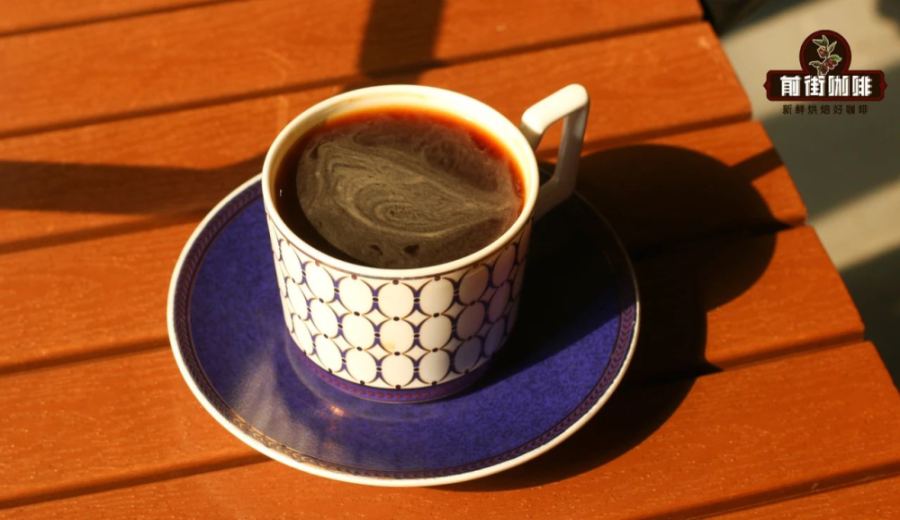
Introduction:As the largest coffee-producing country in Central America, Honduras, with its diverse altitudes and climatic conditions, fosters uniquely distinctive highland flavors. This article delves into the geographical environments, bean varieties, and post-harvest processing techniques of the country’s six major producing regions, with a special focus on how whiskey barrel fermentation imparts intense wine-like aromas to the coffee. It also provides professional pour over recommendations and cupping references to help you comprehensively understand Honduran specialty coffee—from origin to cup.
Located in northern Central America, Honduras borders the Caribbean Sea to the north, the Pacific Ocean’s Gulf of Fonseca to the south, and shares boundaries with Nicaragua, El Salvador, and Guatemala. The country’s mountainous terrain and warm, humid tropical climate provide an ideal environment for coffee cultivation. Honduran coffee is categorized by altitude into two main types: highland and premium highland, with the latter grown at elevations between 1500 and 2000 meters, known for its rich and full-bodied flavors, representing the country’s top-tier coffees.
Currently, Honduran coffee producing regions can be mainly divided into six core areas, each yielding distinctly flavored beans due to variations in microclimates and soil conditions.
The Copán region, located in the west bordering Guatemala, has an average elevation between 1000 and 1500 meters, with relatively high air humidity and significant diurnal temperature variation—the nighttime low can drop to 11.5°C. This environment helps coffee cherries ripen slowly, accumulating rich flavor compounds.
In the Montecillos region, coffee farms are mostly situated at elevations between 1200 and 1600 meters. The cool nights slow down fruit ripening, allowing sugars to fully develop, resulting in pronounced citrus, peach, and apricot aromas, paired with caramel sweetness and a smooth mouthfeel, making it a favorite among many coffee enthusiasts.
The Agalta region in the southeast has a more tropical climate, with plantings at elevations between 1100 and 1400 meters. The coffee produced here features tropical fruit and chocolate flavors, with gentle acidity and a rich caramel sweetness in the aftertaste, suiting those who prefer sweet and mellow profiles.
The Opalaca region, adjacent to Copán, commonly grows Bourbon, Catuai, and Typica varieties at elevations ranging from 1100 to 1500 meters. Its coffee offers a more nuanced flavor profile, with bright yet non-sharp acidity and a balanced, lingering finish, showcasing the advantages of high-altitude cultivation.
Comayagua, located in the central region, was the country’s top-producing area in 2016. Its coffee boasts a distinct citrus acidity and a creamy, velvety mouthfeel, appealing to consumers who enjoy fresh acidity and rich body.
El Paraíso, in the south bordering Nicaragua, is Honduras’ largest and oldest-producing region, with elevations between 1000 and 1400 meters and temperatures ranging from 16°C to 22.5°C. The warm environment promotes rapid cherry development, yielding beans with unique regional characteristics.
Honduran coffee beans come in a variety of cultivars, among which the popular Sherry and Lychee Orchid beans are primarily made up of combinations such as Caturra, Catuai, Pacas, and Caturra-Catuai blends.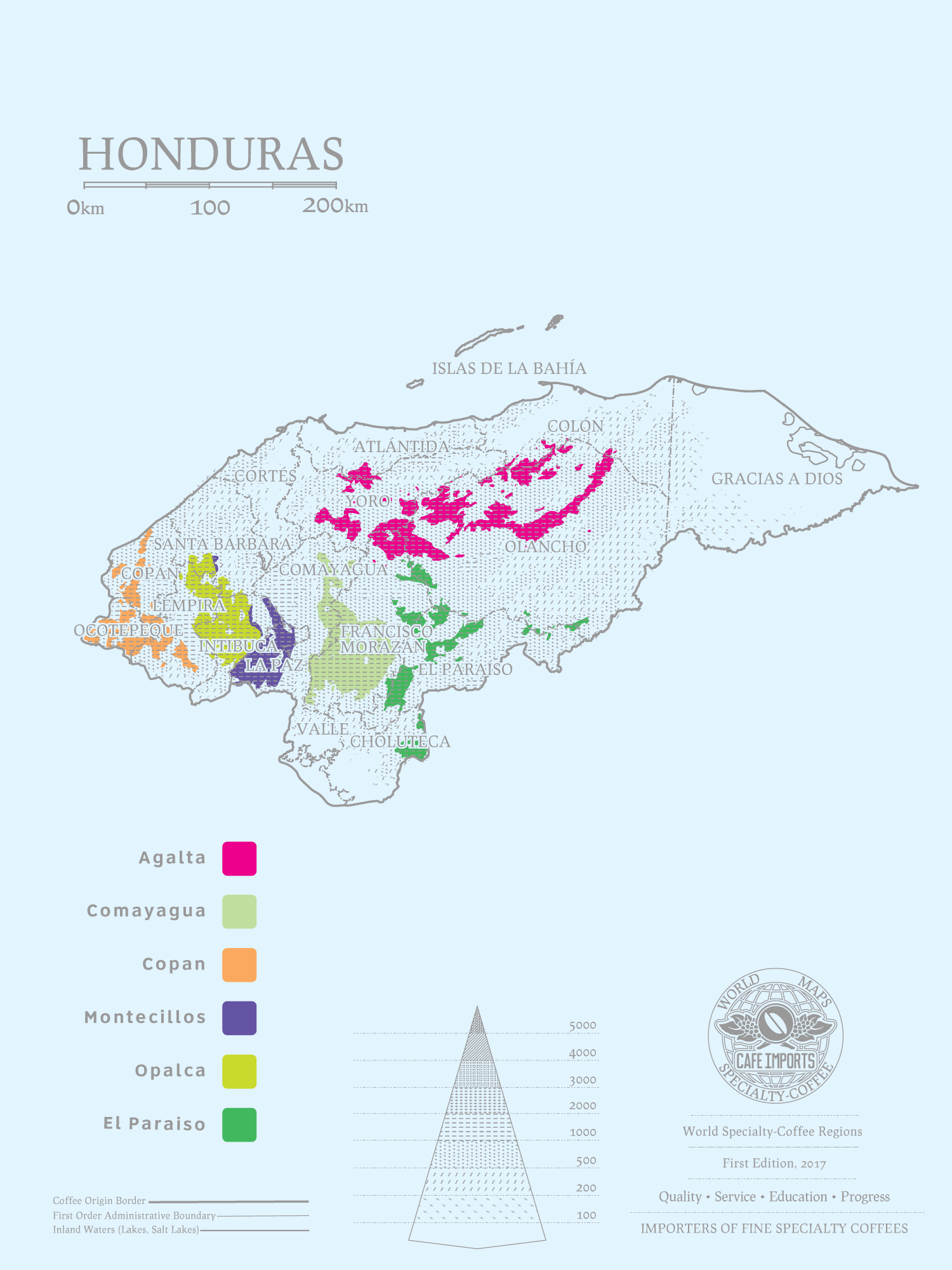 Caturra is a natural mutation of Bourbon, originating in Brazil between 1915 and 1918, with a shorter plant height suitable for dense planting; Catuai is a disease-resistant hybrid developed by the Brazilian Agricultural Research Corporation by crossing Mundo Novo with Caturra, though it is more susceptible to pests; Pacas, originating in El Salvador, was discovered in 1949 and later selectively bred by ISIC, then introduced to Honduras by IHCAFE in 1974. It is a Bourbon variety that balances yield and quality.
High-quality Honduran coffee generally employs the washed processing method. The process begins with removing floaters—defective cherries—followed by mechanical depulping and screening to retain only mature beans. Sherry coffee beans undergo additional whiskey barrel fermentation after washing—beans are placed in sherry whiskey barrels and fermented at a low temperature of 15°C to 20°C for 30 to 40 days, then shaded dried to prevent sun-heating that could compromise the wine aroma.
Take the Sherry coffee from Finca Masaguara Mocha as an example: grown at elevations between 1500 and 1700 meters, it uses Caturra, Catuai, and Pacas varieties. After meticulous washed processing and barrel fermentation, the recommended brew method is using a Hario V60 filter, with water at 90°C, 15 grams of coffee, a 1:15 coffee-to-water ratio, and grind size around EK 43s#10 (80% passing through a standard #20 sieve). The pouring technique involves three pours: the first pour adds 30 grams of water for a 30-second bloom; the second pour uses a slow circular motion to reach 125 grams, then pauses; after the water level drops, continue pouring to 225 grams, with total extraction time around 2 minutes. The final cup is creamy-smooth on the palate, accompanied by whiskey aroma, vanilla, and berry acidity, with a lingering finish of dark chocolate and honey notes.
The above content is compiled by CoffeeHunters, a coffee news website.


