







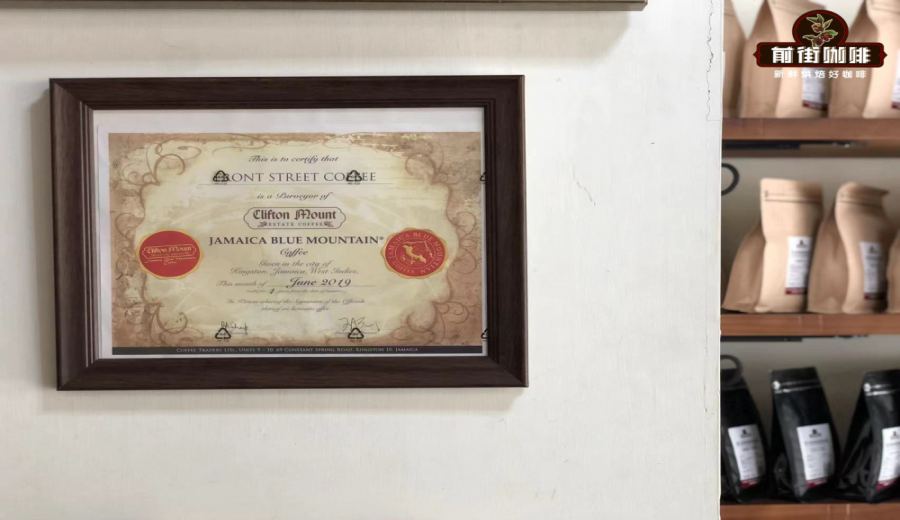
Introduction:Jamaican Blue Mountain coffee is hailed as one of the world’s top-tier coffees, with its unique aroma and rich, mellow flavor leaving an unforgettable impression. This article delves deep into the flavor profile, terroir microclimate, variety commitment, washed processing, and strict grading system of Blue Mountain coffee, while also analyzing the roasting and pour over parameters for Blue Mountain No. 1 to help you fully grasp the charm and selection secrets of this classic coffee.
Jamaican Blue Mountain coffee is renowned as one of the world’s representative premium coffees for its full-bodied and mellow aroma, well-balanced acidity, sweetness, and bitterness, along with its delicate and elegant mouthfeel. But to truly savor its essence, one must first understand its unique terroir conditions, varietal background, and a rigorous quality control mechanism.
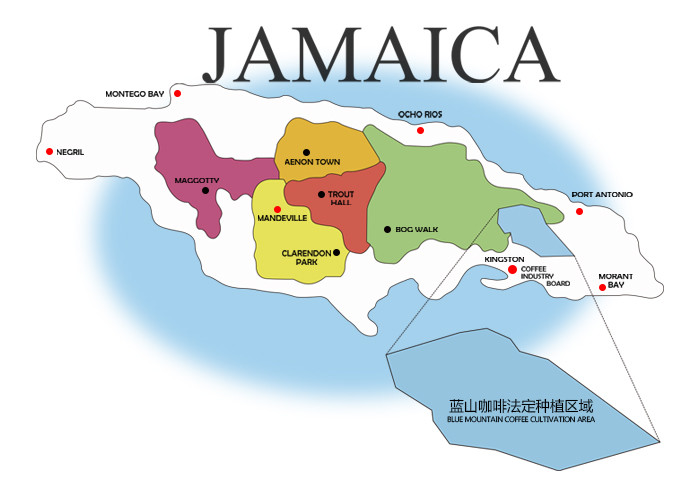
The Blue Mountains are located in eastern Jamaica, within the Golden Coffee Belt near 25 degrees north latitude, with the main peak reaching an elevation of 2,256 meters. Such high altitude brings a significant diurnal temperature variation, slowing down the ripening process of coffee cherries and allowing more time for flavor compounds to accumulate, thus forming a rich aroma and layered complexity. Coupled with the fertile volcanic soil that is rich in various minerals, along with abundant rainfall and year-round cloud cover, even with minimal artificial irrigation and fertilization, the coffee trees can thrive healthily—creating the unique character of Blue Mountain coffee.
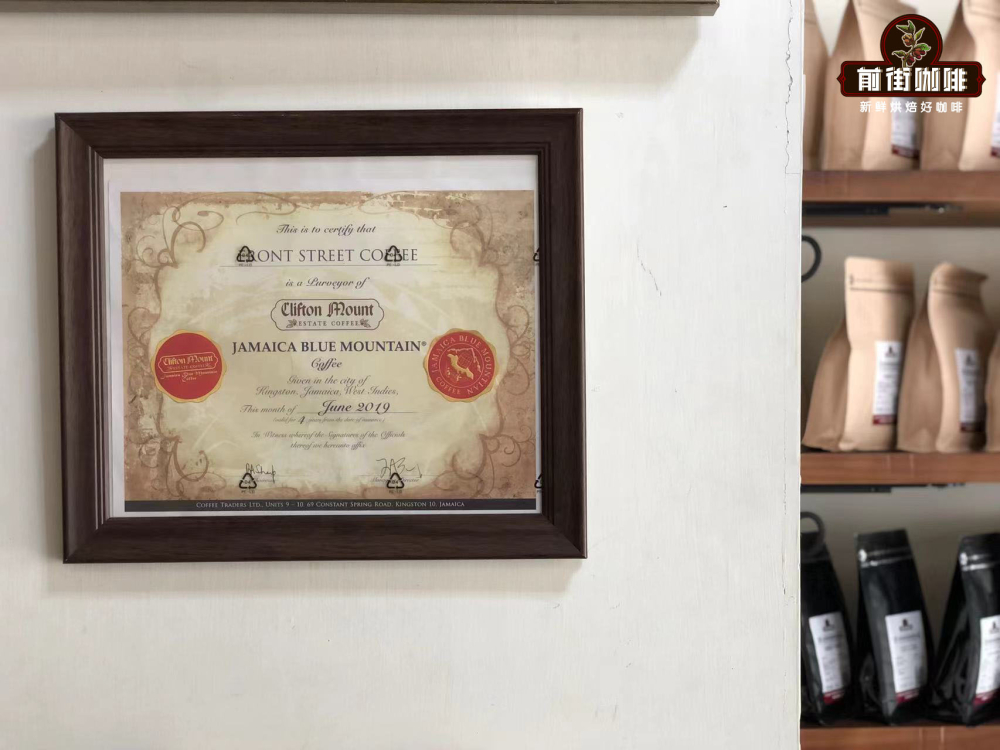
It’s worth mentioning that the Blue Mountain coffee region has a highly enclosed island-style microclimate, with fresh air and almost no pollution. The Typica variety introduced earlier gradually adapted to this special environment, not only preserving its original pure lineage but also developing good disease resistance. While many producing areas have switched to other high-yield varieties, Blue Mountain has remained committed to cultivating Typica, which is one of the key reasons for its distinctive and stable flavor.
However, not all coffee grown in the Blue Mountains can be called “Jamaican Blue Mountain coffee.” According to Jamaica’s Coffee Industry Regulation Act, only Typica coffee planted within the four administrative regions of Saint Andrew, Saint Thomas, Portland, and Saint Mary, at elevations between 910 and 1,700 meters, qualifies to be labeled as “Jamaica Blue Mountain (Jamaica Blue Mountain).” These four regions cover a total area of about 6,000 hectares, accounting for only one-third of the entire Blue Mountain cultivation area, underscoring its rarity and preciousness.
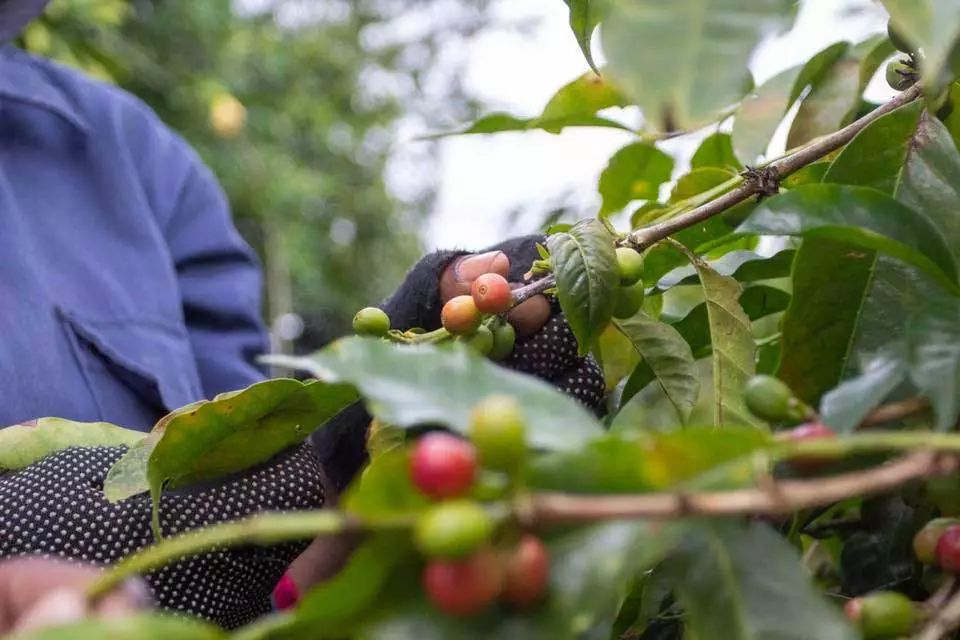
After harvesting, the green beans of Blue Mountain coffee undergo the traditional washed processing method. First, the manually selected coffee cherries are screened in water, and defective floaters are removed first. Then the pulp and flesh are removed, and the beans enter a fermentation tank for 12 to 18 hours of fermentation to break down residual mucilage. After fermentation, the beans are washed with water flow and friction between the beans until the surface is smooth and clean, followed by sun drying until the moisture content stabilizes at 12% to 14%. This processing method not only reduces the defect rate but also better preserves the coffee beans’ natural aroma, resulting in a cleaner and clearer taste.
Before export, the green beans of Blue Mountain coffee must also pass the strict quality inspection and grading system of the Jamaica Coffee Industry Board (CIB). Inspection items include bean size, color, defect ratio, and flavor performance. The primary criterion is that the defect rate must be less than 3%, then they are subdivided into four grades based on bean size. Among them, “Blue Mountain No. 1” is the highest grade, with green bean specifications requiring 17 mesh or above, and moisture content around 10% to 12.5%. After roasting, it often exhibits a balanced acidity, sweetness, bitterness, and body, representing the classic Blue Mountain flavor.
The graded and inspected Blue Mountain green beans are packaged and transported in handcrafted oak barrels, which is not only a characteristic of Blue Mountain coffee but also an important sign of authenticity. Oak barrels effectively regulate internal and external humidity, prevent aroma loss, maintain stable moisture content of the beans, and thereby ensure consistency and controllability during the roasting process. The coffee barrels produced in Jamaica come in three capacities: 70 kg, 30 kg, and 15 kg, commonly used in high-quality coffee trade.
For coffee enthusiasts, understanding how to brew Blue Mountain No. 1 is equally important. During roasting and cupping, aiming for a medium-dark roast highlights its mellow characteristics, based on its chocolate and nutty aroma profile and soft acidity. In extraction, although there are no absolutely fixed parameters, it is recommended to flexibly adjust strength according to personal taste preferences, while avoiding over-extraction or under-extraction.
A special reminder: for high-quality coffee beans like Blue Mountain No. 1, freshness greatly impacts flavor performance. It is recommended to choose green beans roasted within 5 days and to brew them freshly ground for the best experience. If you don’t have a grinder, consider having the shop grind them for you, but note that coffee powder exposed to air can quickly lose its aroma and should be consumed as soon as possible. To fully experience the delicate layers of Blue Mountain No. 1, it is recommended to purchase whole beans and grind them yourself.
In actual pour over practice, some shops prefer using the KONO filter, due to its immersion-style extraction characteristics, which enhance overall coffee concentration and body, especially suitable for Blue Mountain coffee with a bitter base. Compared to the V60, the upper part of the KONO filter has better paper adhesion, effectively stabilizing the flow rate and delivering a rounder mouthfeel. This filter is also suitable for other dark-roasted or full-bodied beans such as Brazilian Queen Estate and Golden Mandheling.
Blue Mountain No. 1 pour over parameters are as follows:
Filter: KONO filter
Water temperature: 88°C
Coffee-to-water ratio: 1:15
Coffee dosage: 15 grams
Grind size: EK43s - scale 10.5 (approximately 75% passing through a #20 sieve)
Operation steps: Wet the filter with hot water first, ensuring it fits snugly with the filter paper, then place it in the server. Add 15 grams of coffee grounds, pour 30 grams of hot water for a 30-second bloom, then pour water in small circles from the center outward until reaching 125 grams for the first pour. Once the coffee bed drops to the middle of the filter, pour again using the same method until reaching 225 grams. After the coffee liquid has completely dripped through, remove the filter to complete the brew.
The final brewed Blue Mountain No. 1 coffee offers a distinct black chocolate richness, a gentle caramel sweetness, and a subtle yet refined acidity. All flavor elements are well-balanced and harmonious, with a smooth and velvety mouthfeel, perfectly showcasing the classic flavor characteristics of Blue Mountain coffee.
The above content is compiled by CoffeeHunters, a coffee news website.


