








Introduction:Indonesian Mandheling coffee is renowned for its rich, bold flavors with herbal and dark chocolate notes, making it a favorite among dark roast enthusiasts. This article delves into the history of Mandheling, the characteristics of the Sumatra region, and how the unique wet hulling process contributes to its distinctive flavor profile. It also explores the origins and quality control of Golden Mandheling, helping you gain a deeper understanding of this classic coffee bean’s charm.
When it comes to Indonesian coffee, most people immediately think of Mandheling. This coffee from Sumatra, Indonesia, is beloved by dark roast fans for its full-bodied taste and unique herbal and dark chocolate aromas. But did you know that the name “Mandheling” actually stems from a misunderstanding by a Japanese soldier? This article will take you through the history, origin, processing method, and flavor characteristics to fully uncover the allure of this Indonesian coffee gem.
The history of coffee cultivation in Indonesia dates back to 1699, when the region was still under Dutch colonial rule. The Dutch East India Company (VOC) sought to break the Arab monopoly on coffee trade by introducing Arabica coffee seedlings to Indonesia, starting with Batavia—modern-day Jakarta. Soon after, coffee was planted in East Java, Central Java, West Java, as well as Sumatra and Sulawesi, making Indonesia one of the earliest regions in the world to cultivate coffee on a large scale, following Arabia and Ethiopia. Between 1725 and 1780, the VOC even briefly monopolized global coffee trade.

By the 19th century, coffee cultivation expanded further to Sumatra, Bali, Sulawesi, and Timor. Among these, the Lake Toba region in North Sumatra saw its first coffee plantings in 1888, while the Gayo Highlands (near Lake Laut Tawar in the Aceh region) joined in 1924. However, Indonesia’s coffee industry suffered a major blow in 1876 when coffee leaf rust devastated the dominant Typica variety. To compensate for the loss, disease-resistant Robusta coffee was introduced to East Java starting in 1900, especially in low-altitude areas prone to pests and diseases.
Sumatra is the world’s sixth-largest island and Indonesia’s largest, located in the northwest of the country. Thanks to its geography and climate, Sumatra enjoys the earliest coffee harvest season in the nation, typically running from November to March the following year. Mandheling coffee from Sumatra is known for its low acidity and layered flavors, particularly its herbal and spicy notes, making it a classic favorite among many coffee lovers.
The unique flavors of Sumatran coffee are influenced by several factors. First, the island’s fertile volcanic soil provides abundant nutrients, giving the coffee a rich, earthy body. Additionally, the low acidity—such a hallmark of Sumatran coffee—is largely due to the widespread use of the “wet hulling” processing method, which we’ll detail later.
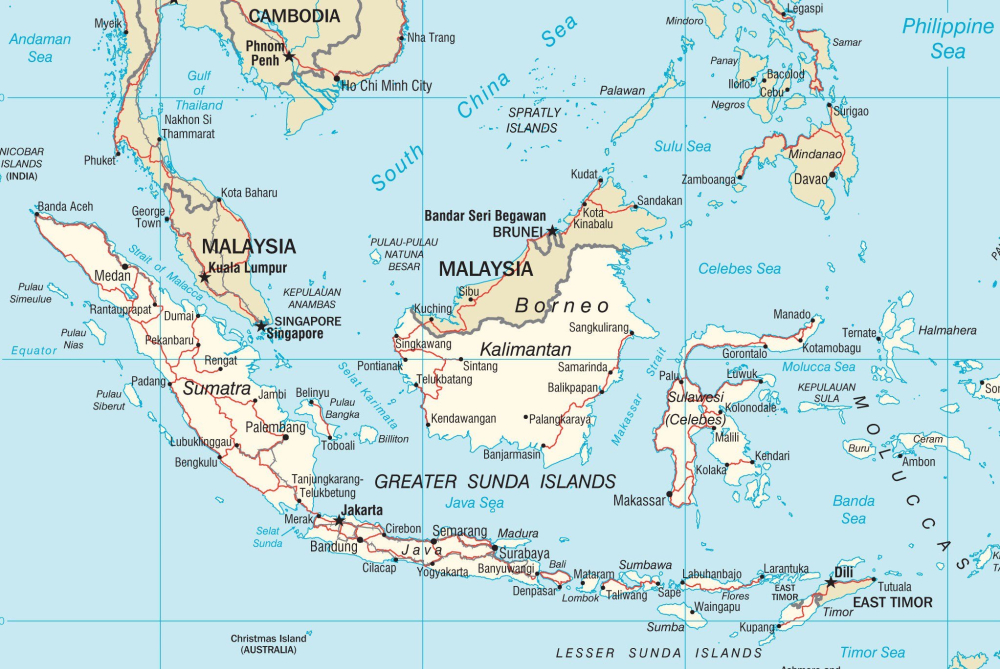
Among Sumatra’s many producing regions, premium Mandheling is primarily concentrated around the Lake Toba area in the Lidong region and the Gayo highlands in Aceh. These two areas, due to differences in altitude, microclimate, and processing methods, produce subtly varied flavor profiles. Currently, the two most popular types of Sumatran Mandheling on the market showcase distinct flavor directions: one exhibits prominent roasted toast, nut, caramel, pine, and herbal aromas; the other has greater depth, with complex layers of spice, nut, dark chocolate, caramel, and herbs.
As for the origin of the name “Mandheling,” it actually has no direct connection to the coffee-growing region. Historical records indicate that during World War II, a Japanese soldier stationed in Sumatra asked locals about the origin of the coffee. Mistaking the question for one about his ethnicity, they replied “Mandheling.” After the war, the soldier recalled that special coffee and assumed its name was “Mandheling.” By 1968, Nomura Trading Company in Osaka, Japan, imported 15,000 kilograms of Sumatran Mandheling coffee from Indonesia’s N.V. Pawani Medan company (abbreviated as PWN). The coffee became immensely popular in the Japanese market, and from then on, the name “Mandheling” gradually gained widespread recognition.
PWN is a well-known and reputable green bean purchaser and processor in Indonesia, with extremely high standards for coffee quality. After processing wet-hulled Mandheling beans, PWN performs one mechanical screening and three rounds of manual hand-picking to ensure each bean meets high standards and achieves Indonesia’s top G1 grade. The machine sorting primarily removes beans smaller than size 18, while subsequent hand-picking focuses on eliminating irregularly shaped or visibly defective beans, effectively reducing defect rates and improving overall flavor consistency.
To distinguish itself from regular Sumatran Mandheling, the brand has registered “Golden Mandheling” as its exclusive trademark. The Golden Mandheling coffee beans sold by this supplier all come from the brand’s own company and are accompanied by official certification and relevant origin documentation. If you have the chance to see the physical packaging, you may even spot the brand’s official gunny sacks and certification credentials, ensuring traceability and quality.
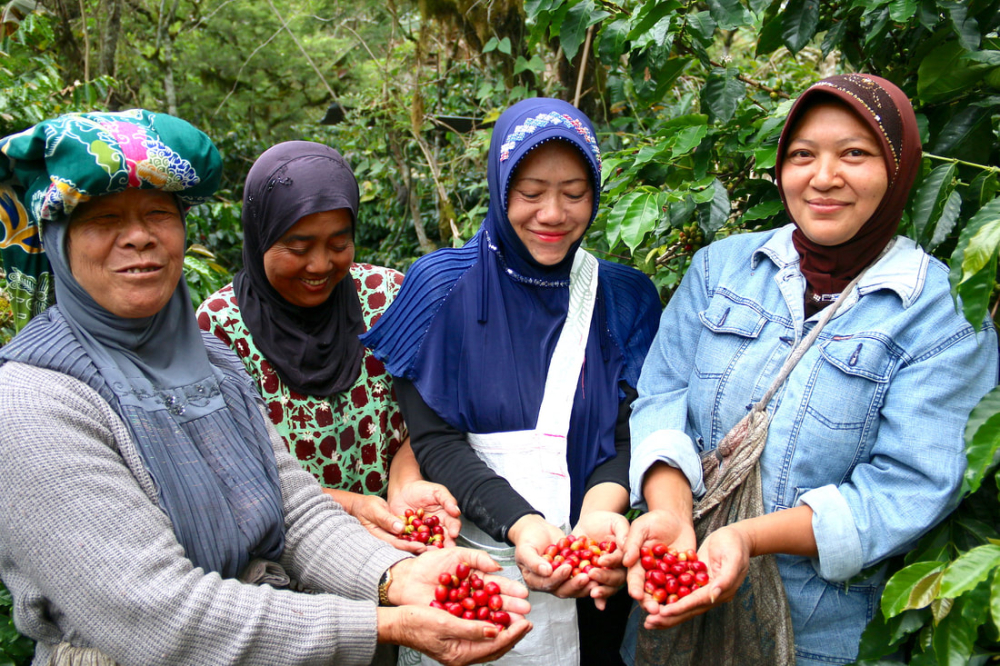
When discussing the unique flavors of Mandheling, one cannot overlook the “wet hulling” (Wet Hulling) process, a coffee processing method unique to Indonesia, locally called giling basah. Though its name resembles the common “wet processing (Wet Processing),” the actual procedures and resulting flavors differ significantly.
The basic steps of wet hulling are as follows: First, the coffee cherries are depulped to remove the skin and flesh, leaving mucilage-covered parchment coffee beans. These are then placed in water tanks for a short fermentation to remove part of the mucilage. After washing, the beans with parchment are dried in the sun for 2–3 days, reducing the moisture content to 20–24%. Next, the parchment is removed, exposing the beans, which are then further dried until the moisture level reaches approximately 12–13%. Finally, the beans are ready for packaging and export.
Notably, a key feature of wet hulling is the “early removal of the parchment and hulling while the beans are still high in moisture,” which accelerates the drying process but also makes the beans more prone to defects. Therefore, high-quality processors like PWN often conduct additional secondary (DP) or tertiary (TP) hand-picking stages specifically to remove defective beans, ensuring the final product’s quality.
Coffee processed via wet hulling typically features pronounced low acidity, a full body, and unique earthy, spicy, and smoky aromas. However, improper processing can result in dull flavors. In contrast, PWN’s Golden Mandheling showcases higher-level herbal notes, caramel sweetness, and a soft yet rich spicy finish, standing out as an exemplary representation of the wet hulling method.
The above content is compiled by CoffeeHunters, a coffee news website.


