







Introduction:Colombia is the world’s third-largest coffee producer and a leader in washed Arabica processing, with up to 40% of its exported beans classified as specialty grade. This article traces the origins of coffee cultivation in the 19th century, delves into how the FNC has driven industry development, explores the characteristics of major producing regions such as Huila and Cauca, and focuses on the Geisha variety, which has gained international acclaim through world competitions. It also covers the variety’s origins, cultivation challenges, and unique flavor profile, and concludes with practical pour over parameters to help you fully appreciate the charm of Colombian coffee.
As the world’s third-largest coffee producer, Colombia is also the country with the highest volume of washed Arabica processing, and up to 40% of its exported coffee beans reach specialty grade. On the menus of many coffee shops, Colombian beans are almost a permanent fixture, with offerings like Rose Valley, Flower Moon Night, Big Belly Button, Geisha, and Huila—all well-suited for pour over to showcase their delicate flavors.
This article will begin with the planting history of Colombian coffee, guiding you through the development trajectory of this major South American coffee nation, introducing the characteristics of its main producing regions one by one, analyzing in depth the Geisha variety that gained fame through the World Barista Championship, and sharing the planting story of Finca El Diviso in the renowned Huila region. Finally, it will provide practical pour over parameters to give you a more comprehensive understanding of the essence of Colombian coffee.
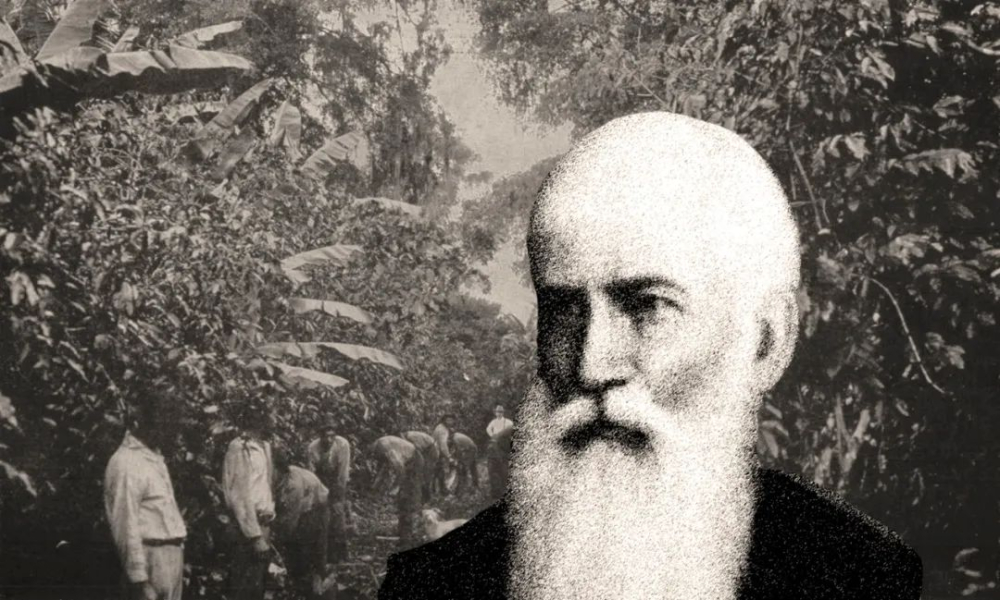
The history of Colombian coffee dates back to the 19th century. Don Mariano Ospina Rodriguez was one of the early pioneers promoting coffee cultivation. In 1835, he established the first experimental coffee plantation in Fredonia, Antioquia, and actively promoted coffee cultivation techniques to local farmers based on his own experience.
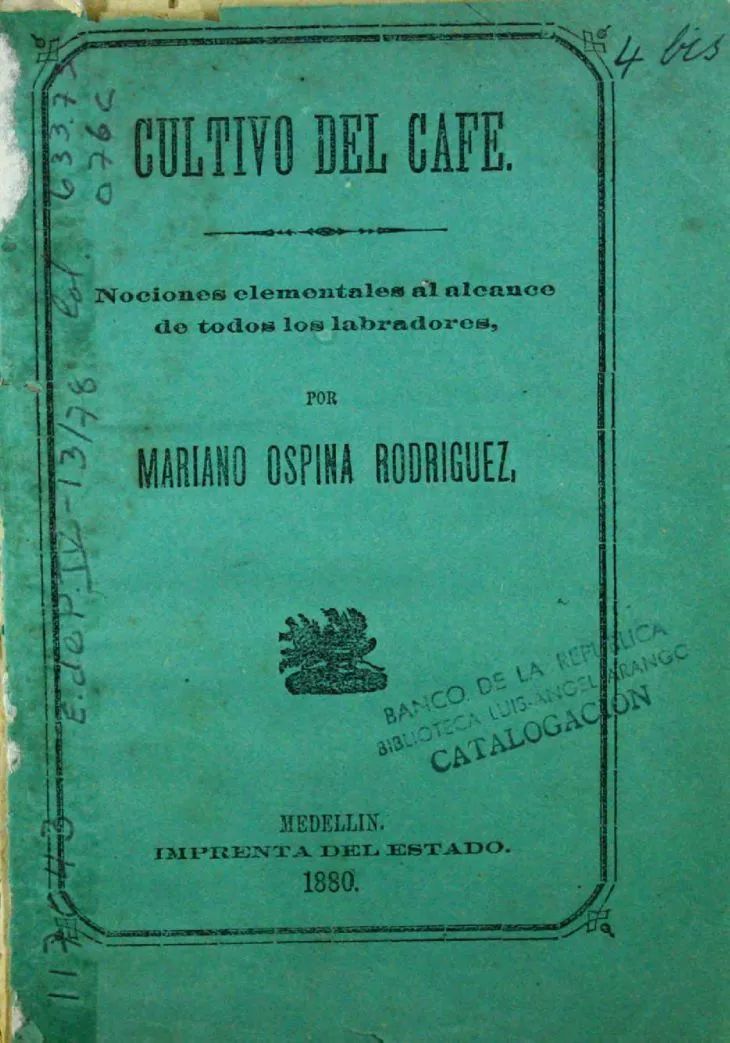
In 1857, Don Mariano was elected President of Colombia, and in 1879, the government further promoted coffee cultivation through the Coffee Act. In 1880, he published the country’s first technical book on coffee cultivation, Coffee Cultivation: Basic Concepts for All Farmers. Subsequently, the price of Colombian coffee in New York City rose from 10.6 cents per pound in 1887 to 18.8 cents per pound in 1893, reflecting its gradually increasing status in the international market.
Entering the 1920s and 1930s, the Colombian government implemented land reforms to support small producers, and the establishment of the Federación Nacional de Cafeteros de Colombia (FNC) in 1927 became a key force driving industry development. The FNC headquarters is located in Medellín and brings together 560,000 coffee-growing families from 22 provinces and 590 municipalities across the country. Its first president was Luis Mariano Ospina Pérez, the grandson of President Mariano. Thanks to the FNC’s efforts, Colombian coffee not only became a major export crop but also completely transformed the country’s economic landscape.

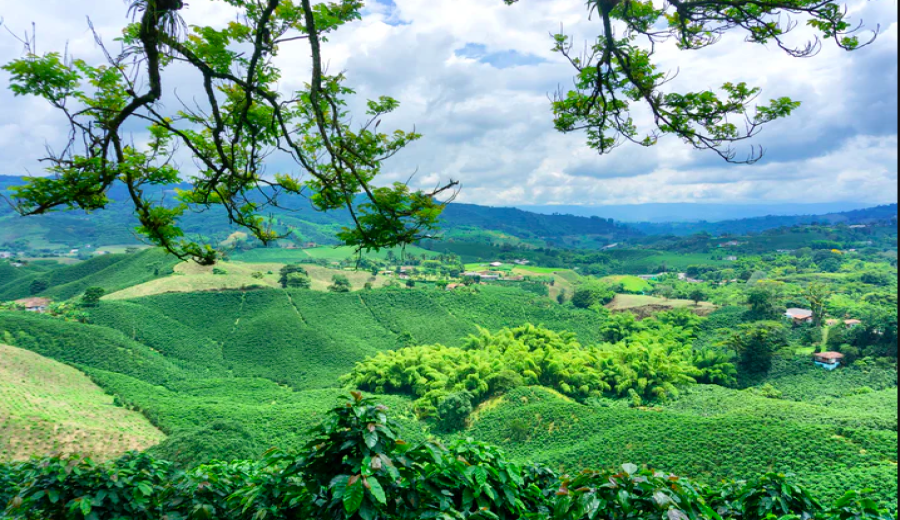
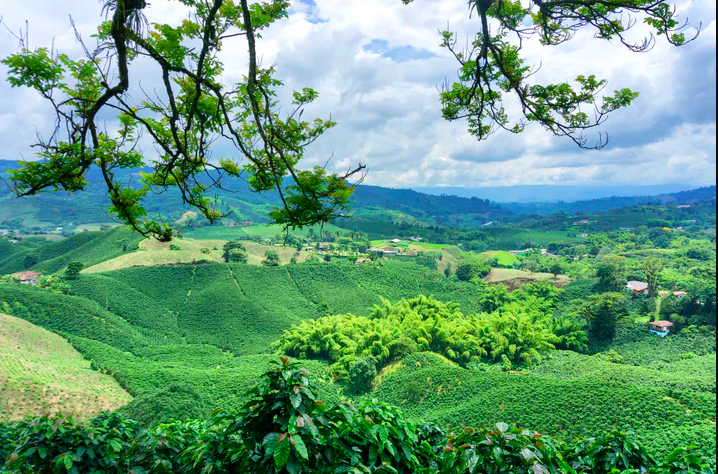
Colombia is located in the northern part of South America, with coffee-growing regions mainly distributed along the Andes Mountains, extending from south to north and concentrated in the central-western part of the country. Due to its varied terrain, the climate and altitude differ significantly across producing regions, resulting in a characteristic of multiple harvest seasons throughout the year. The country’s coffee is typically grown at altitudes between 1,000 and 2,500 meters. Influenced by the high-altitude terrain, the microclimates are rich, rainfall is stable, and the average annual temperature is around 18°C—making it an ideal environment for Arabica coffee trees.
About 30% to 40% of the rural population in Colombia relies on coffee production for their livelihoods, mostly operating small farms with an average size of just two hectares. Farm owners often plant shade trees such as banana trees or tall hardwoods around coffee trees to regulate the microclimate and protect the healthy growth of coffee trees.
Colombia’s coffee-producing regions can be roughly divided into three major blocks: northern, central, and southern, with the southern regions producing coffee beans that are particularly noted for their quality. Below are some representative producing regions: Huila, Cauca, Nariño, and Santander.
When it comes to specialty coffee in Colombia, the Geisha (Sidra) variety, which has garnered significant attention in recent years, is undoubtedly a highlight. In 2022, World Barista Champion Anthony Douglas used Geisha coffee beans from Colombia’s Huila region in the competition, and as early as 2019, champion Jooyeon Jeon also used Geisha coffee from Ecuador, gradually bringing this variety into the spotlight.
Geisha originally originated in Pichincha Province, Ecuador, where it is called Sydra. According to available information, Geisha is a laboratory-cultivated variety, a hybrid of Typica and Red Bourbon. Subsequent genetic analysis revealed a high genetic similarity to Ethiopian landraces, leading some scholars to speculate that Geisha may have been cultivated from experimental varieties exported from Ethiopia hybridized with local Bourbon varieties in Ecuador. Currently, Geisha is mainly grown in Ecuador and Colombia, typically at altitudes between 1,650 and 1,800 meters.
Geisha plants are robust, growing up to 4 meters in height and requiring appropriate shading. They exhibit resistance to various insect pests but are more susceptible to leaf rust and coffee berry disease. The leaves are long and narrow, with five-petal flowers during blooming. The fruit is densely distributed, with large, round beans, and the green beans are slender in shape, quite similar to Gesha. Due to its limited cultivation area and outstanding flavor profile, the market price is relatively high.
Geisha coffee is known for its floral and fruity notes, often featuring layers of peach, citrus, grape, and honey flavors, with a soft acidity and a round, full-bodied mouthfeel. The Geisha from Finca El Diviso is further enhanced in acidity through double anaerobic washed processing, and after medium-light roasting, cupping reveals distinct fruit notes such as apricot, citrus, and grape.
Finca El Diviso is located in Colombia’s renowned Huila region, at an altitude of about 2,100 meters, covering an area of 14 hectares. It is a family-run coffee farm that has been in operation for over 25 years. The farm’s founder, Jose Uribe Lasso, began planting coffee in 1996, and it is now managed by his son, Nestor Lasso. Under his family’s influence, Nestor is dedicated to improving cultivation and post-harvest techniques, growing a dozen coffee varieties including Caturra, Colombia, Geisha, Castillo, Gesha, and Bourbon.
Nestor and his family work together to continuously enhance coffee quality and expand new farms, striving to produce higher-quality beans and move toward the goal of creating a top-tier family estate. He firmly believes that the fertile land of Huila allows diligent farmers to improve their lives through coffee cultivation.
If you’re curious about the pour over flavor of the Geisha variety, here are the practical pour over parameters for the Finca El Diviso Geisha coffee beans introduced by a certain coffee brand for your reference:
Coffee dose:15g
Coffee-to-water ratio:1:15
Brewing temperature:91°C
Grind size:Medium-fine grind (recommended 80% passing through a 20-mesh sieve)
Pouring technique:Three-pour method
Steps as follows:
1. First pour: Add 30ml of hot water for blooming, for about 30 seconds.
2. Second pour: Pour 120ml using a small stream in a circular motion until the water level drops to about half.
3. Third pour: Pour another 90ml using a small stream in a circular motion, with total extraction time controlled to around 2 minutes.
The above content is compiled by CoffeeHunters, a coffee news website.


