








Introduction:Central and South America are major hubs for specialty coffee worldwide, encompassing renowned coffee-producing countries such as Brazil, Colombia, Panama, and Costa Rica. This article delves into the geographic environments, primary coffee varieties, common processing methods, and representative flavor profiles of each producing region. It also provides practical brewing parameters and flavor performance based on real regional examples to help you fully grasp the essence of Latin American coffee.
The global coffee belt can be broadly divided into three regions: Africa, Asia-Pacific, and Latin America. Each region, due to its unique geography and climate, produces coffee beans with distinct flavor characteristics. Generally speaking, African beans are known for their bright acidity, Asian beans showcase herbal and full-bodied flavors, while Latin American coffee falls somewhere in between, often exhibiting a balanced and rich profile reminiscent of cocoa and dark chocolate. This article focuses on Latin America, covering countries such as Brazil, Colombia, Panama, Costa Rica, Honduras, Jamaica, Guatemala, and Nicaragua. It introduces the coffee varieties, processing techniques, main producing regions, and unique flavors of each country, and combines practical case studies to illustrate brewing methods and flavor profiles—helping coffee enthusiasts systematically understand the diverse world of Central and South American coffee.

If we follow the common classification of the world’s coffee belts, the major coffee-producing regions can be grouped into three major blocs: Latin America (i.e., Central and South America), Asia-Pacific, and Africa. While each area holds rich content worth exploring in depth, a quick summary of their flavor profiles is as follows: African regions are noted for their bright acidity, Latin American coffees are celebrated for their chocolatey and nutty richness, and Asian regions tend to present more herbal and heavier body profiles. This piece centers on Central and South America, taking you on a journey to uncover the secrets of this coffee paradise.
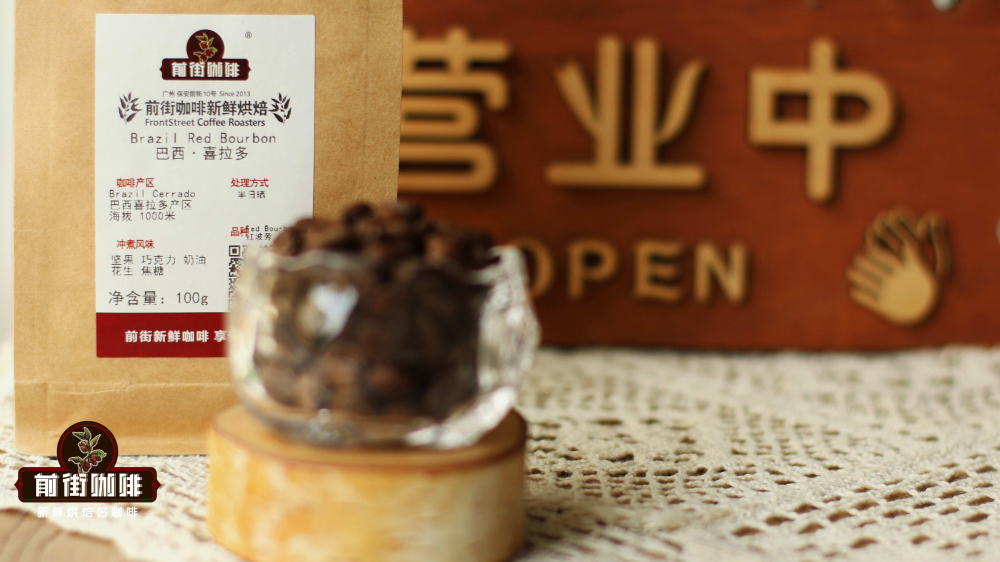
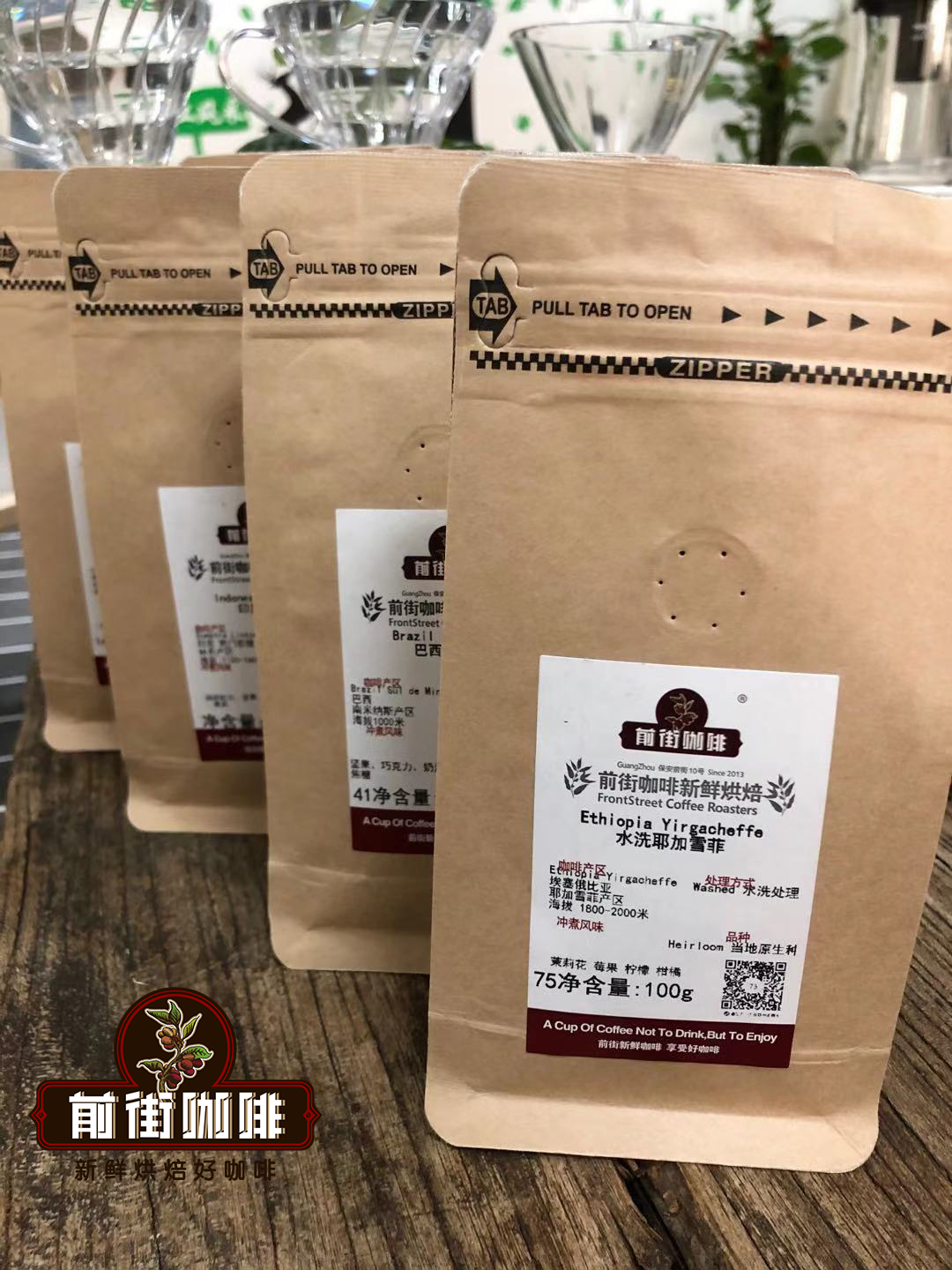
To understand the overall flavor framework and variety composition of Central and South American coffee, one can start from real tasting experiences. For instance, within the everyday coffee bean series launched by a certain brand, there are several classic representatives from Central and South America—such as Guatemala Huehuetenango, Costa Rica Tarrazú, Colombia Huila, and Brazil Red Bourbon—making them excellent choices for beginners looking to get to know the characteristics of coffee from this region.
Overall Characteristics of Latin American Coffee Beans
Latin America generally refers to the Americas south of the United States, encompassing Mexico (commonly categorized under North America), Central America, the West Indies, and South America. This region not only boasts diverse climates but is also one of the most humid and hot continents in the world. Especially in low-altitude areas, it is often damp and sultry, whereas high-altitude mountainous regions are relatively cool and dry—providing a variety of microclimates ideal for coffee cultivation.
The history of coffee cultivation in Latin America dates back to the 18th century, primarily influenced by Spanish colonization. As a result, Spanish is the official language in most Latin American countries, with the exception of Brazil, a former Portuguese colony where Portuguese is predominant. Although the colonial period led to a significant expansion in coffee planting, the quality was generally modest at first. It wasn’t until the rise of the specialty coffee concept that Latin American countries gradually shifted toward more refined production models. Currently, the majority of Latin American coffee beans are exported to the United States, followed by European and Asian markets.
Looking at the overall characteristics of Latin American coffee beans, their most prominent feature lies in the balance of flavors and rich body texture. Compared to the often herbaceous and heavy profiles of Asian regions, Latin American beans usually exhibit a mellow tone reminiscent of cocoa and dark chocolate. In terms of processing techniques, washed fermentation is the mainstream method, especially outside of Brazil; whereas Brazil, due to its climate and historical factors, commonly employs the pulped natural (semi-washed) method. Additionally, coffee beans from Latin American regions are typically larger in size, with higher uniformity and integrity.
Overview of Major Producing Regions
1. Brazil: The World’s Largest Producer, Known for Stability and Body
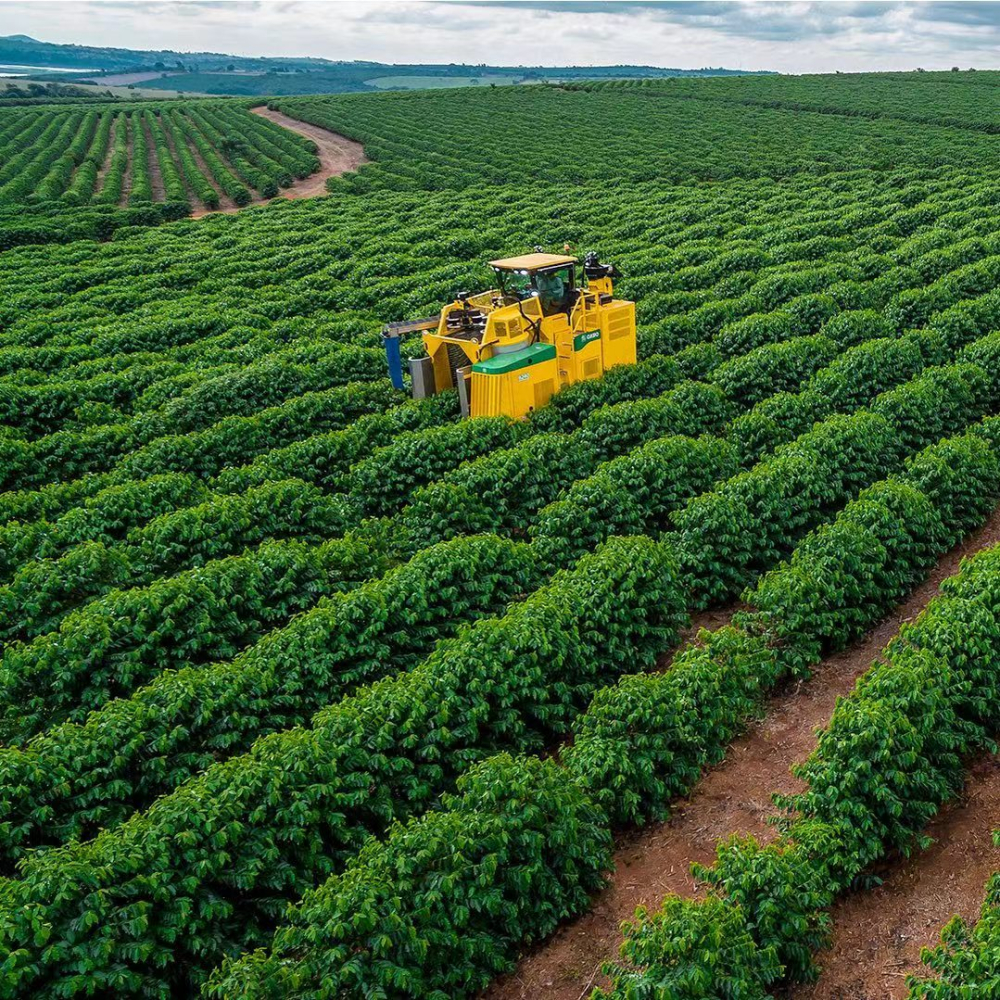
As the world’s largest coffee producer and the second-largest consumer (only behind the United States), Brazil’s coffee industry is immense in scale. Although prone to higher risks of natural disasters, its vast plantable land area is sufficient to sustain production volumes. Brazilian coffee is mainly grown at low altitudes, lacks pronounced microclimates, and is mostly cultivated without shade—resulting in flavors that are generally stable rather than exceptional. There's even a saying that “Brazil has no good beans,” which stems from its historical background of industrialized production prioritizing quantity over quality.
However, in recent years, Brazil has been committed to improving coffee quality, actively cultivating and improving Arabica varieties, and adjusting processing methods according to different altitudes and climatic conditions to highlight regional characteristics. Common processing methods include natural (sun-dried), pulped natural, and washed. Typically, regions with higher humidity prefer washed processing, while drier areas tend to use natural or pulped natural methods.
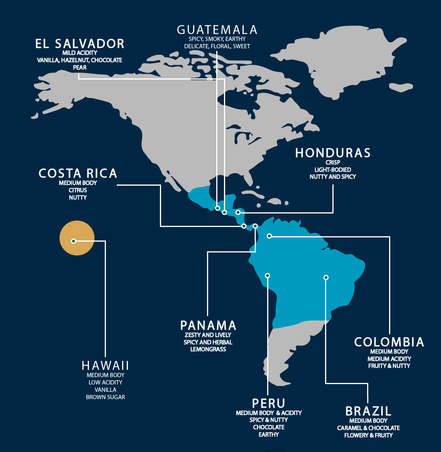
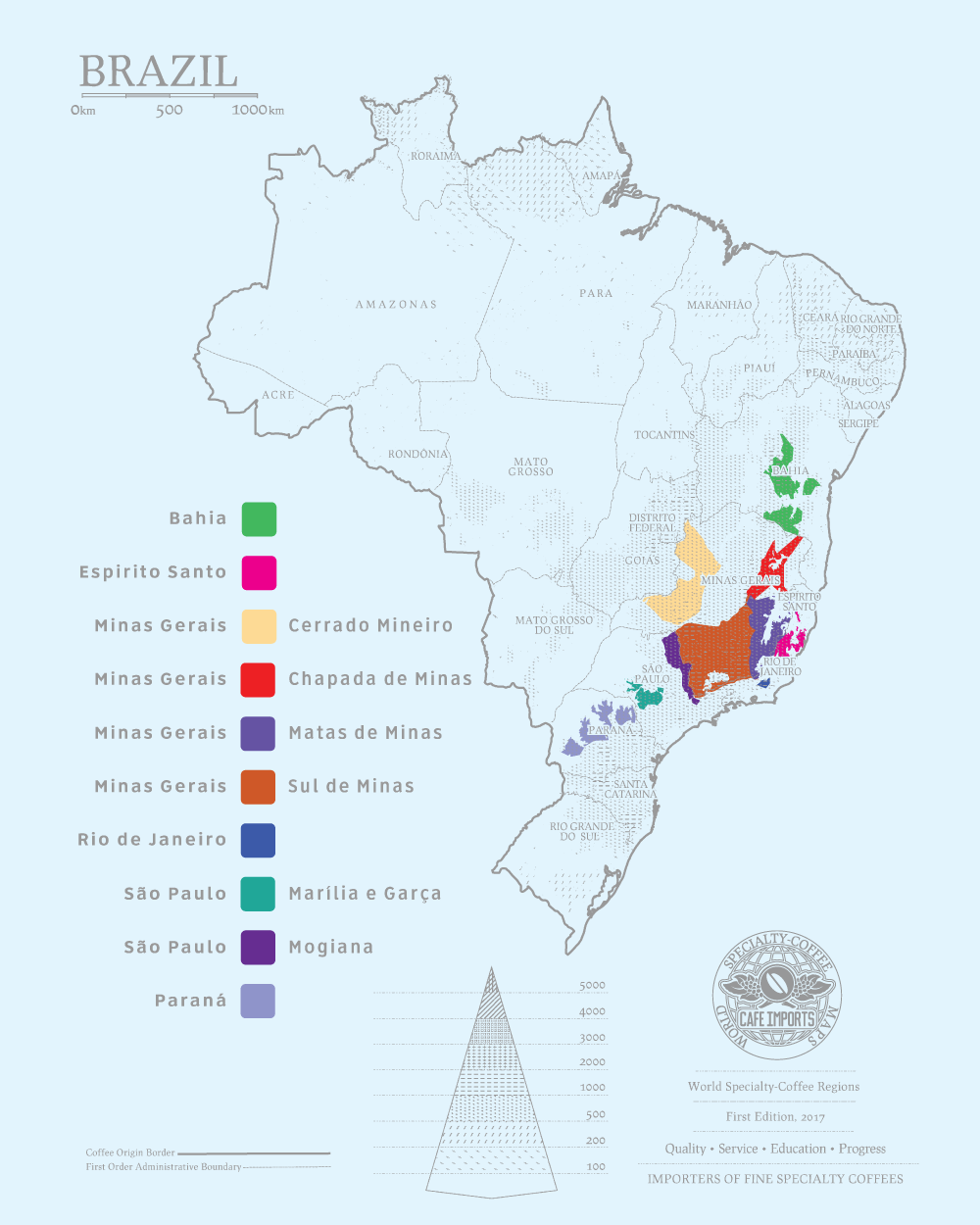
Brazil has 21 states, 17 of which are involved in coffee cultivation, with production concentrated in seven major states that account for 98% of the national total output. These include São Paulo, Paraná, Bahia, Espírito Santo, Minas Gerais, Rondônia, and Rio de Janeiro. Among these seven, Minas Gerais, São Paulo, Bahia, and Espírito Santo are the main export contributors, together accounting for 90% of the country’s total exports.
Take Minas Gerais as an example. Its key high-altitude regions are Cerrado and Sul de Minas, with the former ranging from 750 to 1200 meters in altitude and characterized by flat plateau terrain, and the latter ranging from 700 to 1200 meters across hilly areas. Since 1999, many farms that have achieved outstanding results in Brazil’s Cup of Excellence auctions are concentrated here. In addition, the eastern forested highlands of Minas Gerais, with altitudes exceeding 1000 meters, are also an important source of premium coffee.
In Brazil, the grading of coffee beans does not emphasize high-altitude hard beans as much as other factors. It takes into comprehensive consideration particle size, defect rate, cupping score, and overall flavor. The flavor grades, from highest to lowest, are: Strictly Soft (very mild), Soft (mild), Softish (slightly mild), Hardish (harsh), Rioy (iodine-like). The defect rate is measured by the number of defective beans per 300 grams of green coffee—for example, 6 defects constitute NY.2 grade, while NY.1 with zero defects is extremely rare. Cup quality grading, from highest to lowest, includes Fine Cup, Fine, Good Cup, Fair Cup, Poor Cup, and Bad Cup, with FC and GC being the most common. As for particle size, the highest grades are 17 and 18 mesh, while 19 mesh exists but is rarely produced.
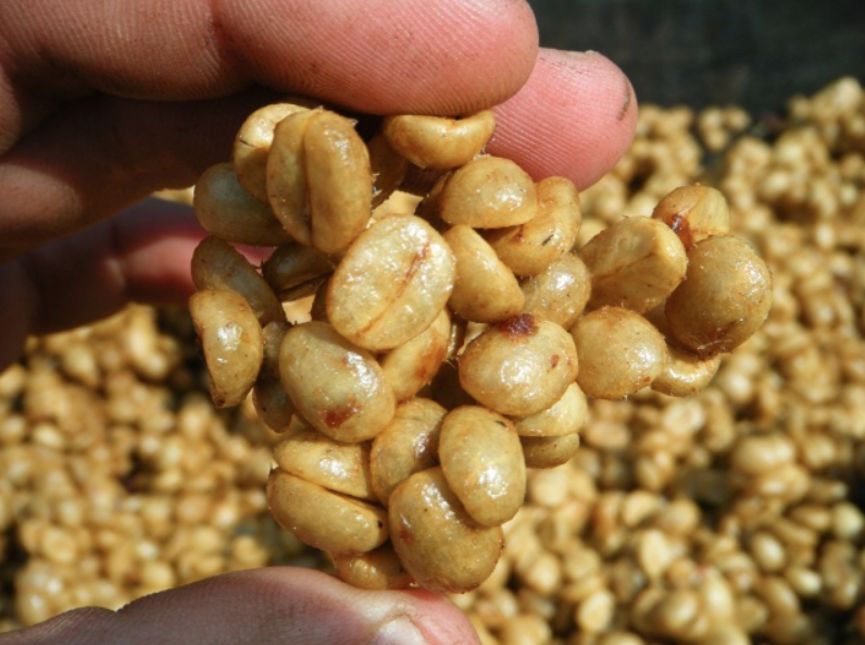
2. Colombia: The Third-Largest Producer with Excellent Balance
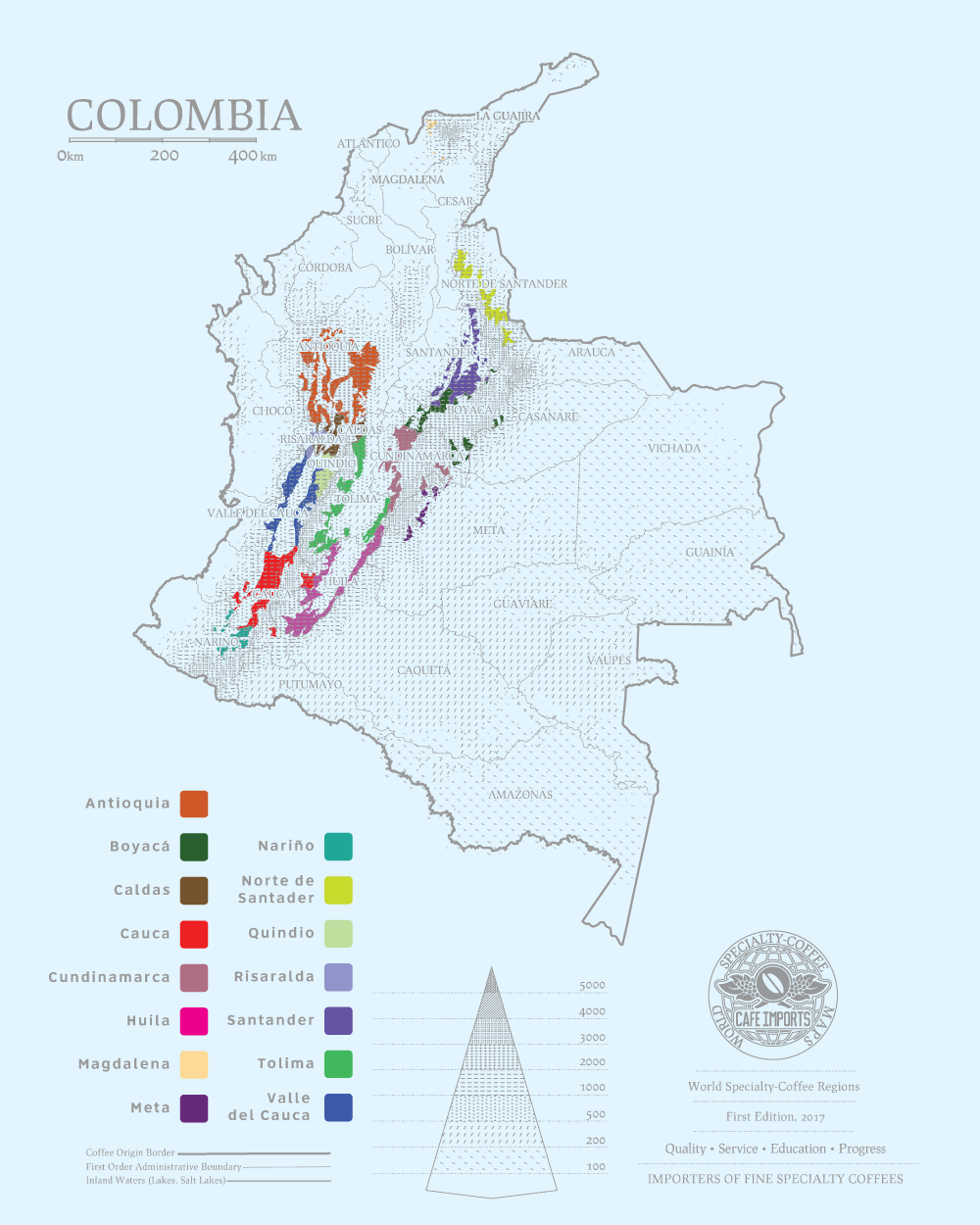
Colombia is the world’s third-largest coffee producer, located in the northwest of South America, where the climate varies significantly with altitude and region. Its eastern plains and southern areas feature a tropical rainforest climate, the central mountainous regions have a subtropical climate, and the northwest has a tropical savanna climate. Although not as intense in body as Brazilian coffee, nor as bright in acidity as African beans, Colombian coffee generally offers a well-balanced flavor, often combining notes of nuts and fruit acidity.
Colombian coffee beans are mostly processed using the washed method. Unlike other Latin American countries, coffee farming in Colombia is predominantly carried out by smallholder farms, with growers often owning their own washed processing equipment, allowing for strict quality control. Moreover, due to processing differences, Colombian beans often retain more silver skin, making them more distinguishable in appearance compared to Brazilian beans.
Coffee cultivation in Colombia is mainly concentrated along the Andes Mountains and can be divided into four major regions: northern, central, southern, and eastern. The central region benefits from two dry and two rainy seasons each year, resulting in two harvests annually, making it one of the primary production zones. The southern region, with its higher altitude, mainly grows specialty coffee varieties, including the departments of Huila, Cauca, Nariño (Narino), and Tolima—destinations not to be missed by specialty coffee enthusiasts.
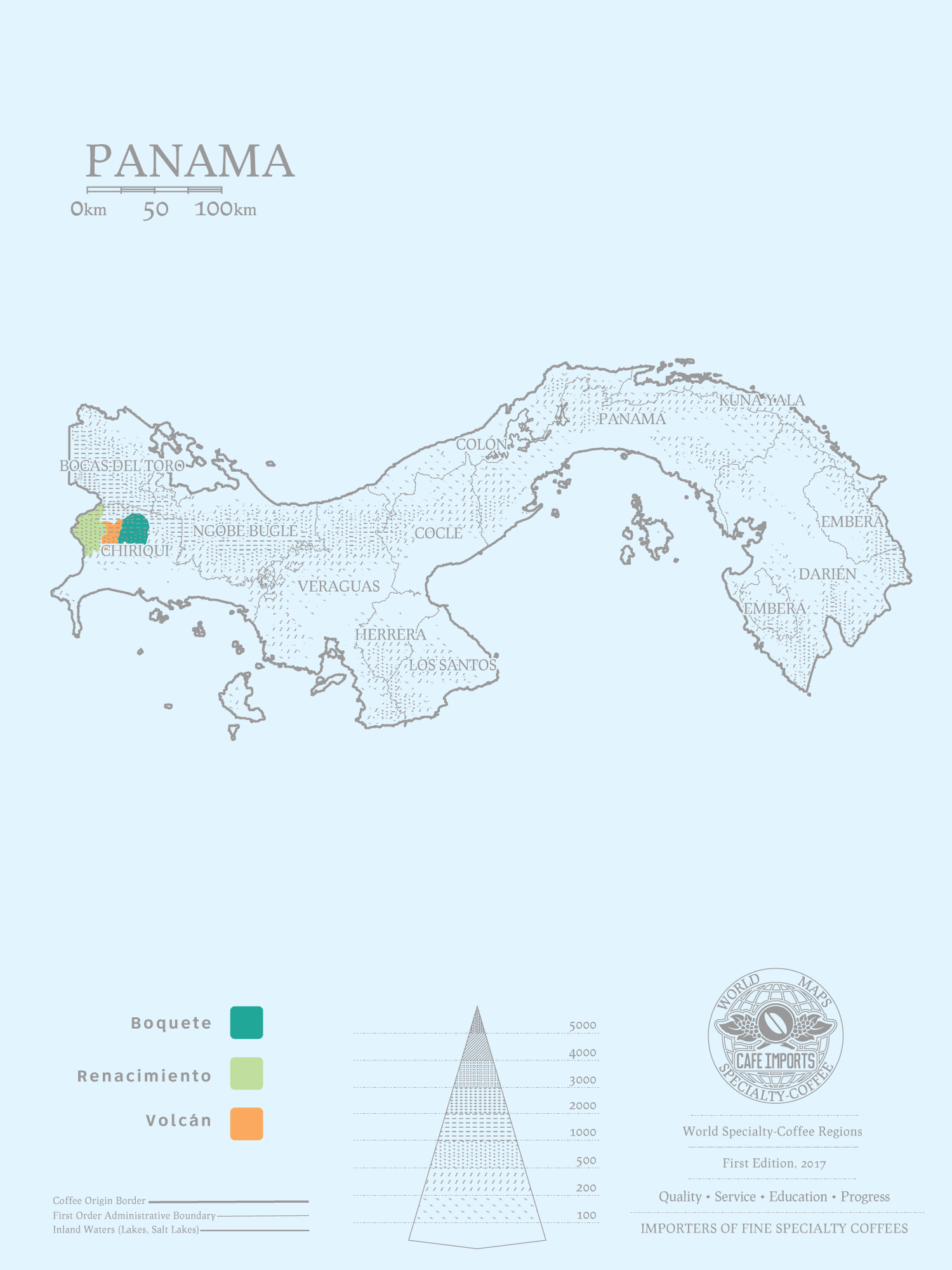
3. Panama: Home of Geisha, Renowned for Unique Flavors
Panamanian coffee is world-famous for the Geisha variety, thanks to its exceptional natural environment and meticulous cultivation management. The country has volcanic soils, moderate air humidity, and abundant sunshine, providing ideal conditions for coffee growth. The opening of the Panama Canal in the late 20th century also attracted substantial foreign investment and technology, further advancing the refinement of its coffee industry.
Panamanian coffee beans are predominantly of the Geisha variety, with common processing methods including washed and natural. The former highlights floral and fruity acidity, while the latter adds body and sweetness. In addition, Hacienda Hartmann has developed a unique red wine processing method, which, by controlling the fermentation environment, imparts complex layers to the coffee beans.

4. Costa Rica: Pioneer of Honey Process, Known for Sweetness
Costa Rica is one of the earliest Central American countries to cultivate coffee. As early as 1820, it had records of coffee exports to Europe and earned a reputation as “Golden Beans” for its premium flavor. The government has long supported the coffee industry, promoting the development of private estates and enacting legislation that only allows the cultivation of Arabica varieties—making it one of the few countries in the world that prohibits the planting of Robusta.
Costa Rican coffee beans are primarily processed using the washed method, but the most iconic is the honey process. This method retains some mucilage during drying, giving the beans a natural sweetness. Depending on the amount of mucilage retained, it is further subdivided into white honey, yellow honey, red honey, and black honey, each representing different sweetness and body levels.

5. Honduras: A Rising Star with Unlimited Potential
Although Honduras’ coffee industry started relatively late, it has risen rapidly in recent years with government support and international collaboration. Particularly after 2010, with the involvement of Japanese specialty coffee professionals, the quality of Honduran coffee has improved significantly. It has now surpassed Guatemala in production, becoming the largest coffee producer in Central America, and has entered the top ten globally in output rankings.
Honduran coffee is mostly processed using the washed method, but in recent years, wine barrel fermented washed processing has also emerged. For example, Sherry coffee beans are a representative product, where coffee beans undergo low-temperature fermentation in whiskey sherry barrels, imparting rich sweetness and complex layers.
6. Jamaican Blue Mountain: The Legend of the Coffee World
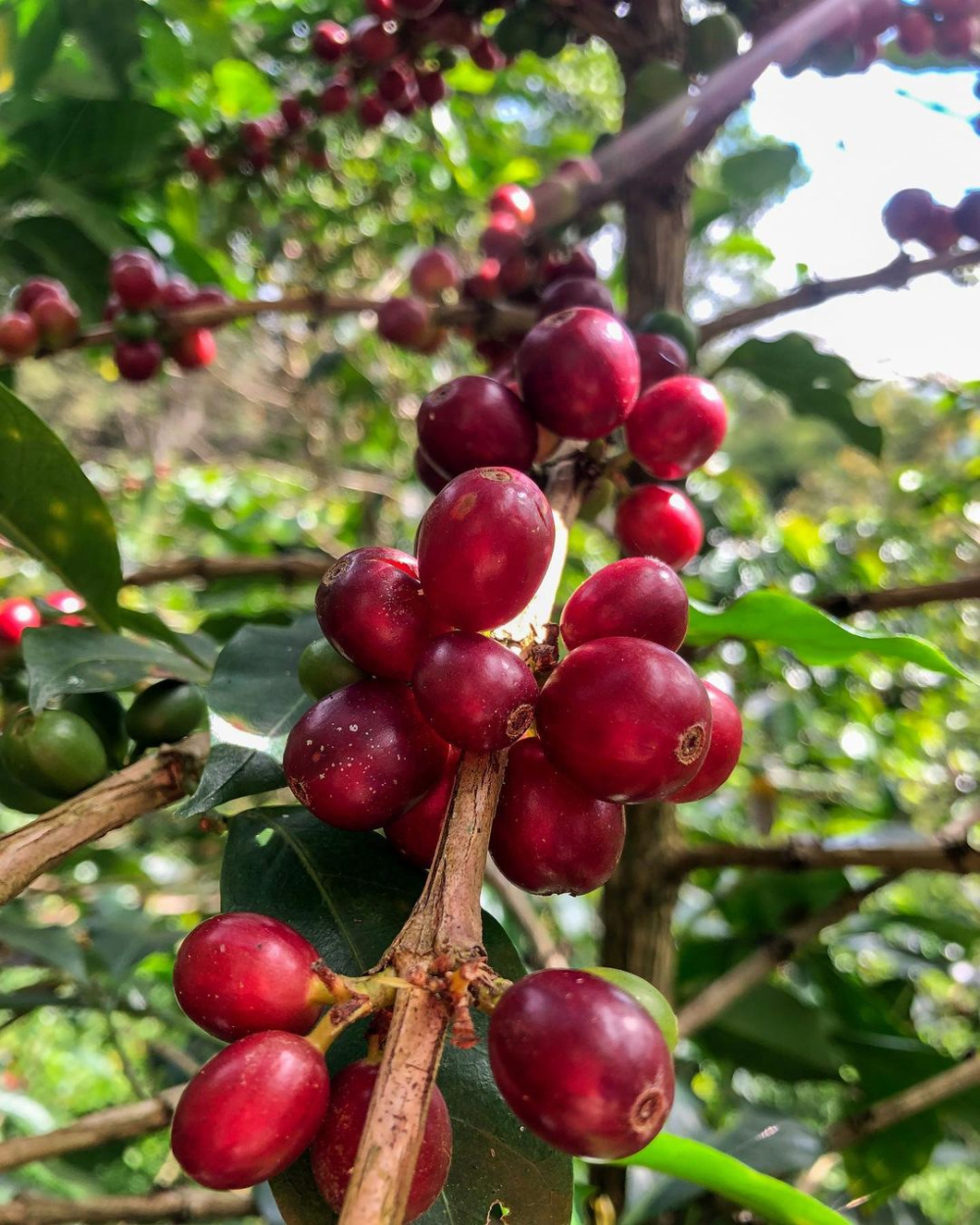
Jamaican Blue Mountain coffee is famed for its exceptional flavor balance and rarity. It is grown in the Blue Mountains at altitudes below 1700 meters. The region enjoys a cool, rainy climate with significant day-night temperature variations, along with fertile volcanic soils—creating the delicate and mellow characteristics of Blue Mountain coffee. Blue Mountain coffee is mostly processed using the washed method, although sun-dried versions have also emerged in recent years, offering coffee lovers more options.
7. Guatemala: Diverse Microclimates, Rich Flavors
Although Guatemala is not a large country in terms of land area, its diverse terrain—including tropical rainforests, volcanic geology, and highland valleys—creates a wealth of microclimates, contributing to the diversity of its coffee flavors. Most Guatemalan coffee is grown at high altitudes above 1500 meters, with main varieties including Bourbon, Typica, Caturra, and Catuaí. The flavors are known for being rich in fruity aromas and balanced sweet acidity.
Guatemalan coffee beans are mainly processed using the washed method, supplemented by natural processing. Different regions such as Antigua, Huehuetenango, and Cobán rainforest each offer their own unique flavor profiles.

The above content is compiled by CoffeeHunters, a coffee news website.


