







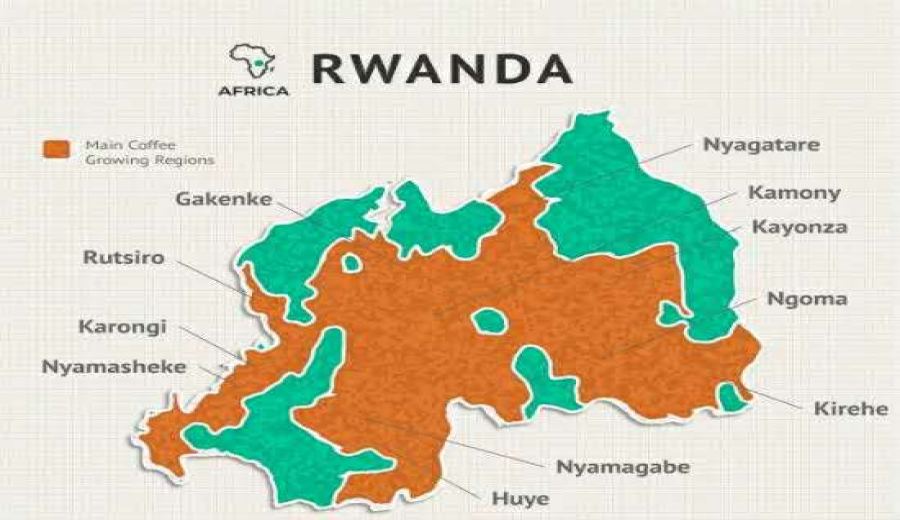
Introduction:Rwanda, an inland African country known as the "Land of a Thousand Hills," produces coffee with unique flavors thanks to its high-altitude terrain and fertile volcanic soil. This article will delve into the characteristics of Rwanda’s coffee-growing regions, its main varieties, and the washed processing method, analyzing the secrets behind its bright acidity and citrus and berry aromas, and explaining why medium-light roasting best highlights its delicate layers.
Known as the “Land of a Thousand Hills,” Rwanda’s mountainous terrain and high-altitude environment, combined with the natural nutrients of volcanic soil and ample sunshine, provide ideal conditions for growing specialty coffee. This land in the heart of Africa has experienced war and ethnic turmoil, which once led to a decline in the coffee industry. However, since the country gradually stabilized, Rwanda has refocused on developing specialty coffee. By refining its washed processing techniques, it has successfully produced high-quality coffee beans with floral, citrus, and berry notes.
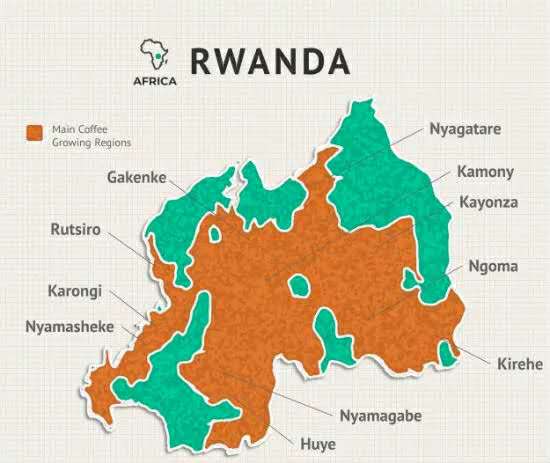
Coffee cultivation in Rwanda is mainly concentrated in mountainous areas at elevations of 1,700 to 2,000 meters. Such heights slow the growth of coffee trees, helping the beans accumulate richer flavor compounds. The main producing regions include the southern Huye mountains, western Nyamasheke, eastern Ngoma Lakes, and the northern region. The southern and western regions, due to their higher altitudes, often produce coffee with bright acidity and clear floral and fruity aromas. Among them, Nyamasheke, close to Lake Kivu, benefits from humidity and microclimatic conditions that lend the coffee rich fruit tones and layers.
In terms of variety, over 90% of Rwanda’s coffee trees are Bourbon and its derivatives, such as Catuai and Caturra. The Bourbon variety is known for its excellent disease resistance and adaptability, and it can yield beans with delicate and layered flavors. Compared to other commonly grown varieties in other regions, Rwanda’s Bourbon achieves a good balance between stable yield and consistent flavor, which is also one of the key factors enabling its international market prominence.
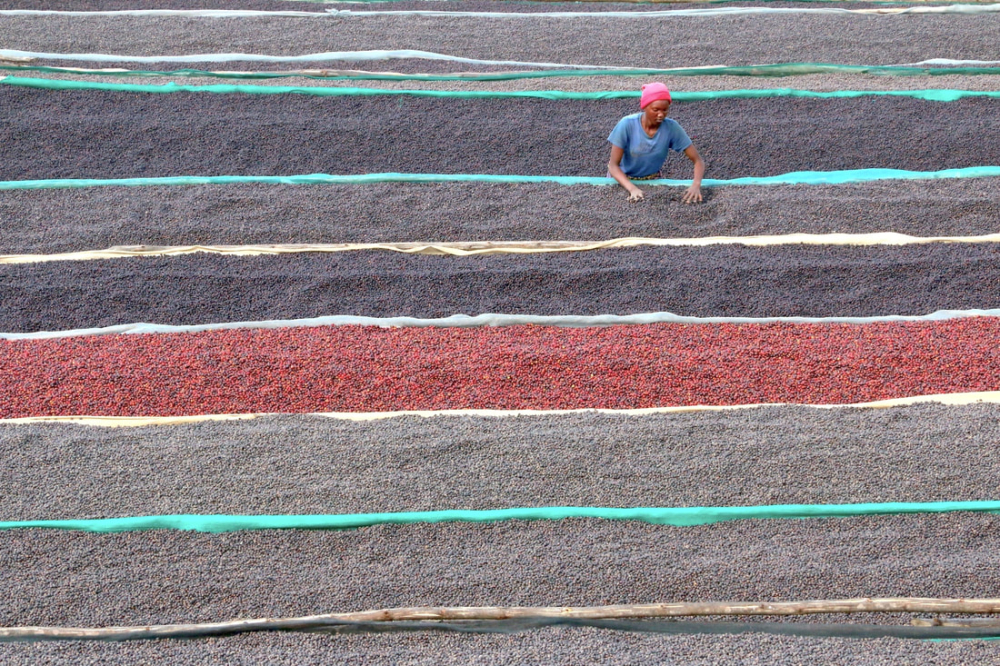
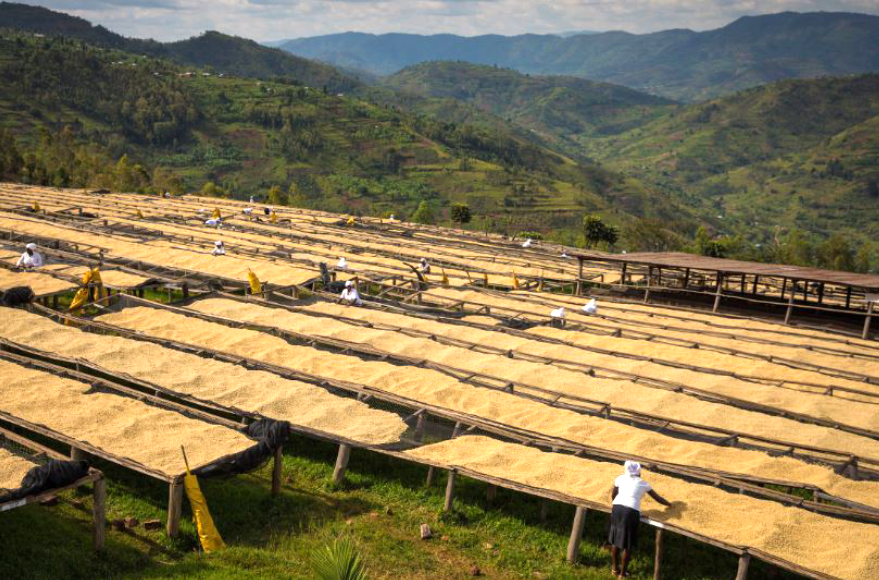
What Rwanda’s coffee is most known for is its near-exclusive use of the washed processing method. Washed processing is meticulous: first, harvested coffee cherries undergo floatation to remove underripe or low-density fruits, then the outer skin and pulp are removed, leaving the beans coated with mucilage. These mucilage-covered beans are placed in water tanks for fermentation. The fermentation time varies depending on climate conditions, typically around 24 to 48 hours, with the aim of breaking down residual mucilage and enhancing flavor purity. After fermentation, the beans are thoroughly rinsed with clean water to remove all mucilage layers. Finally, the parchment-covered beans are evenly spread on raised beds or concrete drying patios for sun drying over about 15 to 22 days until the moisture content is reduced to the ideal range of 11% to 13%.
Notably, Rwandan coffee farmers pay great attention to detail during processing. For example, only red cherries are selected during the floatation stage to ensure that only the ripest coffee fruits enter the washed process. This rigorous selection mechanism is key to achieving Rwanda coffee’s high cleanliness, bright acidity, and flavor consistency. Washed processing is also considered the method that best highlights the terroir characteristics of the region, making it undoubtedly the first choice for enthusiasts who want to deeply understand the essence of Rwanda coffee.
In terms of international competitions, Rwanda has hosted the Cup of Excellence (COE) competition since 2010, becoming one of the few African countries to hold this international-level evaluation event. Through COE’s online auction platform, global buyers can directly access the top coffee batches from various regions. However, Rwanda coffee has also sparked discussions at COE events due to a peculiar “potato taste” in some green beans. This flavor usually originates from specific microbial infections in the coffee fruit before harvest and emits a raw potato-like odor at the green bean stage, significantly affecting the overall drinking experience. Fortunately, after years of variety improvement and processing technology upgrades, such issues have been gradually brought under control, and such cases are now rare among today’s Rwanda specialty coffees.
For roasting and brewing recommendations, to fully showcase Rwanda coffee’s floral, citrus, and berry profiles, medium-light roasting is the best choice to preserve its refined flavors. Over-roasting can mask its bright acidity and delicate fruit notes, making the coffee taste one-dimensional. During actual brewing, it is recommended to use a medium-fine grind with a water temperature of 90 to 94°C. Using pour over or drip methods allows for a clearer capture of its layered aromas and balanced sweet-and-acidic taste.
In summary, Rwanda coffee holds a place in the global specialty coffee market with its unique high-altitude terroir, refined washed processing, and bright acidity. From the citrus notes of southern Huye to the rich berry and fruit aromas of western Nyamasheke, each coffee bean tells the story of this “Land of a Thousand Hills.” If you enjoy coffee with delicate flavors, vibrant acidity, and rich layers, Rwanda washed beans are definitely worth a try.
The above content is compiled by CoffeeHunters, a coffee news website.


