







Introduction:Panama and Guatemala are both renowned for their Gesha coffee, yet each showcases a distinctly unique flavor profile. This article delves into the growing environments, stories of representative farms, compares their auction histories and cupping characteristics, and provides practical pour over parameters and roasting recommendations to help you choose the most suitable Gesha coffee beans based on your taste preferences.
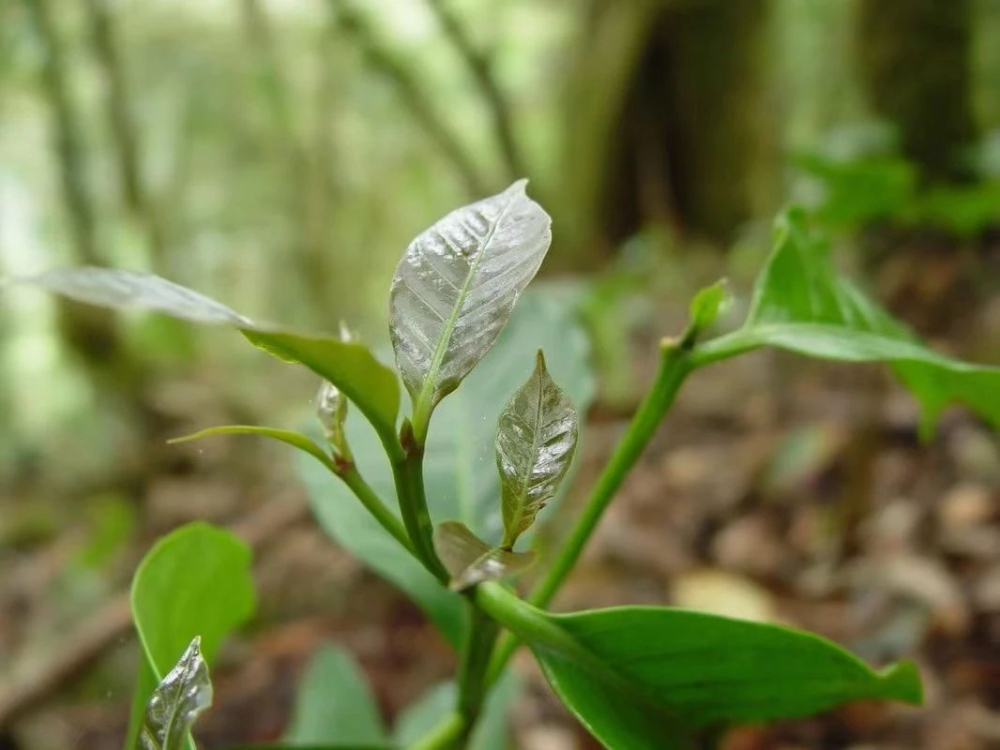
The Gesha (Geisha) coffee variety was first discovered in 1931 in the Gesha Forest of Ethiopia. It then traveled through Kenya, Uganda, Tanzania, and Costa Rica, before finally being introduced to Panama in the 1970s when Hacienda La Esmeralda obtained seeds from CATIE in Costa Rica. This gradually established its prestigious status today. Initially, Gesha was only planted as a windbreak, until 1996 when Daniel Peterson of Panama’s Hacienda La Esmeralda unexpectedly uncovered its astonishing potential during a competition, forever altering the landscape of global specialty coffee.
Compared to Panama, Guatemala’s Gesha may have started later, but thanks to its high-altitude volcanic soils and unique microclimates, it has also produced remarkable quality. In particular, El Injerto Estate’s “White Stone Gesha,” sourced from a micro-lot beneath a cliff deep within the estate, has repeatedly achieved outstanding results in international auctions, becoming one of the highlights of Central and South American specialty coffee.
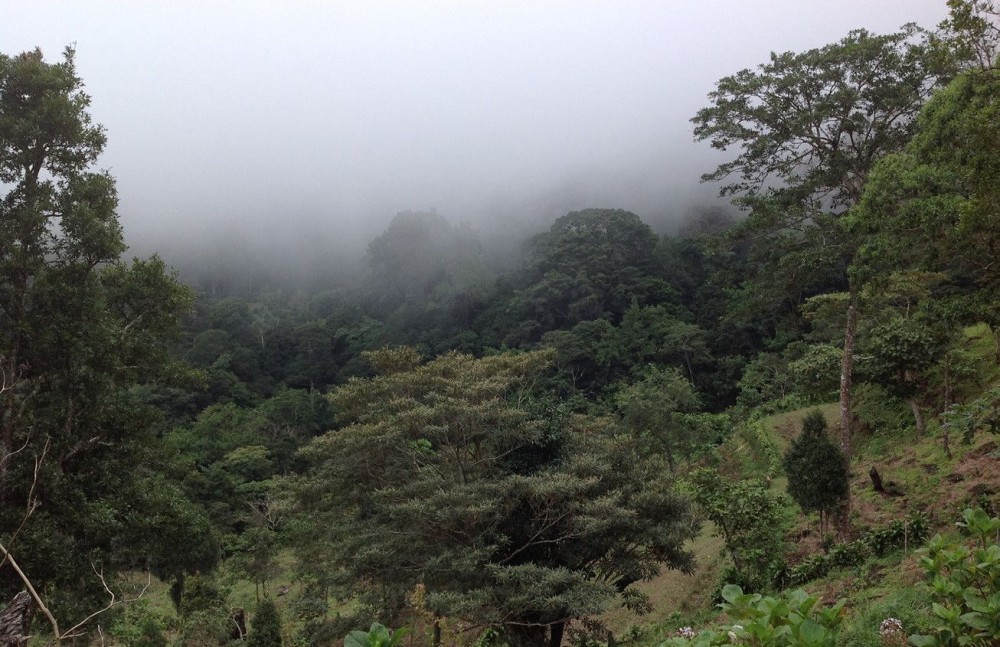
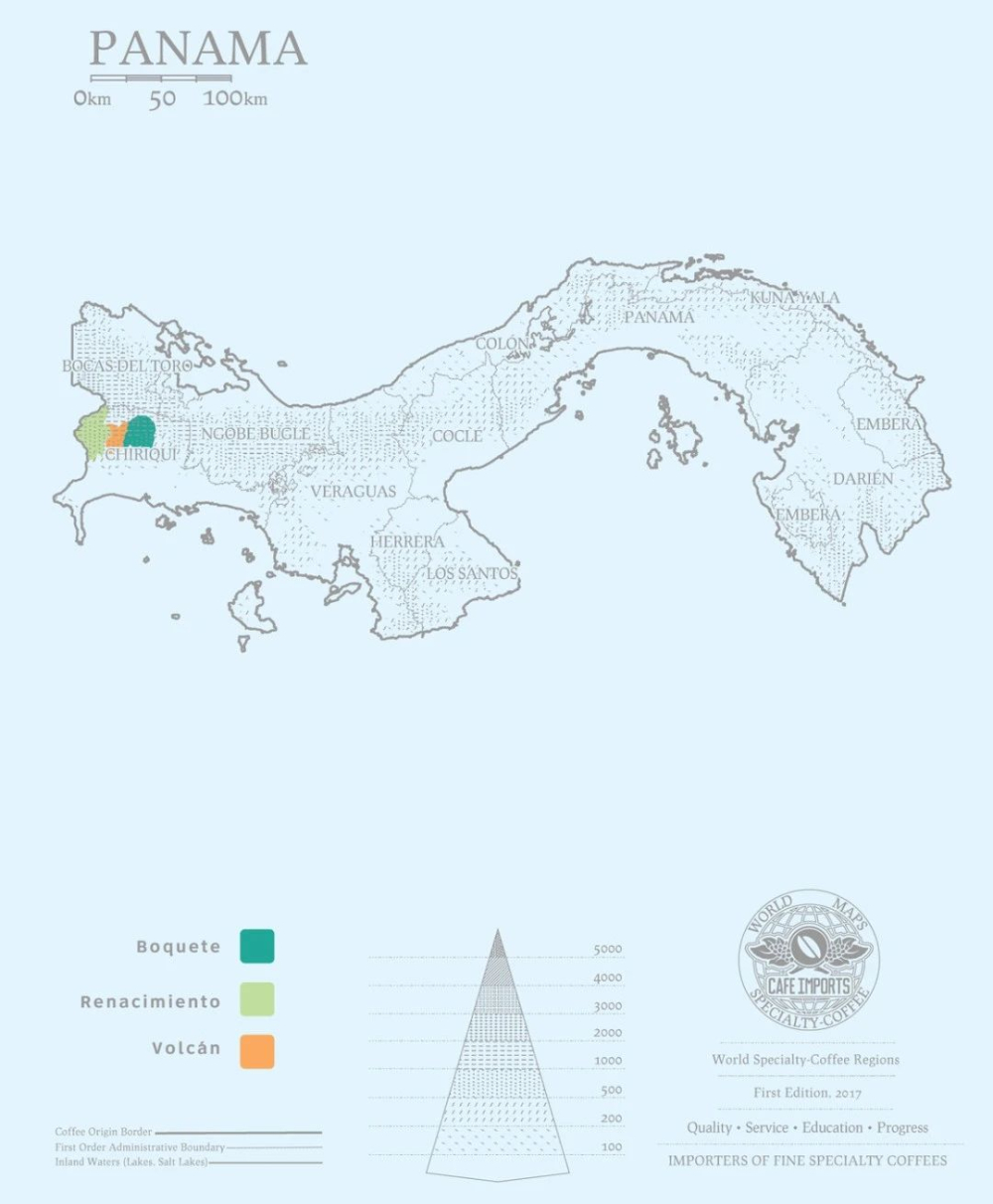
What exactly are the differences between Panamanian and Guatemalan Gesha? The primary factors lie in the terroir and processing methods. Panama is located on the Central American isthmus, featuring a typical tropical maritime climate with significant day-night temperature variations, along with fertile volcanic soils—most notably in the Boquete region. This area is not only home to Hacienda La Esmeralda but also a major global source of premium Gesha. The coffee trees absorb ample sunlight during the day, while cool nighttime temperatures slow ripening, allowing rich flavor compounds to accumulate, resulting in pronounced floral notes, tropical fruit characteristics, and a tea-like finish.
In contrast, Guatemala is situated in the heart of Central America, dominated by high-altitude volcanic mountains and characterized by a subtropical climate with distinct dry and wet seasons. The central highlands, such as Huehuetenango, have elevations typically ranging from 1,300 to 1,800 meters, with notable day-night temperature differences. The volcanic soils are rich in minerals, lending the coffee a distinctive smoky aroma and bold body. El Injerto Estate is located in this region, and its Gesha not only retains the area’s characteristic full body but also blends the variety’s inherent delicate floral and fruity notes, creating a highly distinctive and complex flavor profile.
When discussing Panamanian Gesha, one cannot overlook Hacienda La Esmeralda. Established in 1924 as a ranch, it wasn’t until 1964, after a change in ownership, that it gradually transformed into a coffee plantation. In 1994, the family introduced professional equipment and officially entered the specialty coffee market. In 1996, they serendipitously discovered the potential of Gesha in the Jaramillo region, propelling the variety onto the international stage. Hacienda La Esmeralda categorizes its Gesha based on altitude and microclimate into multiple brands, including the Red Label, Green Label, and Geisha1500 series. Among them, the Red Label Gesha is known for its auction-grade quality and frequently achieves top rankings in the Cup of Excellence (COE).
In terms of processing methods, Panamanian Gesha often employs both washed and natural processes to enhance its bright acidity and layered complexity. Meanwhile, Guatemala’s El Injerto Estate adheres to a high-standard, independent washed process—from carefully selecting ripe cherries and hand-sorting, to washing with mountain spring water, controlled fermentation, and prolonged sun drying. Every step reflects an uncompromising attention to detail. The White Stone Gesha, in particular, is made from rare lots harvested during the second picking season and undergoes over 45 days of aging, resulting in even more concentrated flavors and a lingering aftertaste.
In terms of auction performance, Hacienda La Esmeralda’s Gesha has repeatedly shattered global specialty coffee price records, especially the Red Label and auction lots, often selling for hundreds of dollars per pound. Meanwhile, Guatemala’s El Injerto White Stone Gesha, though a relative newcomer, has also commanded impressive auction prices thanks to its outstanding cupping scores and ultra-premium micro-lot origins. In some years, its prices have even surpassed those of the estate’s famed Pacamara variety, reflecting strong market recognition of its potential.
In terms of flavor profiles, Panamanian Gesha is celebrated for its clear floral notes (such as jasmine and rose), vibrant citrus acidity (like lemon and bergamot), and tea-like finishes (such as honey and green tea). It offers a sensory experience akin to strolling through a tropical garden, with distinct layers and a long-lasting aftertaste. In contrast, Guatemalan Gesha adds a smoky undertone and a fuller body, often accompanied by tropical fruits (like passionfruit and mango) and nutty notes. Its flavors are more intense and defined, making it ideal for those who prefer a richer mouthfeel.
If you wish to brew Gesha coffee at home, a light roast is recommended to preserve its lively acidity and delicate aromas. For practical purposes, using a V60 dripper with a medium-fine grind (approximately 80% through a #20 sieve), a 1:15 coffee-to-water ratio, and a water temperature of 90–91°C for pour over can highlight its citrusy acidity and fruity-floral notes. If you prefer a fuller body, you can also opt for a Kalita Wave dripper to achieve more even extraction and a more focused flavor profile.
In summary, though both Panamanian and Guatemalan Gesha coffees share the same origin, they exhibit distinctly different personalities due to variations in geology, climate, microclimates, and processing techniques. Whether you are drawn to the fresh floral-fruity notes of Panamanian Gesha or the bold smoky flavors of Guatemalan Gesha, both are must-try collector’s choices in the world of specialty coffee.
The above content is compiled by CoffeeHunters, a coffee news website.


