








Introduction:The key to a high-quality latte lies in the integration between the milk foam and coffee, as well as the optimal serving temperature. This article delves into the science behind milk steaming, explores the critical factors that affect the fineness of milk foam, and analyzes the differences in foam stability at various temperatures. It also provides practical suggestions for common issues such as poor milk-coffee integration and milk foam rising during latte art, while explaining why 60°C is considered the ideal flavor temperature for milk-based coffee.
A memorable latte depends not only on the quality of the coffee itself but also on the degree of integration between milk and coffee, as well as the appropriate temperature, which are key to the overall flavor profile. This article will break down the scientific mechanism of steaming milk into foam, discuss the various factors influencing milk foam and coffee integration, and use empirical data to illustrate the stability and endurance of milk foam under different temperature conditions. Additionally, it addresses common operational issues such as poor integration and milk foam rising during latte art, offering specific analyses of causes and improvement directions, and explains why heating milk to around 60°C achieves the ideal temperature range for optimal flavor and mouthfeel.

To produce high-quality latte milk foam, one must first grasp the basic principles of milk steaming. Milk foam is essentially created by injecting air into milk under high-pressure steam. Thanks to the surface tension of milk proteins, numerous tiny and uniform bubbles are formed, transforming liquid milk into a fluffy foamy state. This process not only alters the physical structure of the milk but also enhances the release of aroma and the layered texture during drinking.
During the steaming process, as the temperature rises, lactose gradually dissolves and becomes encapsulated within the bubbles, while milk fat helps stabilize these tiny bubbles, preventing them from bursting too quickly. When these bubbles, which carry aroma and flavor compounds, burst in the mouth, they release a richer sweetness of milk, complementing the coffee flavors to create a harmonious and multi-layered drinking experience. Especially when mixed with espresso, good integration allows the molecules of both to bind tightly, showcasing their individual characteristics while achieving a unified and balanced taste.
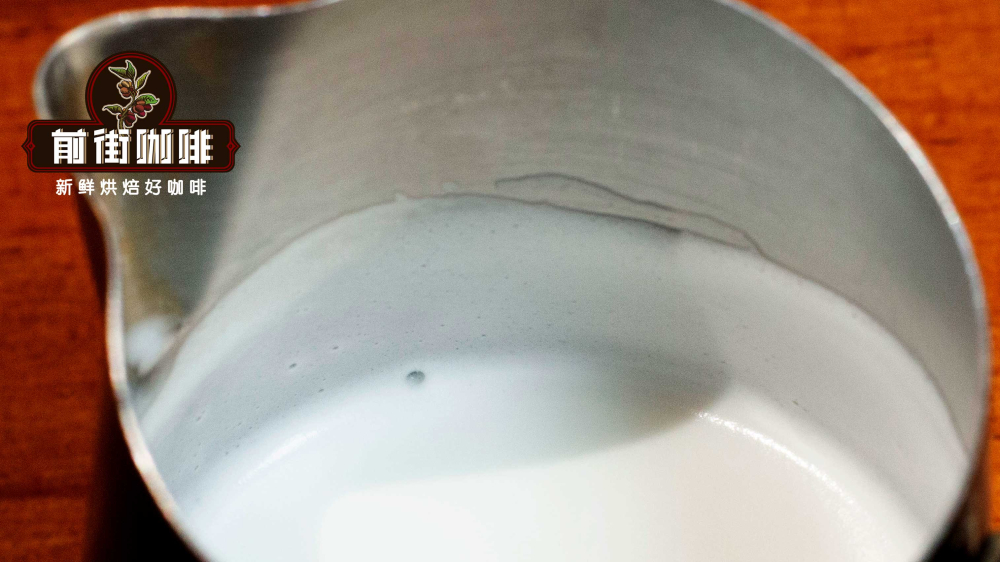
However, in practice, many baristas or coffee enthusiasts often face the issue of poor integration between milk foam and coffee. For example, when milk foam is poured into espresso, it quickly disperses instead of forming a uniform mixture, even affecting the pattern formation during latte art. This situation is often related to the freshness of the coffee beans—even if the beans appear shiny on the surface, their aroma and flavor may have significantly diminished if stored for too long, making ideal integration with milk foam difficult. It is recommended to choose medium-to-dark roasted blends, such as those with notes of spice, dark chocolate, maple syrup, and toasted hazelnuts. These beans not only have low acidity but also offer rich crema and a full-bodied mouthfeel, helping to enhance overall integration.
One common milk foam issue is foam that is too thin, resulting in an inability to form a proper mixture with coffee, usually due to insufficient steaming volume. If you find that the milk foam cannot support latte art patterns, it is advisable to moderately increase the steam time and air intake to achieve a richer layering of foam. Another common problem is milk foam floating on the surface during latte art, often caused by poor integration between the foam and milk, leading to layer separation. In this case, the steam pressure and frothing technique should be adjusted during the stretching phase to ensure the foam is fine and uniformly mixed with the milk.
The integration of milk foam and milk is mainly influenced by two key factors: first is the air pressure from the steam wand—the stronger the pressure, the more thorough the rolling of the foam during steaming, which helps improve integration; second is the fineness of the milk foam itself—fine foam, with fewer air pockets per bubble and higher density, has lower buoyancy and thus rises more slowly, resulting in better integration. In contrast, coarse foam, with larger air pockets and lower density, tends to rise quickly to the surface, reducing integration.
Why is integration so important? High-integration foam allows latte art patterns to have clearer and finer lines, whereas poor integration leads to blurry patterns and rough outlines. To assess whether the milk foam integration meets the standard, you can pour the steamed foam into a clear glass and observe it after it settles: if obvious layering appears within 30 seconds, the integration is poor; if layering occurs between 30 to 60 seconds, it is of medium level; if it remains unlayered for over 60 seconds, the integration is excellent. It’s important to note that steamed foam should be used immediately to avoid natural layering over time.
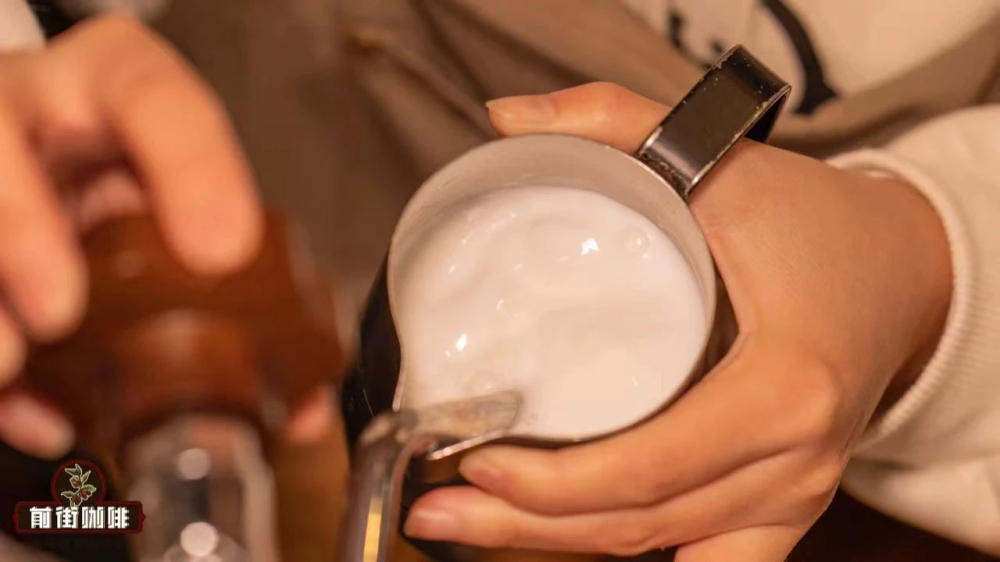
Next, let’s discuss why heating milk to around 60°C is considered the optimal flavor temperature. Experimental data shows that when milk is heated to approximately 60°C, the stability of the mixture between milk foam and milk is at its best, and the protein structure in the milk is not compromised. It is generally recommended to control the temperature between 60°C and 70°C, and not to exceed 70°C, to prevent irreversible denaturation of proteins, which can cause the foam to dissipate rapidly.
Empirical data indicates that when milk is steamed to 90°C, the foam expands rapidly due to the high temperature and may even overflow from the pitcher without intentional frothing, showing significant defoaming after about 1 minute and 30 seconds. In contrast, when steamed to 60°C, the foam only begins to show noticeable defoaming after about 10 minutes and 50 seconds. Meanwhile, milk foamed at 30°C and 12°C loses stability in a much shorter time. Especially within the 50°C to 70°C range, whether using pure milk or mixing with coffee, the foam exhibits relatively outstanding endurance, as the adequate mixing time in this temperature range and the fact that milk proteins have not yet reached the critical point of irreversible denaturation contribute to higher stability.
In summary, mastering the scientific principles and practical techniques of milk steaming, as well as understanding the impact of different temperatures on foam stability, is key for every barista and coffee enthusiast aiming to elevate the flavor performance of a latte. By precisely controlling the steaming temperature, adjusting steam pressure, and observing the degree of integration, one can not only produce fine and smooth foam but also ensure that every cup of latte showcases optimal flavor and visual appeal.
The above content is compiled by CoffeeHunters, a coffee news website.


