








Introduction:Want to brew espresso at home with a flavor close to that of an espresso machine? The moka pot is the most economical and beginner-friendly option. This article explains the construction, working principle, correct operation steps, and safety tips of the moka pot. From coffee-to-water ratio, grind size to heat control, it will guide you step by step through the key techniques. It also recommends medium to dark roasted blends and single-origin beans tailored for crema extraction, and analyzes the design upgrades and actual extraction differences of Bialetti’s new pressurized dual-valve moka pot.
Although the moka pot has a simple appearance, it is a practical tool that can replicate the flavor of Italian café espresso at home, and is almost a staple in Italian kitchens. However, many coffee enthusiasts are still unfamiliar with how to use it. This article will introduce the components, operating steps, and precautions of the moka pot in an easy-to-understand way, helping you master everything from coffee-to-water ratio, grind selection to heat adjustment with ease, and brew a rich cup of coffee with crema.
The moka pot was invented in 1933 by the Italian Alfonso Bialetti. It is a device that uses steam pressure generated by heating to extract coffee, belonging to a type of percolation extraction. Its biggest advantage is its affordable price and relatively low barrier to use, making it very suitable for daily home use.
The moka pot mainly consists of three parts: the upper chamber, the funnel (coffee chamber), and the lower chamber. The lower chamber is for water, the funnel holds finely ground coffee, and the upper chamber collects the brewed coffee. Its working principle is to heat the water in the lower chamber, turning it into steam that creates pressure to push the hot water through the coffee grounds, eventually collecting in the upper chamber. This method is similar in effect to an espresso machine and is capable of extracting a strong coffee with crema.
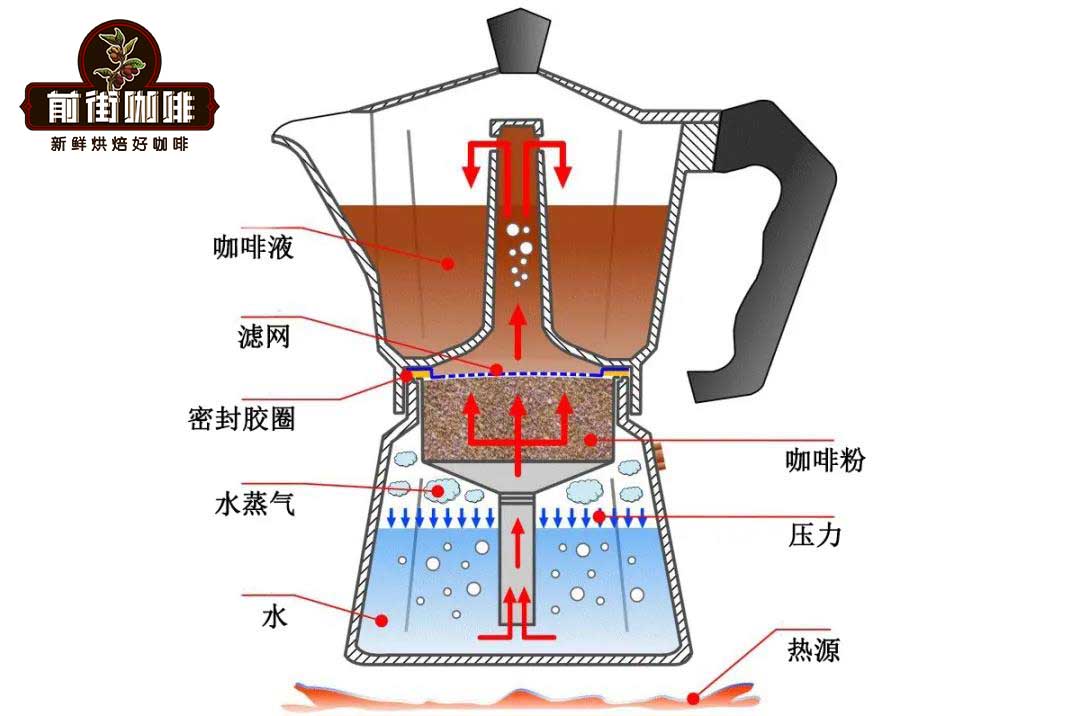
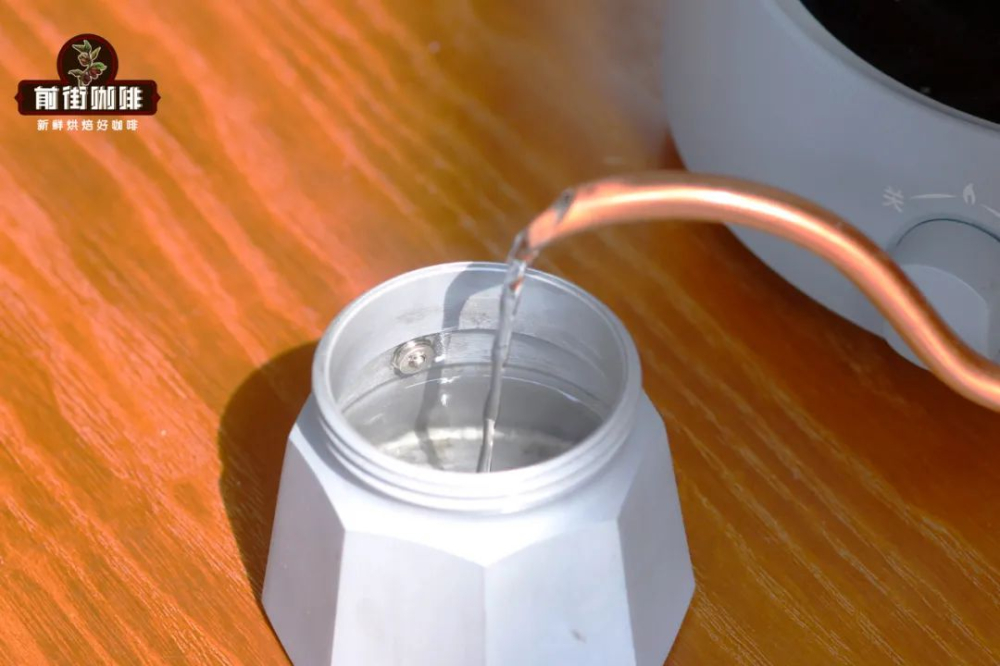
Before starting, prepare the moka pot, gas stove (or induction cooker), grinder, coffee beans, and water. First, fill the lower chamber with clean water. The water level should be about 0.5 cm below the safety valve to avoid overfilling which may affect pressure or cause overflow.
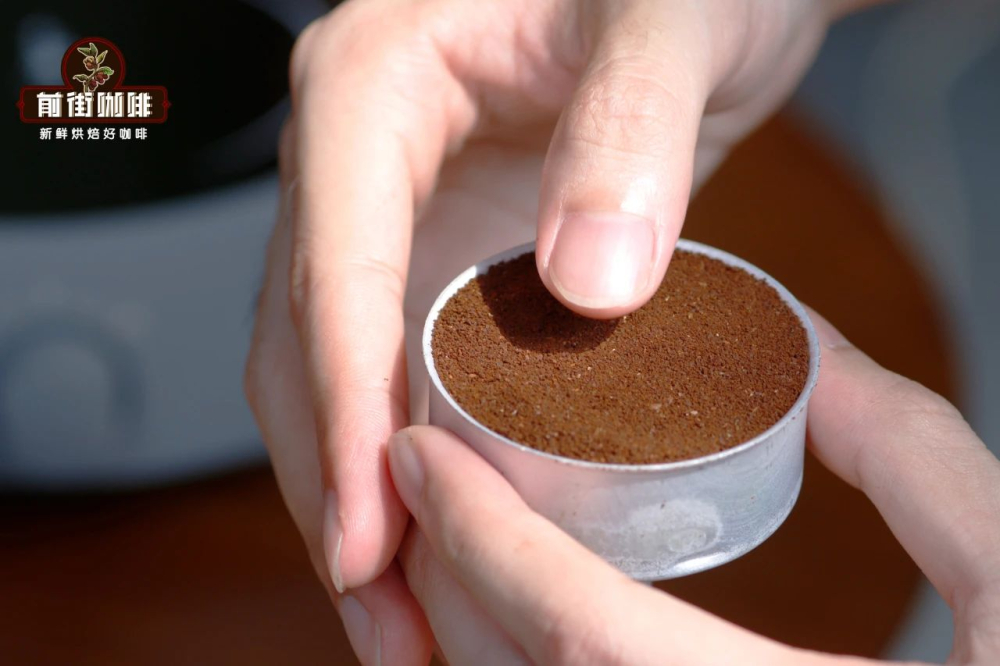
Next is grinding the coffee. It is recommended to grind slightly coarser than what is used for espresso machines, and you can refer to the size of the gaps in the funnel filter to ensure coffee particles don’t fall into the lower chamber. After placing the coffee grounds into the funnel, gently tap and level the surface with a distribution or leveling (spoon scraping) motion to ensure even distribution. A well-packed funnel not only helps stabilize extraction but also prevents under- or over-extraction in certain spots, reducing bitterness and off-flavors.
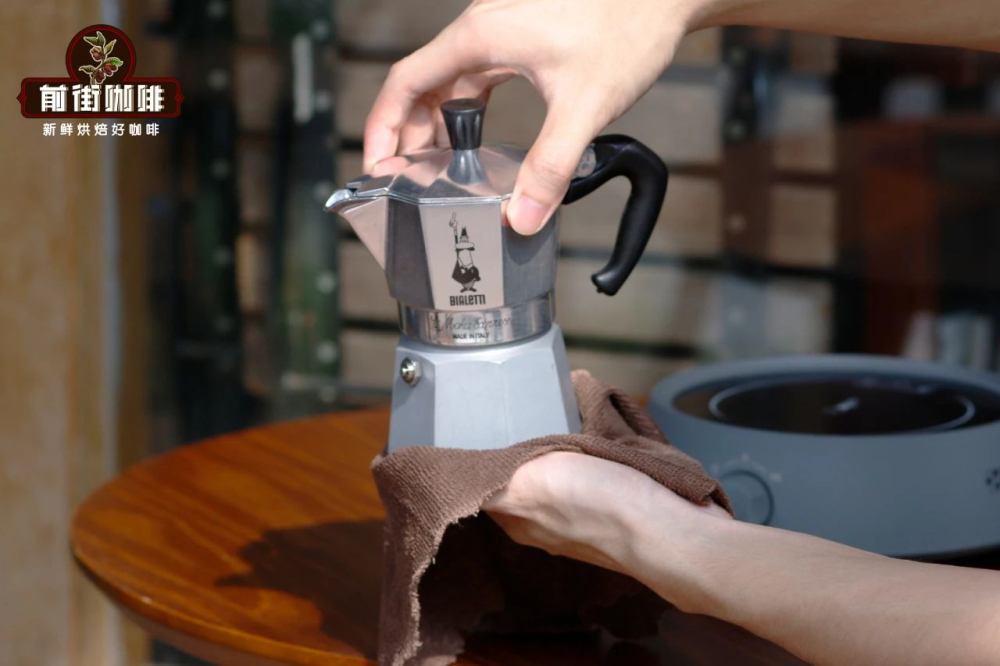
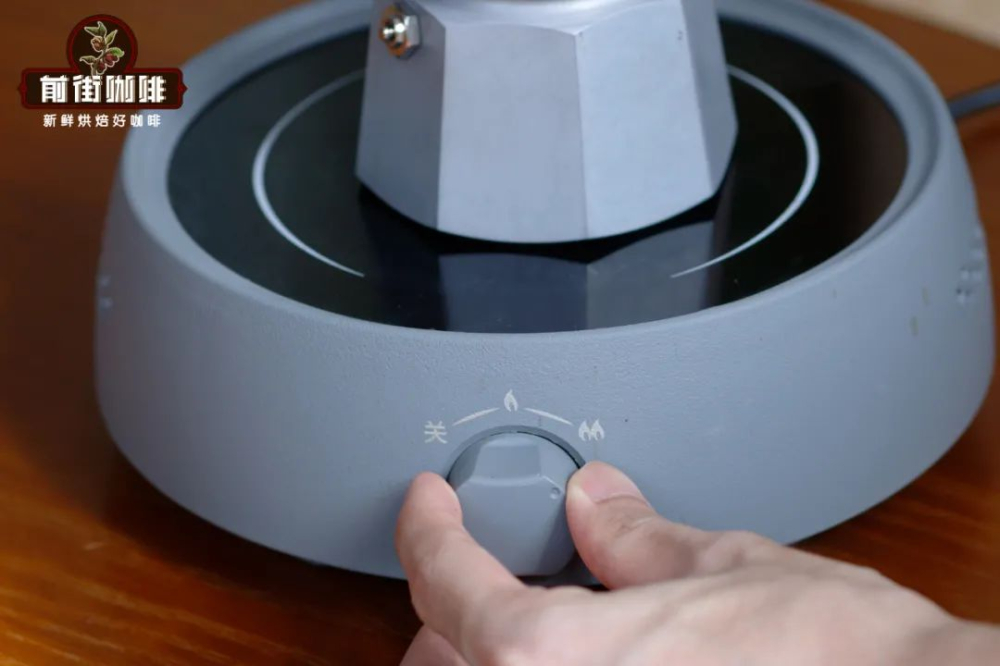
Place the funnel into the lower chamber, screw the upper and lower chambers tightly together, and wipe the base with a dry cloth to prevent overheating. It’s recommended to use a stove-top heater (like a gas burner) on high heat. When you hear a distinct “wuu wuu” sound during heating, it indicates that pressure is gradually building up. At this point, reduce the heat and open the upper chamber lid to observe the extraction process.
When the coffee starts to flow and reaches about half the capacity of the upper chamber, you can turn off the heat. The remaining pressure and residual heat inside the pot will continue to push the coffee up until the extraction is complete. This staged heat-off technique helps control extraction time and avoids over-extraction, which can lead to overly intense or burnt-bitter flavors.
The coffee brewed with a moka pot is highly concentrated and usually has crema, with a taste close to espresso. It is suitable for direct drinking or mixing with water or milk. Note that the water level in the lower chamber must never exceed the safety valve position, and the pot becomes extremely hot after heating—do not touch it directly. If coffee splashes occur, it may be due to excessively high water temperature. If the flow rate is too slow, the heat may be insufficient and needs adjustment.
In terms of bean selection, because the moka pot uses pressurized extraction, it is recommended to use medium to dark roasted beans, whether blends or single-origin (SOE). Blends typically combine beans from multiple regions, offering balanced flavors and stable extraction, making them suitable for beginners. For example, a classic blend combining Indonesian Mandheling and Brazilian beans—the former brings unique aroma, while the latter offers a smooth mouthfeel. The two complement each other, and the addition of Robusta enhances crema performance, making it suitable for milk-based drinks like lattes.
If you prefer the unique character of single-origin beans, you might choose something like the Brazilian Queen Estate SOE, which is of the Yellow Bourbon variety and processed via sun-drying. Medium to dark roasting highlights a sweet, cane sugar-like profile with rich crema. The flavor profile includes peanuts, almonds, chocolate, and nutty notes, performing excellently and consistently.
Recently, Bialetti launched a new generation of pressurized moka pots, including the standard single-valve model, the older gravity-pressurized dual-valve model, and the new hydraulic-pressurized dual-valve model. The main difference lies in the pressurization structure: the older model uses gravity pressurization, while the new one adopts an internal hydraulic layer, resulting in a simpler and more easily cleanable design. According to multiple comparative tests, the single-valve model extracts less crema which dissipates quickly, whereas the pressurized models—especially the new one—not only significantly increase crema volume but also make it denser and longer-lasting, greatly enhancing both the taste and visual appeal of the coffee.
The above content is compiled by CoffeeHunters, a coffee news website.


