







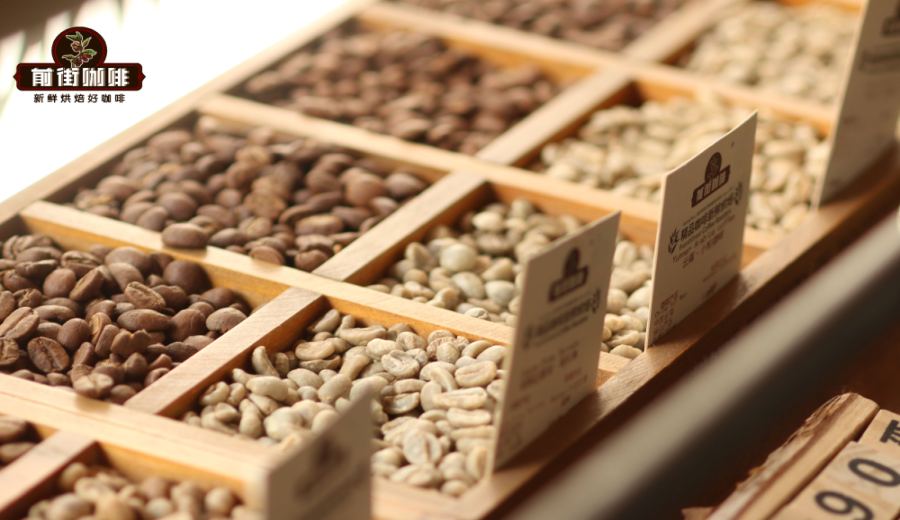
Introduction:Yunnan coffee has gradually entered the international market in recent years, but many consumers still have only a vague impression of it. This article delves into the fundamental differences between the mainstream Catimor variety and the specialty coffee representative Typica in Yunnan, analyzes why the industry persists in growing Typica, and provides practical brewing parameters and flavor guidance to help you understand Yunnan coffee's potential and challenges.
In recent years, Yunnan coffee has appeared more frequently on the promotional lists of global coffee brands. From international chains to emerging forces like Blue Bottle Coffee, attention has turned to this Chinese origin. However, the vast majority of Yunnan coffee beans circulating in the market actually belong to the Catimor variety. This hybrid, carrying Robusta lineage, boasts advantages such as high yield and strong disease resistance, yet consistently struggles to deliver the pure flavor characteristics expected of specialty coffee. Since 2013, the industry has begun planting Typica and a small amount of Bourbon in Lincang, Yunnan, attempting to reshape Yunnan coffee’s market positioning from the very root of the variety. This article will provide a detailed analysis of the breeding background of Catimor, its relationship with traditional Arabica varieties, and explore how Yunnan coffee can find its own path toward specialty development amid the interplay of varietal traits and post-harvest processing techniques.
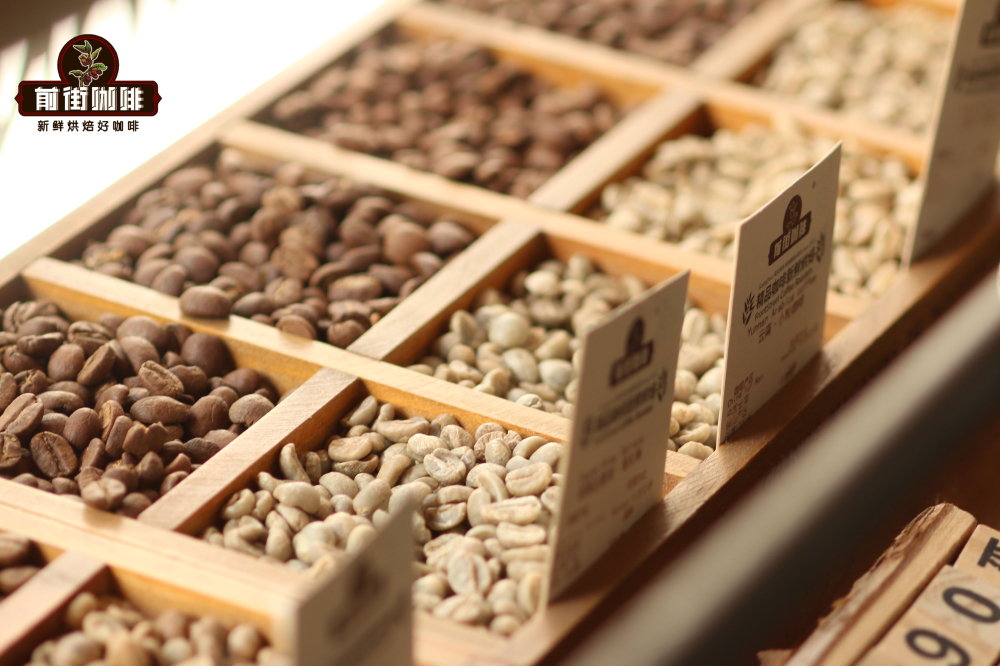 Observing market trends over the past two years, it’s not hard to see that Yunnan coffee is gradually gaining more attention. In the early days, due to immature cultivation techniques and relatively crude post-harvest processing, its flavor performance failed to win consumer favor. Moreover, Nestlé’s long-term large-scale procurement of Yunnan beans as raw materials for instant coffee led many to equate "Yunnan coffee" with "instant coffee." But today, the situation is vastly different—not only are domestic well-known coffee chains actively promoting Yunnan-origin beans, but even Blue Bottle Coffee, which has just entered the Chinese market, has included it in its key product lines. This undoubtedly proves that Yunnan coffee now possesses independent competitive quality. What are the key factors driving this shift?
During the pandemic, the international coffee bean supply chain was disrupted, with significant impacts on shipping timeliness and port arrivals, while the domestic coffee consumption market continued to expand. This created a rare market entry opportunity for Yunnan coffee. Beyond that, an even more core reason lies in the progress of the origin itself: the cultivation and processing techniques of Yunnan coffee today have long since shed the backwardness of over a decade ago. Through scientific cultivation management, the basic quality of coffee beans has been significantly improved; the post-harvest processing stage has also accumulated rich experience, resulting in flavors that are more layered and distinctive in the final cup.
However, the industry believes that relying solely on improvements in cultivation techniques and processing methods is still insufficient to help consumers truly understand the unique charm of Yunnan coffee. The so-called "charm of coffee beans" refers to flavor impressions that can be directly associated with a specific origin—such as the bright citrus acidity evoked by mentioning Yirgacheffe, or the rich herbal and earthy notes associated with Mandheling. But when it comes to Yunnan coffee, most consumers lack a clear flavor image in their minds. This ability to instantly trigger regional associations is what is known as "origin flavor," and its formation is closely related to altitude, soil conditions, and microclimates, giving each origin’s coffee beans a unique flavor profile.
 Currently, over 90% of Yunnan coffee circulating in the market belongs to the Catimor variety. The history of this variety dates back to 1957, when the Portuguese introduced the natural mutation of Brazilian Bourbon, Caturra, to East Timor, and crossed it with the Timor variety, which carries Robusta lineage, ultimately giving birth to Catimor. This variety inherited Caturra’s high-yield characteristics while also benefiting from Robusta’s disease resistance, leading Nestlé to introduce and promote it in Yunnan in the 1990s. But precisely because its genes carry Robusta’s "non-traditional Arabica traits," even though it is classified within the Arabica family, its flavor often appears mediocre and lacks complexity. Under traditional washed or natural processing, Catimor is often accompanied by noticeable astringency and unpleasant off-flavors. In recent years, although extending fermentation time and other post-harvest techniques have partially masked these drawbacks, the industry believes that this approach may steer origin development in the wrong direction—using processing methods to "modify" inherent varietal limitations rather than fundamentally enhancing quality.
Based on this philosophy, the industry has chosen since 2013 to focus on planting the Typica variety in Lincang, Yunnan, supplemented by a small amount of Bourbon. As one of the oldest Arabica varieties, Typica boasts a pure genetic lineage, with flavor characteristics known for being elegant and clean, featuring bright and layered acidity. It has long been regarded as a representative variety of specialty coffee. The industry believes that if Yunnan coffee is to truly join the ranks of specialty, transformation must begin at the source—the variety. While Catimor offers practical advantages such as high yield and strong adaptability, Typica requires more meticulous cultivation management and yields relatively lower quantities. Yet, the two are fundamentally different in positioning—the former serves as a bulk commercial bean ingredient, while the latter is the specialty foundation for pursuing extreme flavor. To conflate the two, emphasizing only advancements in post-harvest processing techniques while ignoring the fundamental impact of variety and altitude on flavor, is akin to flogging a dead horse.
Therefore, the industry has chosen to establish its own种植 estates, promoting a specialty coffee development model centered on variety and altitude from the perspective of growers. This strategy may be the key path for Yunnan’s origin to achieve healthy, sustainable specialty development. While transforming the entire origin into a specialty coffee region may not yet be realistic, such attempts are essential—when washed processing can consistently deliver outstanding and uniform flavors, and each year clearly expresses the origin’s characteristics, that will mark the true starting point of Yunnan’s specialty coffee.
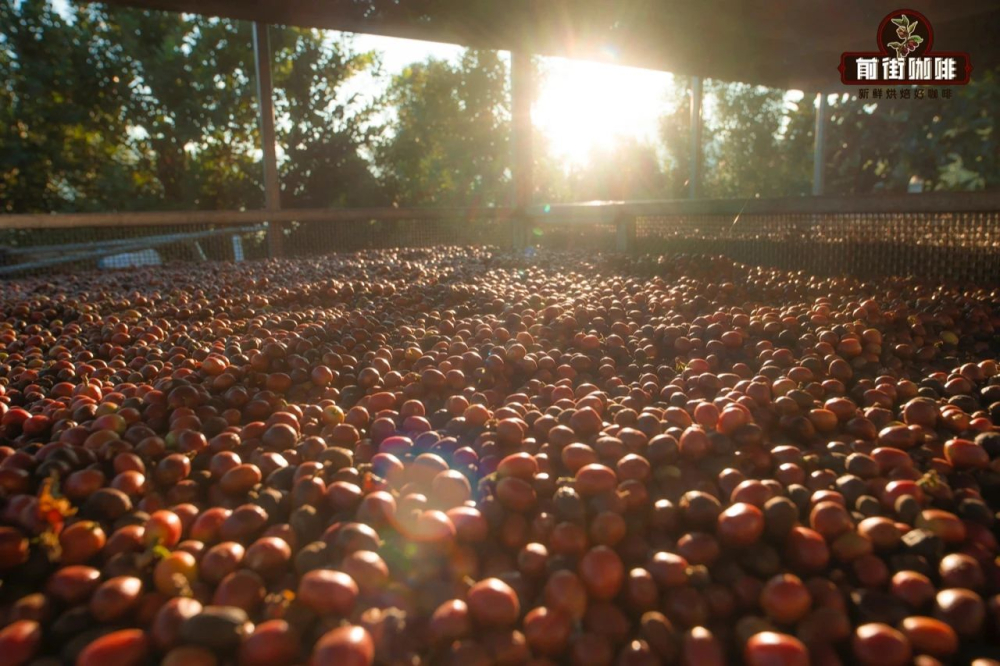 In the industry’s product lineup, consumers can choose sun-dried Yunnan Typica, washed Baoshan Typica, and sun-dried Baoshan Catimor. All three beans reflect the unique terroir of the Yunnan origin, but their flavor profiles each have distinct emphases: sun-dried Yunnan Typica features a black tea-like rich base, paired with brown sugar sweetness and the fruitiness of plums (black plums); washed Baoshan Typica showcases the bright acidity of plums, the mellow aftertaste of nuts, and the balanced sweetness of brown sugar; in comparison, sun-dried Baoshan Catimor has a slightly thinner mouthfeel, yet the combination of plum fruitiness, black tea notes, and nutty tones is still discernible. Notably, while the overall flavor performance of Yunnan coffee may not be as rich and diverse as some renowned origins, its soft acidity and rich mouthfeel still offer unique drinking value.
To fully showcase Yunnan coffee’s balance of acidity and sweetness along with its tea-like qualities, the industry recommends using a medium roast level. For actual brewing, the V60 dripper is suggested, with a powder-to-water ratio set at 1:15, grind size comparable to coarse sugar granules (or 75% passing rate through a Chinese No. 20 standard sieve), and water temperature controlled at 88–89°C. The specific operation process is as follows: the first pour injects 30 grams of hot water for a 30-second bloom; the second pour uses a slow, circular water flow to reach 125 grams, then continues pouring to a total of 225 grams after the coffee bed’s water level drops by about half. Maintain a steady water flow speed throughout, with a total extraction time of approximately 2 minutes and 10 seconds. These parameters help highlight the mellow characteristics of Yunnan beans while avoiding the release of off-flavors caused by over-extraction.
The above content is compiled by CoffeeHunters, a coffee news website.


