







Introduction:Jamaica Blue Mountain, Indonesian Mandheling, and Yemen Mocha — these three classic coffee beans are not only benchmarks in the coffee world but also dream brews cherished by many enthusiasts. This article delves into their origin backgrounds, variety characteristics, processing methods, and unique flavor profiles, along with practical brewing parameter suggestions, helping you gain a more comprehensive understanding of these legendary coffees and find the one that best suits your taste.
In the specialty coffee realm, three coffees have always held an unshakable position: Jamaica Blue Mountain, Indonesian Mandheling, and Yemen Mocha. They not only boast highly distinctive flavors due to their unique growing environments, but also stand as classics in the hearts of coffee lovers thanks to their deep historical roots. Getting to know them is not just a journey of taste, but also an exploration of the very origins of coffee culture.
Jamaica Blue Mountain Coffee: The Essence of High Altitude and Volcanic Soil
Blue Mountain coffee comes from the Blue Mountains region of Jamaica, an island nation in the Caribbean. The area's highest elevation reaches 2,400 meters, making it the tallest peak in the entire Caribbean region. It features newly formed volcanic soil that is fertile and rich in nitrogen and phosphorus. Coupled with year-round humidity, cool climate, notable day-night temperature differences, and layers of mist that reduce intense sunlight, all contribute to the delicate and layered profile of Blue Mountain coffee.
Blue Mountain coffee primarily uses the Typica variety, whose top leaves exhibit a copper color, hence also known as "red-top coffee." Typica plants are relatively tall, with branch angles of about 50 to 70 degrees. Although its flavors are elegant, it is less resistant to diseases and has lower yields. Its coffee cherries are cherry red, and the green beans are small in size with a greenish hue, which will visibly expand after roasting, resulting in plump and firm beans.
Blue Mountain coffee has a rich and full-bodied aroma, with a balanced and smooth taste — no single flavor stands out too prominently. This harmony is the key to its irreplicability. Especially the Blue Mountain peaberry beans, whose aroma is more understated and reserved, yet offer even more distinct flavor layers. When purchasing, authentic beans often feel fine to the touch, offer uniform resistance when ground, and emit a pure, unadulterated aroma — these are important indicators of authenticity.
Indonesian Mandheling Coffee: The Bold Character Brought by Wet Hulling
Indonesia is the world’s third-largest coffee producer. Though Robusta dominates, the Arabica Mandheling coffee produced on the island of Sumatra represents the country’s specialty coffee. Particularly the GRADE 1 level, which signifies extremely few defective beans, is the hallmark of top-tier Mandheling.
When mentioning Mandheling, one often hears of “Golden Mandheling,” a product launched by Indonesia’s renowned coffee purchasing company, Pwani Coffee Company (abbreviated as PWN). PWN meticulously selects the finest coffee beans from the Sumatra growing region, subjecting them to multiple rounds of manual sorting to ensure each bean is plump and flawless, thus earning the honor of being called “Golden Mandheling.”
Mandheling generally employswet hulling (known as Giling Basah in Indonesia)as its processing method, which is quite different from the standard washed process. The coffee beans undergo hulling while still at a high moisture content (about 20%–24%) in a semi-dry state, allowing the beans to more easily absorb surrounding flavors while also forming their unique bold taste and strong personality. Since the beans are not fully dried during processing, it’s common to see elephant ear beans (i.e., irregularly shaped coffee beans), though they are not considered defects.
Golden Mandheling green beans are usually above 19 mesh, with a dark green color and flat bean shape. Their flavor profile is rich, often exhibiting notes of caramel, cocoa, pine, and toasted bread, with a sweet lingering finish accompanied by moderate herbal undertones. The overall taste is bold and full-bodied, with high sweetness and clear layers. The balance between bitterness and acidity is excellent, making it ideal for coffee lovers who prefer strong flavors and a heavy body.
Yemen Mocha Coffee: The Chocolate Notes Born from a Historic Port
Mocha actually does not refer to a coffee variety, but rather to the ancient port city of Mocha on the Red Sea coast in southern Yemen. Between the 15th and 18th centuries, this was the hub of global coffee trade, with nearly all exported coffee shipped from here to Europe and the Mediterranean. As historical coffee trade records only indicated “from the port of Mocha,” over time, these coffees became collectively known as “Mocha coffee.”
It’s worth noting that Yemen is the actual region where these coffees were grown, while the port of Mocha was merely the export gateway. Yemen was among the first countries to cultivate coffee on a large scale, with its coffee-growing areas mostly located in the central highlands. The region has a dry climate and poor soil, producing coffee with strong regional characteristics. Due to sacks being labeled with the word “Mocha” during transport, the name became further associated with coffee.
The most distinctive feature of Mocha coffee is its unique chocolate and spice notes, along with a rich and deep flavor profile, low acidity, but long-lasting aroma. This flavor profile makes it a popular choice for many baristas when creating dark roasts or creative blends, and it continues to hold a legendary status in coffee history.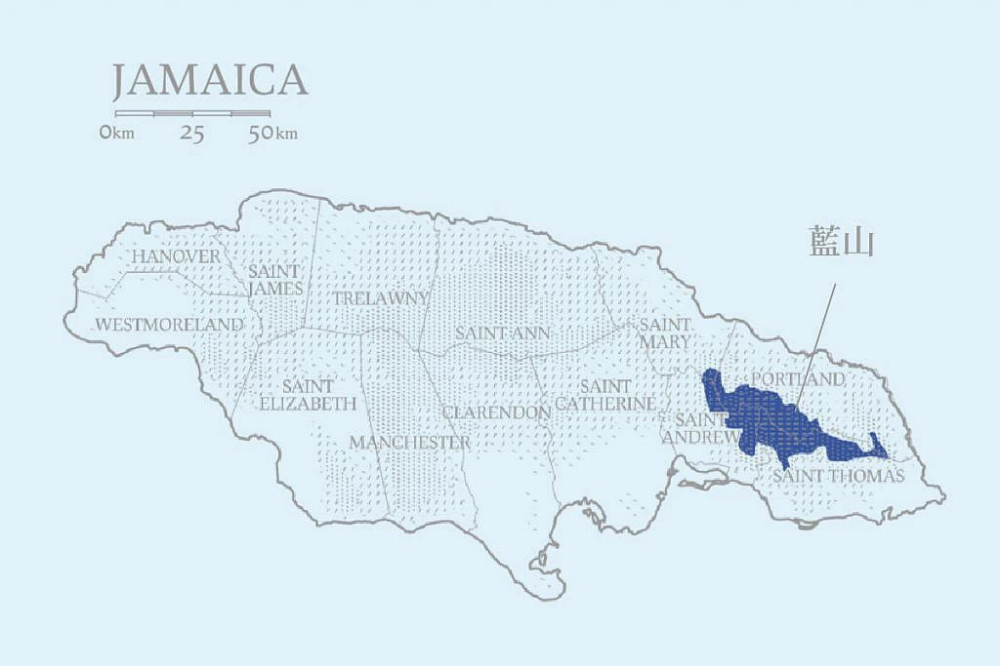
In summary, Blue Mountain, Mandheling, and Mocha each represent the pinnacle of expression under different geographical environments and processing methods. Whether you prefer the fresh and balanced Blue Mountain, the bold and rich Mandheling, or the exotic chocolate notes of Mocha, understanding their backstories and characteristics can guide you in bean selection and brewing, allowing you to enjoy a deeper coffee experience.
The above content is compiled by CoffeeHunters, a coffee news website.


