







Introduction:Mandheling coffee is renowned for its bold, full-bodied flavor and distinctive herbal aroma, yet many remain unclear about whether it belongs to the Arabica species, its regional distribution, and processing methods. This article delves into the variety origins of Mandheling from Sumatra, Indonesia, highlights the characteristics of its main producing regions, explains the wet-hulling process, compares flavor differences between Aceh and Lintong, and introduces the stringent selection criteria of PWN’s Golden Mandheling. Discover the essence and brewing essentials of this classic coffee in full detail.
When it comes to Mandheling coffee, many coffee enthusiasts immediately think of its rich, full-bodied taste with unique herbal and earthy notes. This coffee from Sumatra, Indonesia, has long been polarizing in the coffee world, yet it also boasts a loyal following. But is Mandheling really an Arabica variety? Where are its core producing regions? Why is the unique wet-hulling method used? This article will break down these questions in detail, taking you from variety, region, and processing method to the standards of top-tier Golden Mandheling, offering a comprehensive understanding of Indonesian Mandheling.
Indonesian Mandheling coffee is celebrated for its bold and robust flavor profile, making it a representative of strong flavors for many serious coffee drinkers. However, it is also a highly controversial coffee—loved by some for its deep, complex tones, yet avoided by others due to its intense earthy or herbal aromas. Interestingly, even consumers who have tried full-bodied coffees like Brazilian Yellow Bourbon or Jamaican Blue Mountain often ultimately return to Sumatran Mandheling, underscoring its unique charm.
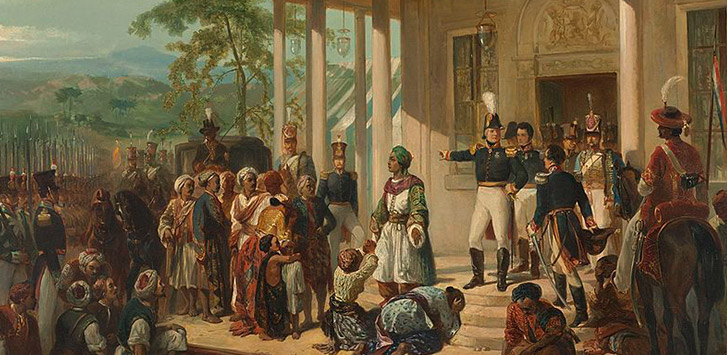
Although Mandheling is widely known today, Indonesia is not actually the birthplace of coffee. Like many tropical countries, Indonesia’s coffee industry originated during the European colonial period. In the 17th century, as coffee gained popularity in Europe, the Dutch East India Company made two attempts to introduce coffee to Indonesia, succeeding on the second try when coffee trees were successfully planted on Java Island before gradually expanding to Sumatra and Sulawesi.
However, by the early 20th century, Java’s coffee plantations were nearly wiped out due to the rampant spread of coffee leaf rust, leading to a shift toward planting the more disease-resistant Robusta. Today, Indonesia is a major global coffee producer, ranking among the top in Asia for Arabica output, with Sumatra being its crown jewel.
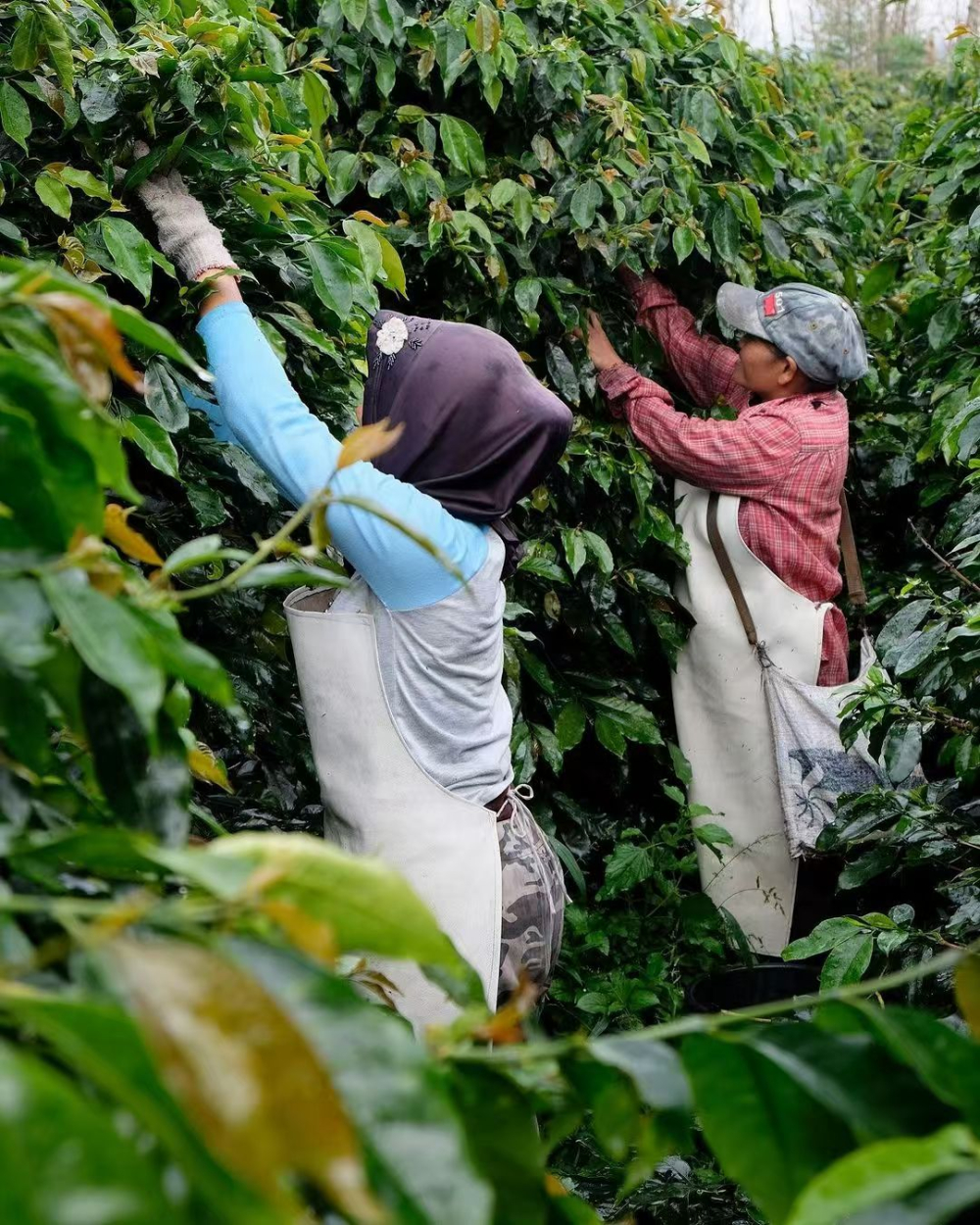
Sumatra is Indonesia’s primary Arabica coffee-producing region, concentrated in the northwestern part of the island. Based on microclimates and geography, it is divided into two well-known producing areas: Aceh in North Sumatra and Lintong near Lake Toba in North Sumatra Province. Among them, Lintong is the traditional home of Mandheling coffee, where the unique wet-hulling process results in a full-bodied flavor, low acidity, and distinct herbal and caramel notes.
The Aceh region is a later-developing area. After Arabica varieties were introduced from North Sumatra in 1924, its planting area and production have grown year by year. Recently, due to climate change, the traditionally suitable planting areas for Lintong are expected to shrink significantly or even disappear within the next thirty years, making Aceh a potential future major source of Mandheling.
Many consumers often wonder: since both Aceh and Lintong produce Mandheling, what are the flavor differences? In reality, cupping comparisons show that Mandheling from Aceh typically has a brighter flavor profile, with less pronounced herbal notes and an overall crisper taste. These differences are related not only to factors like altitude and microclimate but also to processing techniques and quality control standards.
Sumatra’s climate is perpetually rainy and humid, with insufficient sunlight making traditional sun-drying methods difficult to implement. Coupled with the high cost of washed processing equipment, the region developed the unique wet-hulling method. This technique involves removing the fruit skin and pulp from the coffee cherry, then retaining the sticky mucilage layer for short-term fermentation. Some processors even skip fermentation entirely to reduce acidity, directly drying the parchment-covered beans. When the beans reach a semi-dry state, the outer husk is mechanically removed, a process that generates high heat and influences the beans’ flavor, resulting in Mandheling’s signature intense earthy, woody, and herbal notes. The beans also often exhibit the so-called “elephant foot” imprint.
When it comes to premium Mandheling, PWN’s Golden Mandheling must be mentioned. This coffee undergoes an extremely rigorous selection process: only G1 grade green beans with intact shapes, a screen size of 18 or above, and no more than three defective beans per 300-gram sample are chosen, followed by three rounds of manual sorting to ensure flawlessness. This standard results in Golden Mandheling with a cleaner flavor and more pronounced sweetness, almost becoming synonymous with high-quality Mandheling. However, due to its limited production, counterfeits are common in the market. Consumers can request to see the green bean sacks and relevant certificates to verify authenticity.
It’s worth noting that many coffees labeled as Mandheling often list “Ateng” under the variety column. This is actually a general term for the Catimor variety commonly found in Sumatra, a hybrid of Arabica and Robusta that can still exhibit good flavor potential under proper management.
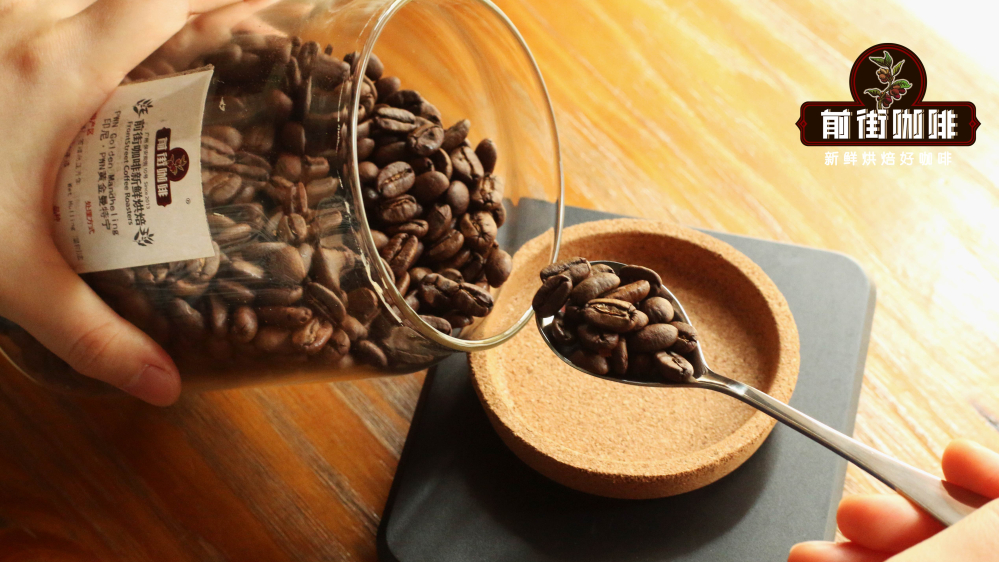
For such medium-to-dark roasted Mandheling coffee beans, a medium-to-dark roast is recommended to highlight their full-bodied and low-acid characteristics. Practical pour-over reference parameters are as follows: use a KONO filter, control water temperature at around 88°C, use a recommended dose of 15 grams, with a 1:15 coffee-to-water ratio, and aim for a grind size that allows about 70% of the coffee to pass through a Chinese No. 20 sieve. Start by pouring 30 grams of hot water for a 30-second bloom, then pour in a thin stream in circular motions from the center outward until reaching 125 grams. After the water level drops, continue pouring to 225 grams. The total extraction time is about 2 minutes, fully showcasing its bold herbal notes and balanced sweetness.
The above content is compiled by CoffeeHunters, a coffee news website.


