








Introduction:Sun-dried coffees from the Wolkite region of Yirgacheffe are renowned for their bright acidity, gentle floral notes, and tea-like aftertaste, making them a popular starting point for many pour over enthusiasts. This article delves into the origins of the region, its altitude advantages, administrative evolution, the characteristics of surrounding sub-regions near Wolkite, analyzes the factors behind its flavor profile, and introduces the unique processing styles of well-known cooperatives such as Gotiti and Konga to help readers choose the coffee beans that suit them best.
Yirgacheffe, a name that resonates loudly with many specialty coffee newcomers, is often their first stop on the pour over journey. Especially the sun-dried lots from the Wolkite region, which always showcase astonishing sweetness and tea-like qualities, leaving an unforgettable impression. But did you know? There’s actually a rich story behind this involving geography, history, and cooperative culture.
Yirgacheffe was originally a small town in southern Ethiopia, famous for its highly distinctive aromatic coffee. The uniqueness of the coffee here is inseparable from its growing environment. Administratively, Yirgacheffe belongs to Ethiopia’s Sidama Region, and it is surrounded by three smaller producing areas: Wenago, Kochere, and Gelena Abaya. The coffee produced in these regions shares a very similar flavor profile with Yirgacheffe and is equally valued by the global coffee market. Particularly after the Ethiopian government implemented a new trading grading system in 2009, with public auctions conducted through the Ethiopian Commodity Exchange (ECX), the status of these four regions was further solidified.

When it comes to the captivating flavors of Yirgacheffe coffee, high altitude plays a key role. Yirgacheffe is one of the highest-altitude coffee-growing regions in southern Ethiopia, with many cultivation areas situated between 1,800 and 2,100 meters above sea level. In such high-altitude conditions, lower temperatures and thinner oxygen levels slow down the ripening process of coffee cherries, allowing more time for the accumulation of flavor compounds and sugars. This forms the foundation of its bright acidity, floral and fruity aromas, and delicate mouthfeel. In addition, the area’s average annual temperature is about 18°C, which is very suitable for the growth of Arabica coffee.
Aside from origin and altitude, coffee cooperatives are also one of the important factors influencing flavor. In the Yirgacheffe region, there are numerous cooperatives formed by smallholder farmers, among which the products of cooperatives such as Gotiti, Konga, Wolkite, Hofusha, and Idido are especially favored by the specialty coffee market. These cooperatives mostly use both washed and natural (sun-dried) processing methods, each bringing out distinctly different flavor characteristics.
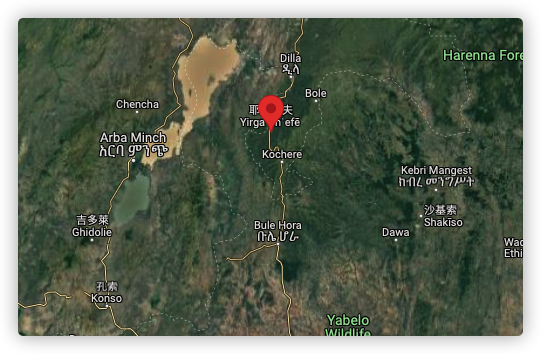
Among them, the Gotiti cooperative is a rather representative example. It was originally part of the Wolkite cooperative under the Yirgacheffe Coffee Farmers Cooperative Union (YCFCU). Later, due to the growing market demand for “single-origin” and “traceability,” the farmers of Gotiti officially split from the original organization in 2012 to form an independent Gotiti cooperative. This cooperative consists of about 300 farmers, and the village is located in one of the earliest independently delineated areas, so its coffee cultivation and processing techniques were already quite mature. Gotiti is often hailed as “the last pure land of Yirgacheffe,” not only because of its relatively remote location, which has preserved traditional farming methods, but also because it mainly uses low-intervention processing methods such as washed and natural, showcasing exceptionally layered and original flavors.
For pour over lovers who enjoy bright acidity and tea-like aftertaste, Gotiti’s washed beans are an unmissable choice. This coffee typically displays a bright citrus tone, accompanied by soft orange aroma, delicate white floral notes, honey-like sweetness, and a green tea-like aftertaste. The overall profile is very balanced, making it suitable for daily pour over or beginner-level tasting.
In addition, many coffee consumers initially built their basic understanding of specialty coffee through an entry-level bean from Yirgacheffe. This type of bean usually has clear fruit acidity and subtle floral notes, with a clean and well-layered flavor profile, and is therefore often compared to the expensive Geisha coffee. Although Geisha boasts richer and more complex aromas and fruit tones, its price is often more than ten times that of Yirgacheffe, making it less accessible for most consumers. For this reason, certain regional lots from Yirgacheffe—especially the sun-dried or washed beans produced by Wolkite and Gotiti—are regarded as high-value alternatives to Geisha, especially suitable for coffee lovers on a budget who still seek outstanding flavor performance.
In summary, whether you’re a beginner just starting with pour over or an experienced coffee taster, gaining a deeper understanding of the geography, cooperatives, and processing methods of Yirgacheffe’s Wolkite region and its surrounding sub-regions can help you more accurately select coffee beans that match your taste. From the unique flavors brought by high altitude to the cooperatives’ commitment to quality, these details are all key elements that make up a great cup of coffee.
The above content is compiled by CoffeeHunters, a coffee news website.


