







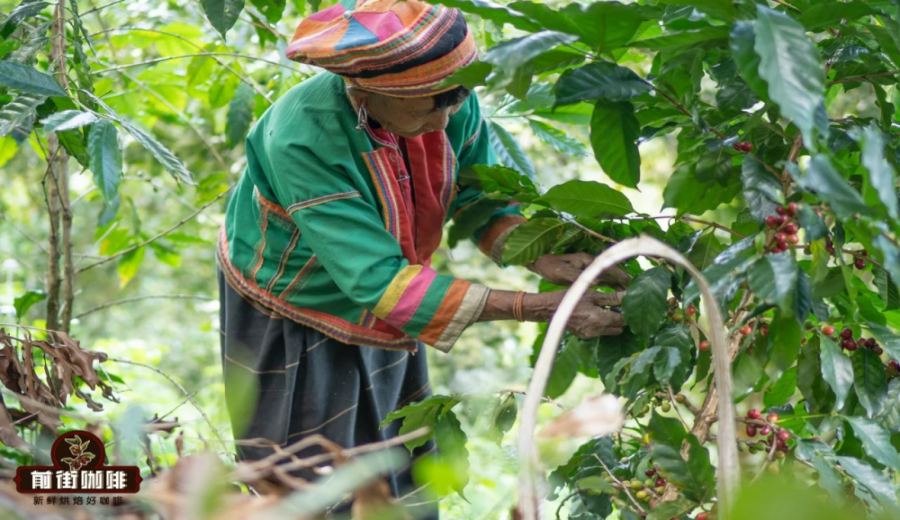
Introduction:Do you know how Yunnan coffee evolved from the very first coffee tree introduced by French missionaries into an important origin in today’s specialty market? This article delves into the varietal evolution of Yunnan’s small-bean coffee, tracing its historical shift from Typica to Catimor, and details its processing methods, roasting strategies, and pour over recommendations—offering insight into the unique flavors and potential of this highland-grown coffee.
The connection between Yunnan and coffee dates back over a hundred years to 1904. At that time, French missionary Térence Dufaure brought coffee seedlings to Zhugula Village in Binchuan, Yunnan. This marked not only the beginning of local coffee cultivation but also planted the seeds for the future birth of “small-bean coffee.” Over time, the coffee varieties grown in this region transitioned from Typica and Bourbon to Catimor, gradually evolving from early bulk commercial raw material to a path of specialty production.
The so-called “small-bean coffee” actually refers to coffee of the Arabica species, particularly the Typica and Bourbon varieties introduced in the early days. These varieties, grown at high altitudes, typically exhibit bright acidity and rich aromas. In contrast, the more commonly seen medium-bean coffee—Robusta—usually produces larger fruit with a more monotonous flavor. However, Typica and Bourbon also have notable drawbacks, including poor disease resistance and low yield, which led to Catimor eventually becoming the dominant variety in Yunnan.
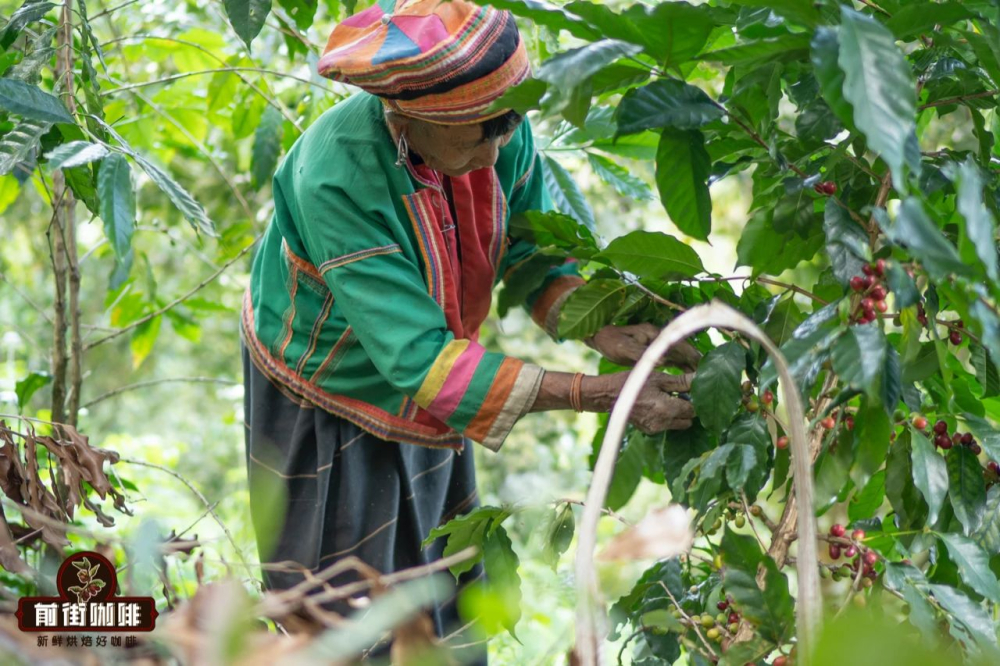
Although classified as Arabica, Catimor has about 25% of its genes derived from Robusta. It is a hybrid variety developed by Portugal’s Coffee Rust Research Centre (CIFC) to meet demands for disease resistance and high yield. This variety features a compact tree structure, dense branching, short fruit nodes, strong vitality, and extremely high resistance to rust, along with relatively stable yields. However, due to the inclusion of Robusta genes, its flavor profile is often more one-dimensional and prone to what is known as a “devil’s tail,” making it less likely to stand out in specialty coffee evaluations.
Even so, Yunnan has not completely abandoned traditional high-quality varieties. For instance, a certain coffee producer replanted the ancient Typica variety in Lincang in 2013. After years of careful cultivation, it finally yielded its first harvest in 2020, processed using the natural (sun-dried) method, and was named “Coffee Brand 2013.” This batch of Typica coffee not only demonstrated the potential of the variety itself but also proved that Yunnan’s high-altitude regions remain suitable for growing classic Arabica varieties. Speaking of the actual flavor profile of Yunnan’s small-bean coffee, the market previously held a rather poor impression due to relatively low planting altitudes and limited processing techniques. But in recent years, with the rise of the domestic specialty coffee trend, there have been significant improvements in all aspects—from planting management and shade tree configuration to soil and water conservation, as well as fresh cherry harvesting and post-harvest processing. For example, a certain coffee brand insists on picking only fully red-ripe coffee cherries during harvest, and processes them via sun-drying, slowly dehydrating them while continuously turning them to ensure even drying and to avoid over-fermentation or mold.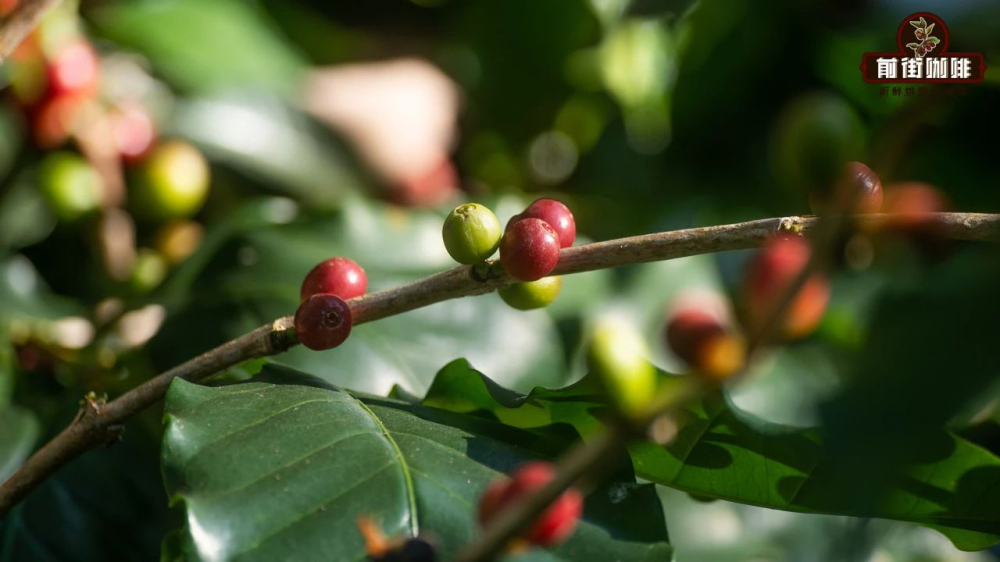 During the sun-drying process, the sugars and flavor compounds in the fruit pulp gradually penetrate the seeds, creating a richer sweetness and a complex aroma profile. In practice, well-processed Typica through sun-drying often exhibits aromas such as caramel, berries, black tea, and even honey, with a noticeable sweetness and a long-lasting aftertaste. The Coffee Brand 2013 Typica, roasted to a medium level, displays notes of chocolate, nuts, dried apricot, and brown sugar. It has a round mouthfeel, gentle fruit acidity, and a clean, tea-like refreshing finish on the aftertaste.
So, how should such delicate and layered small-bean coffee be roasted and brewed to fully showcase its characteristics? It is generally recommended to use a medium roast, where well-controlled temperatures can enhance the caramelization reaction, releasing nutty and chocolatey base notes while retaining a moderate highlight of fruit acidity. If a bolder profile is preferred, one may go slightly darker to a medium-dark roast, but care should be taken to avoid over-roasting, which can lead to flavor loss.
Pour over recommendations can refer to the following parameters: Use a Hario V60 filter, with around 15 grams of coffee, water temperature controlled at 90°C, and grind size recommended at approximately 75% passing through a #20 sieve—that is, a medium-fine grind. Employ a three-pour method: the first pour uses double the coffee’s weight in water (about 30 grams) for a bloom of around 30 seconds. Then, pour in a thin stream in a circular motion from the inside out until reaching 125 grams for the first break. After the bed settles, continue pouring to 225 grams to complete extraction, with a total brew time of about 2 minutes. These parameters help balance sweetness and acidity, highlight aroma, and maintain a rich mouthfeel.
 In summary, the flavor profile of Yunnan small-bean coffee leans toward balance—not overly sharp yet still distinctive—offering enjoyment for both beginners and experienced drinkers. Its aroma may vary depending on the processing method, showing variations of chocolate, nuts, caramel, or even citrus, while the cup often carries layers of herbal notes, brown sugar, or berries. The aftertaste is clean and lingering. For coffee enthusiasts eager to explore diverse regional flavors, Yunnan is definitely worth adding to your bean selection.
The above content is compiled by CoffeeHunters, a coffee news website.


